The Uttar Pradesh government’s decision to enforce mandatory food licenses and display of shop owners’ original names along the Kanwar Yatra route has triggered a sharp political row, with opposition parties accusing the administration of using the move to polarise, while the government insists it is about transparency, consumer rights, and maintaining peace during the annual religious procession.
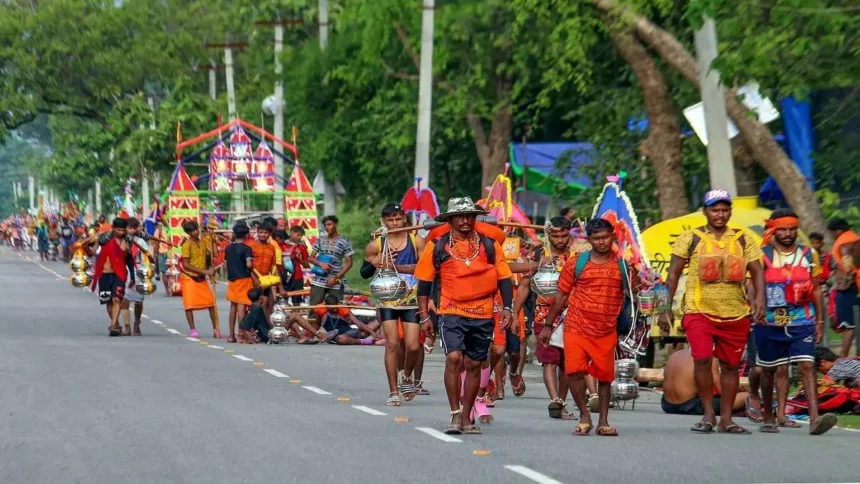
The Kanwar Yatra, which began on June 10, sees lakhs of devotees, known as Kanwariyas, collecting water from rivers and carrying it over long distances to offer it at Lord Shiva’s shrines. The state administration, citing the large gathering and the need for hygiene and accountability, has made it compulsory for all shops along the route to display their licenses and the owner’s original name clearly to buyers.
Government Defends the Decision as Public Welfare Move
Deputy Chief Minister Brajesh Pathak defended the move, stating that every buyer has the right to know who they are purchasing food and edible items from, framing it as a consumer protection measure in line with food safety regulations. “We will maintain law and order in every situation, and every buyer has the right to know and understand from whom they are purchasing edible items,” he said, adding that the Samajwadi Party, which has criticised the move, is engaging in its usual politics of appeasement.
Senior Minister Sanjay Nishad echoed this sentiment, dismissing opposition criticism by saying the government’s decisions are made for the welfare of the public, which is why people continue to support them. “The party whose nameplate the public has torn down and thrown away, that party’s words hold no weight,” he said, in a clear dig at the opposition’s reaction.
Opposition Terms Move as Divisive and Distracting
The opposition, however, has hit out strongly against the move, calling it an attempt to distract from the lack of development and employment opportunities in the state. Congress National Spokesperson Shama Mohamed criticised the decision, alleging that the government was using the policy to create division by singling out shops based on religion. “This happens when you have no development and employment. You have to divert attention. You bring this out again to show this is a Muslim shop, this is a Hindu shop. These things should never be allowed,” she said.
AIMIM Chief Asaduddin Owaisi also criticised the directive, questioning the timing and the need for the enforcement when the Kanwar Yatra has historically taken place peacefully in the region. “There are many hotels near the Muzaffarnagar bypass. These hotels have been there for years. Didn’t the Kanwar Yatra start here 10 years ago? Why is all this happening now?” he asked, pointing out that the administration was asking for Aadhaar cards from hoteliers and putting undue pressure on shopkeepers during the festival.
Senior Minister OP Rajbhar responded to these allegations by stating that the government’s priority is ensuring that every festival is conducted peacefully and that the plans being implemented are for all castes and religions, aiming to avoid any potential controversy. “The opposition always speaks against the ruling party; this is their only work,” he said.
As Kanwariyas continue their journey, walking hundreds of kilometres to offer water at Shiva temples, the UP government maintains that the enforcement of food licenses and clear display of ownership is part of its broader strategy to ensure safety, transparency, and peace during one of India’s largest religious gatherings, even as the move sparks a heated political debate across the state.