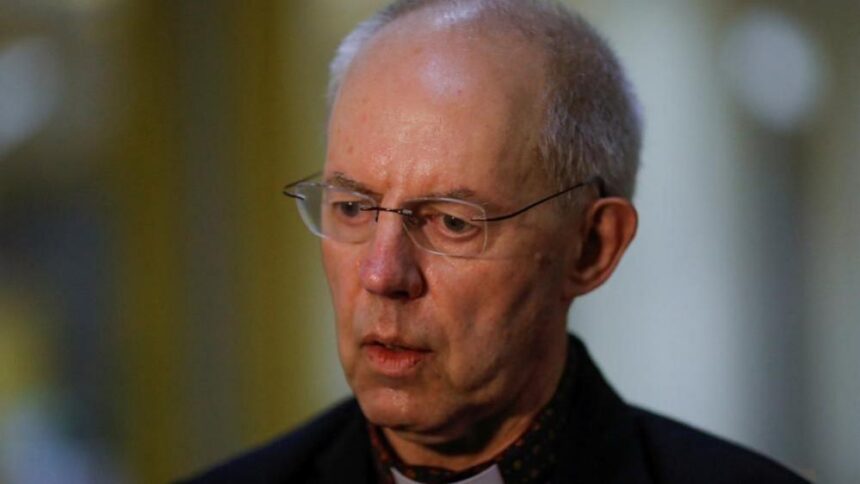
On Monday, Justin Welby, the Archbishop of Canterbury, will formally step down from his role, marking the end of a significant chapter in the Church of England’s leadership. His departure comes on the heels of several controversies, most notably surrounding the Church’s handling of the abuse case involving John Smyth, a sadistic abuser who inflicted brutal sexual, physical, and mental harm on over 120 boys and young men since the 1970s. Justin Welby’s resignation, made official on his 69th birthday, follows significant pressure due to a report that found his actions inadequate in addressing the abuse allegations during his tenure.
Although Justin Welby had initially resisted calls to step down, he announced his resignation on November 12, 2023, stating that he did so “in sorrow with all victims and survivors of abuse.” His decision to step down, however, was met with mixed reactions. While many saw it as a necessary step, some victims expressed disgust at his farewell speech in the House of Lords, where he made jokes. Following backlash, Justin Welby apologized for his insensitive remarks.
As the Archbishop prepares to step down, his final day will be marked by two services at Lambeth Palace: a Eucharist at lunchtime and Evensong in the evening. It is during the evening service that Justin Welby will lay down his crozier, symbolizing the official end of his tenure. His resignation brings an end to a tenure that has been marked by both praise for his leadership and criticism for his handling of major scandals within the Church.
Until a permanent successor is appointed, the duties of the Archbishop will be passed to the Archbishop of York, Stephen Cottrell. Cottrell, who has faced his own scrutiny over his handling of abuse cases, will assume responsibility for leading the Church of England. The process of selecting a permanent Archbishop is expected to take several months, with the 17-member panel tasked with choosing the next leader, including five international representatives from the Anglican Church abroad.
The resignation of Welby comes at a time of increasing internal tensions within the Church. One of the primary issues currently being debated is safeguarding, the very issue that led to Welby’s resignation. Critics have called for a more transparent approach to addressing abuse cases and ensuring that Church leaders are held accountable for their actions. At the same time, questions are being raised about Cottrell’s handling of a 2010 case involving a priest named David Tudor. The Church had been made aware of Tudor’s history of sexual abuse but failed to take sufficient action until 2019 when a police investigation was launched. Cottrell has expressed regret over the situation, though his critics argue that he should have done more to prevent Tudor’s continued involvement with the Church.
In addition to the ongoing safeguarding debates, the Church of England is also grappling with contentious issues such as same-sex marriage and racial justice. The Church recently passed a vote allowing clergy to bless same-sex unions, but this decision has sparked fierce opposition from conservative factions within the Church who view such blessings as contrary to traditional Church teachings. On the other hand, progressive members of the Church are pushing for full marriage equality, arguing that gay couples should have the same rights as heterosexual couples within the Church. These debates, combined with the ongoing leadership transition, are threatening to create further divisions within the Church, both domestically and abroad.
The selection of a new Archbishop comes at a time when the Church is facing an uncertain future. The outgoing Archbishop’s resignation, coupled with the tensions surrounding issues like safeguarding, same-sex marriage, and racial justice, presents a significant challenge for the next leader. As Justin Welby formally relinquishes his role, the Church of England stands at a crossroads, with much at stake in the coming months as the search for a new leader intensifies. The decisions made during this transitional period will shape the future direction of the Church and its place in the modern world.
With a new Archbishop on the horizon, all eyes will be on how the Church navigates these complex issues and whether it can restore the trust of its members and the public.