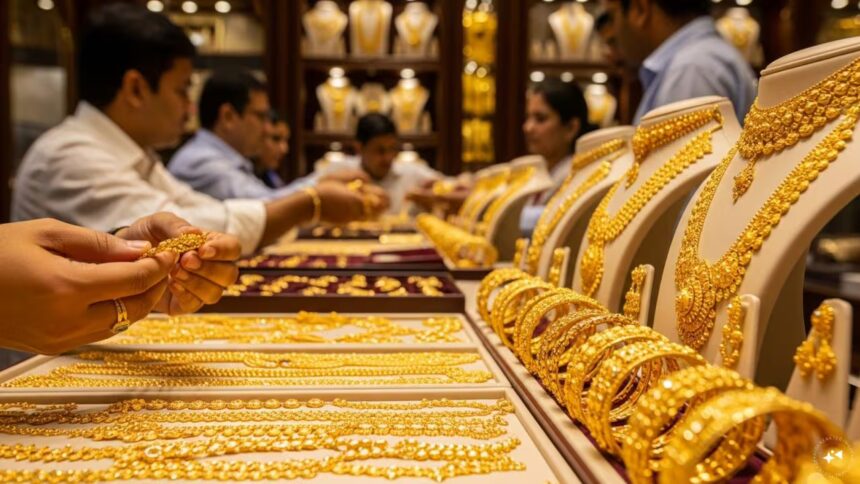
India’s jewellery industry is preparing for a crucial meeting with officials from the Prime Minister’s Office after Narendra Modi urged citizens to avoid non essential gold purchases for at least one year in order to help protect the country’s foreign exchange reserves amid rising global economic uncertainty and volatile commodity markets.
The high level interaction between jewellery associations and PMO officials is expected to focus on the possible economic impact of the Prime Minister’s remarks, concerns regarding domestic demand and the broader strategy being considered by the government to reduce import pressure during the ongoing international crisis.
The development comes at a time when India is facing mounting pressure from rising crude oil prices, global shipping disruptions and geopolitical instability in West Asia. The government has increasingly focused on controlling non essential imports as concerns grow regarding inflation, currency volatility and foreign exchange management.
During a recent public address in Hyderabad, Prime Minister Modi appealed to citizens to postpone unnecessary gold purchases, particularly for discretionary spending and large scale wedding related buying. He argued that excessive gold imports place heavy pressure on India’s foreign exchange reserves because the country remains one of the world’s largest consumers and importers of gold.
According to officials familiar with the discussions, Tuesday’s meeting between industry representatives and PMO authorities is expected to examine the immediate and long term implications of reduced gold demand on the jewellery sector, employment generation and export related business activities.
The Prime Minister’s remarks immediately triggered a sharp reaction across financial markets. Shares of major jewellery companies and retail chains witnessed significant declines during Monday’s trading session as investors worried about the possibility of slowing consumer demand and weaker sales growth in the coming quarters.
Market analysts said the government’s messaging on consumption restraint has created uncertainty within sectors heavily dependent on festive and wedding season demand. Gold remains deeply connected to Indian household savings, cultural traditions and investment behaviour, particularly during marriage ceremonies and religious festivals.
Industry leaders are reportedly concerned that any prolonged decline in gold purchases could directly impact jewellery retailers, artisans, manufacturing units and associated employment networks spread across multiple states.
The jewellery sector employs millions of workers in India, including craftsmen, designers, traders, polishers and small business operators. Cities such as Surat, Mumbai, Jaipur, Kolkata and Chennai remain major centres of gold jewellery production and trade.
Sources indicate that representatives from leading jewellery associations may request clarity from the government regarding whether the Prime Minister’s appeal is advisory in nature or part of a larger economic conservation strategy linked to import management.
Economic experts note that India imports substantial quantities of gold every year, making the commodity one of the country’s largest non essential import categories after crude oil and electronics. Rising gold imports can widen the current account deficit and increase pressure on the rupee during periods of global financial instability.
The government’s concern has intensified because international gold prices have also remained elevated due to geopolitical tensions, investor uncertainty and increased global safe haven demand. Higher prices combined with strong domestic consumption increase the overall import bill significantly.
The Prime Minister’s broader economic appeal included calls for reduced petrol and diesel consumption, increased use of public transport, carpooling, electric mobility adoption and restraint in foreign travel. Analysts believe the government is attempting to create a nationwide awareness campaign focused on economic discipline during a period of global instability.
Industry experts say the gold sector now faces a sensitive balancing challenge. While the government aims to reduce pressure on foreign exchange reserves, jewellery businesses fear that weaker demand may hurt revenue generation during one of the most important consumption periods of the year.
Several jewellery companies have already witnessed volatility in their stock prices following the Prime Minister’s statement. Investors appear concerned that public messaging discouraging gold purchases could influence consumer sentiment, especially among middle class households.
At the same time, some economists argue that even a moderate reduction in gold imports could significantly help India’s external financial position if global oil prices continue rising due to tensions involving Iran, the Strait of Hormuz and international shipping routes.
India’s dependence on imports for both energy and precious metals has made foreign exchange management a key policy concern during the ongoing global crisis. Rising commodity prices have increased the government’s focus on domestic conservation measures and sustainable consumption patterns.
The jewellery industry is expected to present data before PMO officials regarding employment generation, export earnings and economic contribution linked to the sector. Industry bodies may also highlight the cultural importance of gold purchases in Indian society, especially during weddings and religious events.
Analysts believe the outcome of the meeting could shape future policy communication regarding gold imports, luxury consumption and consumer spending behaviour.
Meanwhile, financial markets continue closely monitoring commodity prices, geopolitical developments and signals from the government regarding further economic conservation measures.
The meeting also highlights the growing intersection between macroeconomic policy and consumer industries as India navigates global economic uncertainty and external financial pressures.