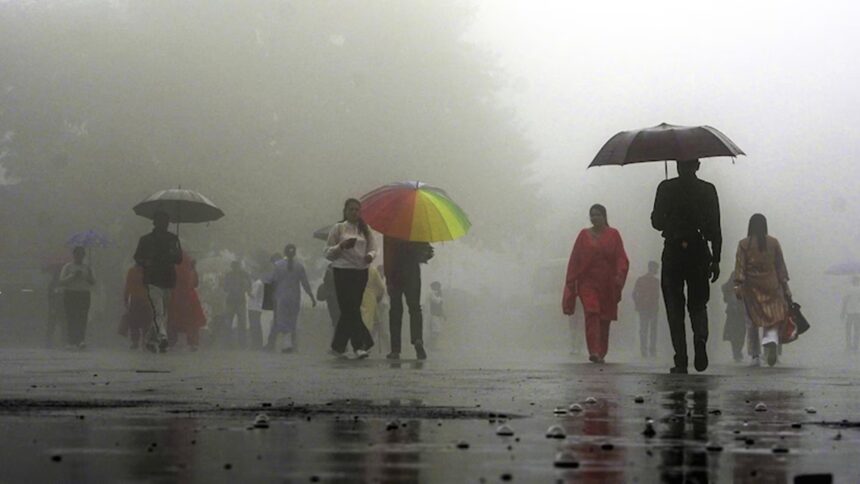
The India Meteorological Department has issued a major weather warning for Uttarakhand as intense rainfall activity, hailstorms, thunderstorms and strong winds are expected to affect several parts of the Himalayan state over the next 36 hours. Authorities have issued an orange alert for multiple hill districts while warning pilgrims, tourists and local residents to remain cautious due to the possibility of dangerous weather conditions, landslides and transport disruptions.
According to the latest advisory released by the Meteorological Department, the districts of Uttarkashi, Chamoli, Rudraprayag, Bageshwar and Pithoragarh are expected to experience heavy rainfall accompanied by thunderstorms and gusty winds during the alert period. A yellow alert has meanwhile been issued for the remaining districts of Uttarakhand, indicating the possibility of moderate rainfall and localised weather disturbances.
The weather department stated that western disturbances interacting with moisture laden winds are currently influencing atmospheric conditions across northern India. This combination has increased instability over Himalayan regions and is expected to trigger widespread rainfall activity in both mountainous and plains areas of Uttarakhand.
Officials warned that weather conditions may become particularly severe during afternoon and evening hours when thunderstorm activity is likely to intensify. Wind speeds in several regions may rise significantly while hailstorms could affect exposed mountain areas and agricultural zones.
The forecast has become a matter of concern because the weather disturbance coincides with the ongoing Char Dham pilgrimage season. Thousands of pilgrims are currently travelling towards the sacred shrines of Kedarnath, Badrinath, Gangotri and Yamunotri, increasing the risks associated with adverse weather conditions in high altitude regions.
The Meteorological Department specifically advised Char Dham pilgrims to check official weather forecasts before starting their journeys. Pilgrims have also been instructed to avoid unnecessary travel during periods of intense rainfall and remain in secure shelters if conditions deteriorate rapidly.
Authorities warned that heavy rainfall in mountain regions can quickly trigger landslides, rockfalls, road blockages and sudden flooding in streams and rivers. Pilgrimage routes in Uttarakhand are particularly vulnerable because many roads pass through steep terrain and landslide prone areas.
Officials from the state disaster management department stated that district administrations have been instructed to remain on high alert throughout the warning period. Emergency response teams, police personnel and rescue units have been deployed across sensitive zones to handle any situation arising from severe weather activity.
Several districts have also activated emergency control rooms to monitor rainfall levels, road conditions and river flow continuously. Local authorities are coordinating with weather officials to ensure timely updates and rapid response in case conditions worsen.
The forecast also includes snowfall in higher altitude areas situated above 4,000 metres. Mountain peaks and glacier regions near pilgrimage routes may therefore experience fresh snowfall, potentially affecting accessibility and visibility.
Experts explained that snowfall at higher elevations during this period is not unusual when strong western disturbances move across the Himalayas. However, combined rain and snowfall activity can significantly complicate transportation and rescue operations in remote regions.
Tourism authorities have also urged visitors planning mountain trips to avoid risky trekking activities during the warning period. Adventure tourism operators have been asked to closely monitor weather bulletins and suspend high altitude expeditions if required.
Local residents in vulnerable areas have been advised to remain cautious around riverbanks, steep slopes and water channels. Flash floods and sudden water level increases remain possible in certain districts due to continuous rainfall and cloudburst like conditions.
The India Meteorological Department further stated that several regions could witness lightning strikes during thunderstorm activity. People have therefore been advised to avoid open fields, isolated trees and exposed hilltops during periods of lightning and heavy rain.
The orange alert category generally indicates the need for preparedness and heightened caution because potentially dangerous weather conditions may impact normal life, transportation and infrastructure.
Meanwhile, unstable weather conditions are not limited to Uttarakhand alone. The Meteorological Department has also forecast significant rainfall activity across Jammu and Kashmir, where authorities have issued separate advisories related to thunderstorms, gusty winds and hailstorms.
Officials in Jammu and Kashmir stated that weather conditions are expected to remain cloudy with intermittent rain showers across multiple districts. Thunderstorms and wind speeds reaching 50 to 60 kilometres per hour may affect both the Kashmir Valley and parts of the Jammu division.
The administration has advised people to suspend boating and shikara operations over lakes and water bodies during afternoon and evening hours because strong winds may create dangerous conditions.
Tourists visiting Dal Lake and nearby water attractions in Srinagar have also been advised to remain alert as changing weather conditions may impact visibility and water safety.
Farmers in Jammu and Kashmir have been specifically instructed to temporarily halt agricultural activities until May 13. Authorities warned that hailstorms, rain and lightning could damage standing crops and endanger workers in open fields.
The weather department indicated that cloudy conditions with occasional rain showers may continue in Jammu and Kashmir until May 17, while scattered rainfall activity is expected again around May 18.
Meteorological experts explained that the current weather instability is part of a broader atmospheric system affecting large parts of northern India. Similar weather patterns have been observed across Himachal Pradesh, Punjab, Haryana and parts of Uttar Pradesh in recent days.
Climate experts also noted that Himalayan states are increasingly witnessing extreme and unpredictable weather events due to changing climatic conditions. Sudden rainfall bursts, flash floods and landslides have become more frequent in mountain regions over recent years.
Uttarakhand in particular has faced multiple weather related disasters in the past decade, including flash floods, glacier bursts and landslides that caused widespread destruction. These incidents have increased public sensitivity toward weather alerts and disaster preparedness measures.
The Char Dham Yatra itself has often been affected by weather disruptions in previous years. Heavy rainfall has historically forced temporary suspension of pilgrimage routes due to landslides and unsafe road conditions.
This year, authorities are trying to ensure that pilgrims receive timely updates regarding weather and travel safety. Police teams and local volunteers have reportedly been stationed at key points along pilgrimage routes to assist visitors and manage traffic movement during adverse conditions.
Transport authorities are also monitoring national highways and mountain roads connecting major pilgrimage centres. Excavators and emergency machinery have been positioned near vulnerable stretches to quickly clear debris in case of landslides.
The Uttarakhand government has appealed to citizens and tourists not to ignore official advisories during the warning period. Officials stressed that avoiding unnecessary movement during heavy rainfall can significantly reduce accident risks in mountain areas.
Health authorities have meanwhile advised travellers to carry necessary medicines, warm clothing and emergency supplies while travelling through high altitude regions where temperatures may drop sharply due to rainfall and snowfall.
The Meteorological Department indicated that the intensity of rainfall may vary between districts depending on local topography and cloud movement. Some regions could witness short periods of extremely heavy rainfall while neighbouring districts may receive moderate showers.
Experts explained that mountain weather often changes rapidly because of terrain related atmospheric interactions. This makes continuous monitoring and real time updates particularly important in Himalayan regions.
Residents living near streams and rivers have also been instructed to remain alert because water levels may rise suddenly following intense rainfall in upper catchment areas.
The current weather activity has additionally affected temperatures across northern India. Cloud cover and rainfall have reduced daytime temperatures in several regions while increasing humidity levels.
Srinagar recorded a maximum temperature of 24.4 degrees Celsius, remaining close to seasonal averages, while minimum temperatures stayed above normal because of persistent moisture and cloud cover.
Jammu city experienced cooler than usual daytime conditions with temperatures remaining below seasonal norms due to rainfall activity and dense clouds.
Meteorologists believe that weather conditions may gradually improve after the next 36 to 48 hours as the western disturbance weakens and moves eastward. However, intermittent rainfall and cloudy conditions are likely to continue in Himalayan regions for several more days.
The India Meteorological Department continues to monitor developments closely and may issue fresh alerts if rainfall intensity increases unexpectedly.
Disaster management authorities have once again highlighted the importance of early warning systems, coordinated administration and public cooperation during severe weather events.
Experts believe awareness campaigns and rapid communication networks have significantly improved disaster preparedness in Himalayan states over recent years. However, increasing tourist movement and climate related weather unpredictability continue to pose major challenges.
The present weather alert serves as another reminder of the fragile ecological and geographical conditions of mountain states like Uttarakhand, where even moderate rainfall can quickly escalate into dangerous situations.
Officials have urged people to rely only on official information sources for weather updates and avoid spreading rumours or unverified messages on social media.
As heavy rain clouds continue to gather across the Himalayas, all eyes now remain on how the weather system develops over the coming hours and whether authorities can successfully ensure the safety of pilgrims, residents and tourists during the alert period.