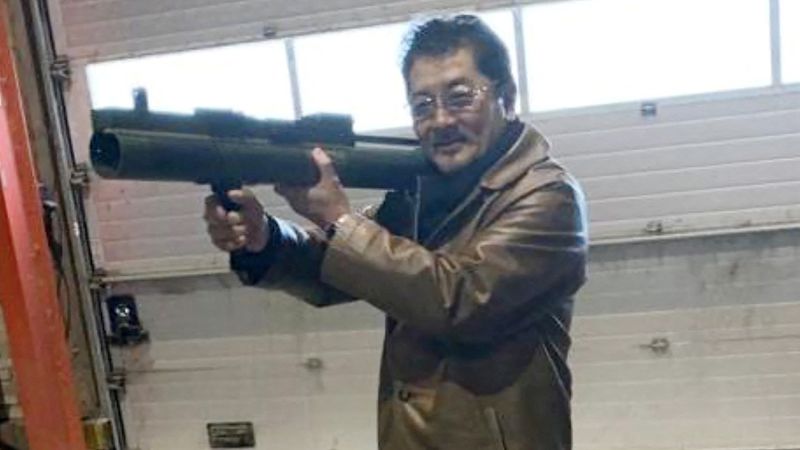
A prominent Japanese crime boss, Takeshi Ebisawa, has pleaded guilty to conspiring to sell nuclear material, along with charges of drug trafficking and weapons offenses, authorities in the United States have confirmed. Ebisawa, a member of the notorious Yakuza crime syndicate, appeared in federal court in Manhattan on Wednesday, where he admitted to multiple charges in connection with illegal activities spanning across multiple nations. His case, which has drawn attention due to the serious nature of the crimes, is expected to result in a sentencing hearing on April 9.
Ebisawa, aged 60, was arrested following a lengthy investigation into his role in a complex international scheme. The US Department of Justice detailed how the crime boss had been actively engaged in an operation to sell large quantities of nuclear material from Myanmar, which he intended to supply to Iran. According to federal prosecutors, the crimes took place in 2020, when Ebisawa contacted an undercover agent from the Drug Enforcement Administration (DEA) with an offer to sell large amounts of thorium and uranium. The investigation revealed that Ebisawa had acquired these materials, which he sought to distribute through various clandestine channels.
The undercover DEA agent, posing as an intermediary, agreed to broker the sale on Ebisawa’s behalf. Prosecutors revealed that the crime boss not only attempted to sell uranium but also proposed supplying plutonium, claiming it was a more powerful and effective material for making nuclear weapons. The operation uncovered that Ebisawa’s criminal enterprise had more extensive plans, which included supplying dangerous nuclear materials and illicit arms to various groups, exacerbating national security concerns in both the United States and abroad.
Further evidence presented by authorities confirmed that a powdery yellow substance, shown by Ebisawa’s co-conspirators to undercover agents, contained detectable amounts of uranium, thorium, and plutonium, confirming the criminal intent and the hazardous nature of the transaction. The Justice Department stated that laboratory analysis of the substance had revealed the presence of these radioactive elements, which could have posed a significant threat if distributed to the wrong parties.
In addition to his nuclear trafficking operation, Ebisawa also conspired to broker the purchase of surface-to-air missiles and other heavy-duty weaponry intended for ethnic armed groups in Myanmar. The weapons were allegedly intended for use by these groups in their ongoing conflicts within the region. To further complicate the matter, Ebisawa agreed to accept large quantities of heroin and methamphetamine as partial payment for these arms, illustrating the deeply embedded nature of his criminal activities.
Ebisawa’s arrest and prosecution were carried out through a collaborative effort between US law enforcement and international partners in Indonesia, Japan, and Thailand. The cooperation among these countries has underscored the international reach of organized crime and its potential to destabilize global security.
Matthew G. Olsen, the Assistant Attorney General for National Security, issued a stern warning to those who engage in trafficking dangerous materials, emphasizing that the Department of Justice is committed to bringing perpetrators to justice. “Today’s plea should serve as a stark reminder to those who imperil our national security by trafficking weapons-grade plutonium and other dangerous materials on behalf of organized criminal syndicates that the Department of Justice will hold you accountable to the fullest extent of the law,” Olsen stated.
Ebisawa’s case is particularly significant given the severity of the charges, which include international drug trafficking and firearms offenses, both of which have the potential to result in a life sentence. This guilty plea follows an earlier indictment in 2022, where Ebisawa was charged with multiple offenses, including drug trafficking on an international scale. The conviction is expected to send a powerful message to criminal syndicates around the world, highlighting the ability of international law enforcement to work together and hold those responsible for such crimes accountable.
As the sentencing hearing approaches, Ebisawa’s case continues to be a focal point in the fight against organized crime and the trafficking of nuclear materials. The conviction represents a critical step in the global effort to curb the spread of dangerous weapons and materials, and it is likely to prompt further scrutiny of criminal networks operating across borders. With the ongoing cooperation between countries, authorities are determined to prevent similar threats from emerging in the future, ensuring that those who engage in such high-level criminal activities face the full force of the law.