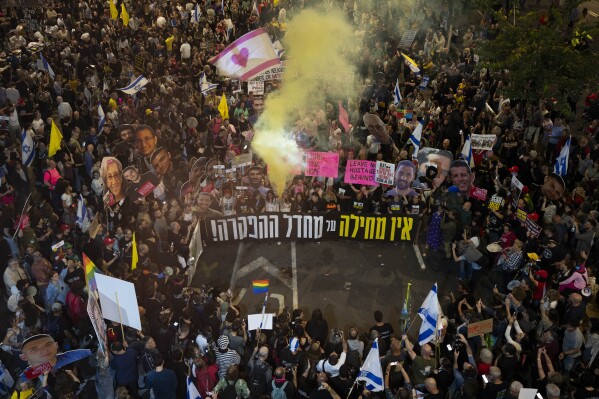
The latest round of Israeli airstrikes on Gaza has reignited tensions, with Hamas accusing Prime Minister Benjamin Netanyahu of deliberately sacrificing Israeli hostages still held by the Palestinian group. The renewed military offensive has raised concerns over the fate of the captives and the future of ceasefire negotiations.
Early this morning, Israeli forces launched a series of large-scale airstrikes targeting Hamas strongholds, ending a period of relative calm that had been in place since a January truce. According to Hamas official Izzat al-Rishq, Benjamin Netanyahu’s decision to resume attacks amounts to a “death sentence” for Israeli hostages, alleging that the Prime Minister is leveraging the conflict for political survival amid domestic crises.
In response, the Israeli government justified the military action by citing Hamas’s refusal to release Israeli captives and its rejection of all previous proposals mediated by U.S. envoy Steve Witkoff. Benjamin Netanyahu’s office issued a statement declaring that Israel would escalate its military operations against Hamas to exert maximum pressure.
The airstrikes have resulted in significant casualties. Gaza’s health ministry, controlled by Hamas, reported at least 330 deaths, including women, children, and the elderly, with many others critically injured. The severity of the attack has prompted renewed scrutiny of Israel’s military tactics and the broader humanitarian impact on Gaza’s civilian population.
Israel has ordered all schools in Gaza to remain closed, indicating that further military operations could be imminent. The White House confirmed that the United States was consulted before the strikes, which took place during the Islamic holy month of Ramzan, a period of fasting and spiritual reflection for Muslims worldwide.
Hamas, which has been holding several Israeli hostages since its October 2023 attack on Israeli towns, accused Benjamin Netanyahu of deliberately sabotaging ceasefire negotiations. The group warned that the lives of the captives remain at risk and held the Israeli government responsible for any consequences stemming from the renewed hostilities.
The collapse of the ceasefire agreement has cast doubt on ongoing mediation efforts led by Qatar, Egypt, and the U.S. While previous negotiations led to the exchange of several hostages for Palestinian prisoners, an estimated 59 Israeli hostages remain in Hamas’s custody. The U.S. has proposed a new swap deal in which five Israeli hostages would be exchanged for a substantial number of Palestinian prisoners currently detained in Israel.
As the situation escalates, diplomatic efforts to restore a ceasefire face significant obstacles. The international community continues to call for de-escalation, but with both sides firmly entrenched in their positions, the conflict appears poised to intensify further in the coming days.