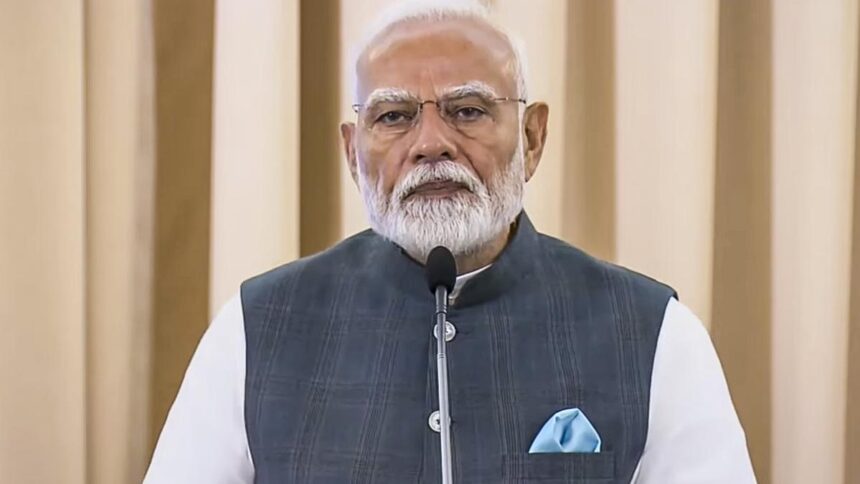
The passage of the Waqf (Amendment) Bill, 2025, has sparked both praise and criticism, with Prime Minister Narendra Modi describing it as a crucial step towards socio-economic justice, transparency, and inclusive growth. The bill, which amends existing Waqf laws, was passed by the Rajya Sabha in the early hours of Friday following its approval by the Lok Sabha after a 12-hour debate. While the government asserts that the bill will bring much-needed reforms to the Waqf system, the opposition has raised concerns over its constitutional validity and intent.
The Waqf (Amendment) Bill, 2025, alongside the Mussalman Wakf (Repeal) Bill, seeks to enhance the governance and accountability of Waqf properties in India. One of its key provisions includes strengthening Waqf tribunals through a structured selection process and fixed tenure, ensuring an efficient dispute resolution mechanism. Additionally, the bill reduces the mandatory contribution of Waqf institutions to Waqf boards from 7% to 5%, while mandating audits by state-appointed auditors for institutions earning over ₹1 lakh. A centralized digital portal will also be introduced to enhance transparency in Waqf property management.
Parliamentary Approval and Opposition Backlash
The bill was passed in the Rajya Sabha with 128 votes in favor and 95 against, following the rejection of all amendments proposed by the opposition. In the Lok Sabha, it garnered support from 288 MPs, while 232 voted against it. Prime Minister Narendra Modi, in a post on X, hailed the passage of the bill as a “watershed moment,” emphasizing that it will particularly benefit marginalized communities that have long lacked proper representation and opportunities.
However, opposition leaders have strongly opposed the legislation, alleging that it undermines constitutional principles. They have questioned the government’s motive behind introducing the bill, arguing that it disproportionately affects minority communities and lacks sufficient safeguards. Despite these objections, the government maintains that the new amendments will bring greater accountability and efficiency to the Waqf system.
Narendra Modi Highlights Need for Reform
In his statement, Prime Minister Narendra Modi underscored the historical lack of transparency and accountability within the Waqf system, stating that it has particularly harmed the interests of Muslim women, poor Muslims, and Pasmanda Muslims. He expressed gratitude to all MPs and committee members who contributed to the discussions, highlighting the importance of extensive debate in shaping policies that promote social justice. Narendra Modi reiterated that the bill aligns with the government’s vision of modernizing legal frameworks to ensure a more inclusive and equitable society.