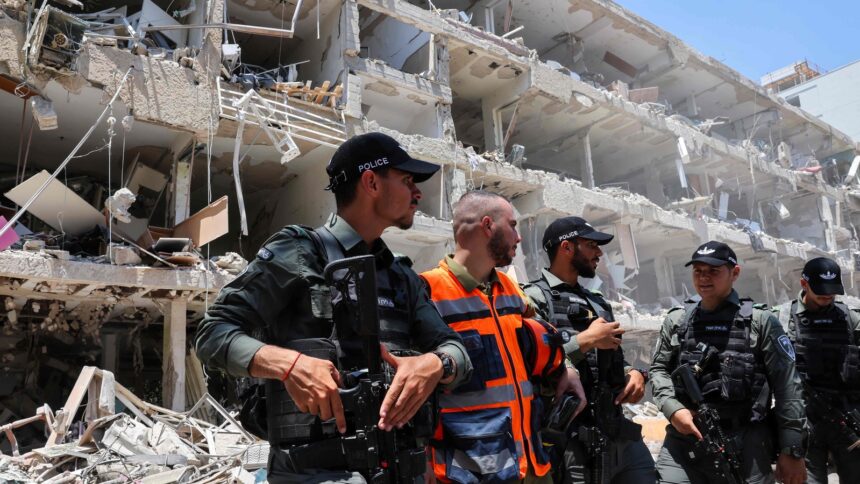
In a dramatic escalation of the ongoing conflict between Israel and Iran, the Israel Defense Forces (IDF) announced that it had struck six military airports across Iran and destroyed 15 fighter jets and helicopters. The air raids were carried out in response to recent Iranian missile attacks on Israeli cities, which followed US strikes on Iran’s nuclear infrastructure. The IDF said the operation was aimed at weakening Iran’s aerial capabilities and ensuring air superiority to protect Israeli territory from further aggression.
Targeted Strikes Across Iran’s Military Infrastructure
The IDF confirmed that the aircraft destroyed during the operation included Iranian F-14s, F-5s, and AH-1 helicopters. According to the military, these aircraft were likely intended for use in offensive operations against Israel or for defending Iranian facilities targeted by Israeli and US forces.
As part of the broader campaign, Israel also damaged runways and underground hangars at the six targeted airports located in western, eastern, and central Iran. The IDF stated that the strikes were coordinated with intelligence from the Military Intelligence Service and focused on areas such as Kermanshah, where launch and storage sites for surface-to-surface missiles were reportedly located.
The IDF emphasized that these facilities were directly involved in recent missile launches towards Israel. “Defense systems are working to intercept the threat,” the military said, underscoring its determination to maintain operational advantage in the skies above Iran.
Fallout from US Airstrikes and Iranian Retaliation
These Israeli airstrikes came just hours after US President Donald Trump declared that American forces had inflicted “monumental damage” on Iran’s nuclear sites with recent precision airstrikes. Calling the outcome a “bullseye,” Trump highlighted that the most significant destruction occurred “far below the ground level,” suggesting underground facilities had been critically damaged.
Iran, meanwhile, has strongly condemned the US and Israel for what it described as coordinated aggression. Supreme Leader Ayatollah Ali Khamenei issued a stern warning, pledging a “harsh and decisive response” to what he labeled a reckless provocation by Israel and its allies.
Iran’s President Masoud Pezeshkian echoed the sentiment, asserting that the United States must face consequences for its actions. He described the airstrikes on Iran’s nuclear facilities as the most serious military assault by the West since the Islamic Revolution in 1979.
The tension in the region has drawn global attention, with several countries, including India, voicing deep concern over the conflict’s rapid escalation. Observers fear that continued hostilities between Iran, Israel, and the US could spark a broader crisis in the already volatile Middle East.