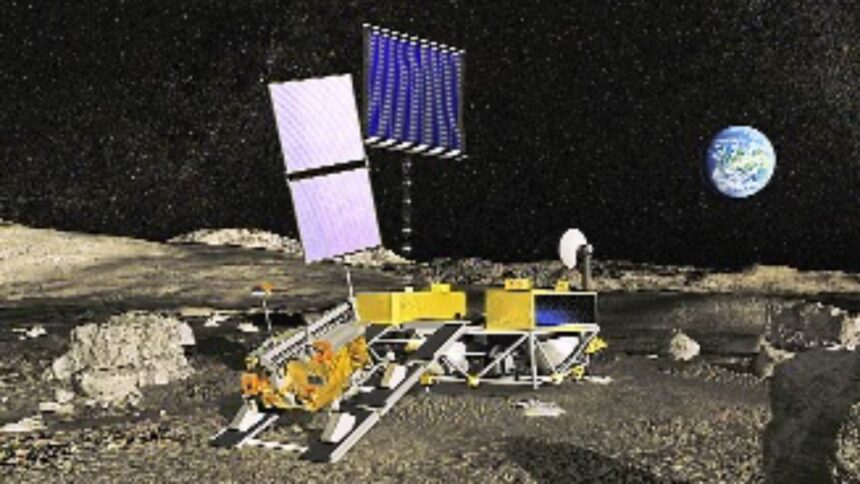
India and Japan are gearing up to move into the preliminary design phase of Chandrayaan-5, a collaborative lunar exploration mission aimed at studying the Moon’s polar regions, particularly for the presence of water. The mission, officially called LUPEX (Lunar Polar Exploration), is being jointly developed by the Indian Space Research Organisation (ISRO) and the Japan Aerospace Exploration Agency (JAXA), and is scheduled for launch around 2027-28.
Progress So Far and Mission Goals
The instrument selections for the mission have already been finalized, and engineering model testing is nearing completion. Both space agencies are now entering the next phase—designing the lander and rover that will conduct in-situ experiments on the lunar surface. The LUPEX mission aims to study water and water-ice both on and beneath the Moon’s surface. The mission will use a 350-kg rover built by JAXA and a lander developed by ISRO. The mission duration is expected to be around 100 days.
The rover will travel across the Moon’s surface, capable of climbing slopes with inclinations of up to 25 degrees. It will drill into the lunar soil (regolith) and analyze samples to detect water content and other elements. The collected data will be used to understand the quality and distribution of water, as well as the Moon’s mineral composition.
International Collaborations and Technical Advancements
Seven scientific instruments will be on board the LUPEX mission, including contributions from the European Space Agency (ESA) and NASA. ESA is developing a mass spectrometer, while NASA is building neutron spectrometers, both still in the design phase. These instruments will help determine the energy and mass of lunar materials, offering insights into the composition and evolution of elements like hydrogen.
A unique aspect of the mission includes a large instrument comprising four sensors—one developed by ISRO and the remaining three by JAXA. The rover’s battery system is being engineered to charge at two key intervals: once before and once after the sample collection.
According to JAXA project manager Asoh Dai, if all goes according to plan, the mission might even explore the Moon’s far side and extend its operational life by a year. A JAXA delegation is currently in Bengaluru to hold discussions with ISRO as both agencies prepare for the next critical steps.