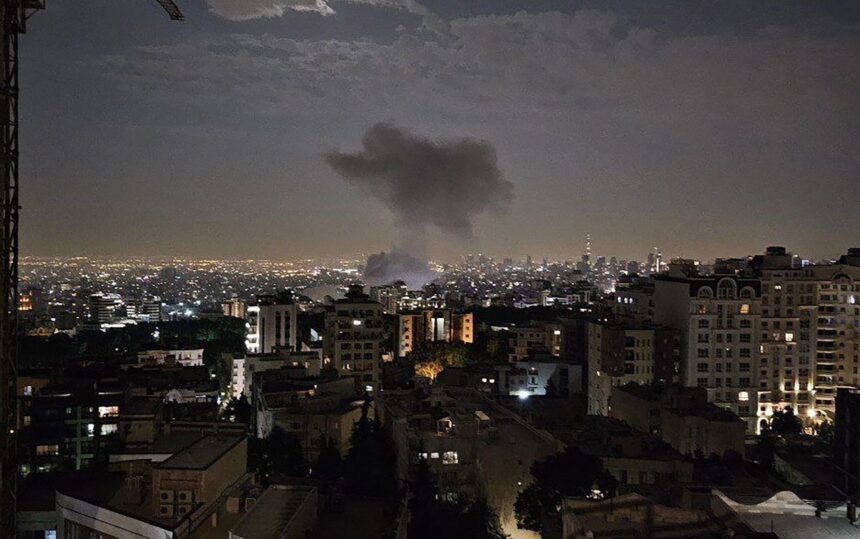
In a midnight operation that read like a thriller, Israel launched a meticulously planned strike on June 13, killing more than 30 senior Iranian security officials and 11 nuclear scientists in a mission dubbed ‘Red Wedding’ and ‘Operation Narnia’. Years in the making, the operation showcased Israel’s use of intelligence, deception, and air power to cripple Iran’s nuclear ambitions and military leadership, while the world remained distracted by diplomatic narratives.
Decades of Preparation, One Night of Impact
Israel identified Iran’s nuclear weapons program as a threat as far back as the mid-1990s, embedding agents across Iran and gathering intelligence for years while developing advanced airstrike strategies to deliver precise attacks. The targets were located over 1,000 miles away, requiring Israeli pilots to perfect synchronized missile strikes, complex in-air refueling, and covert drone deployments, despite resistance within Israel’s cabinet and limitations posed by Syrian airspace influenced by Iran.
The landscape shifted after the October 7 Hamas attacks when Israel dismantled key Iranian proxy networks in Gaza, Lebanon, and Yemen, and saw Syria’s regime replaced by an anti-Iranian government, clearing the path for air operations. With preparations spanning decades, Israel readied a ‘kill list’ of 250 targets by November 2024, including missile sites, senior military figures, and nuclear scientists essential to Iran’s nuclear program.
The ‘Red Wedding’ and ‘Operation Narnia’
Using a strategy reminiscent of the infamous ‘Red Wedding’ in Game of Thrones, Israel deceived Iran by maintaining a public image of disagreement with the US over plans to strike, even as the mission was finalized days before on June 9. On June 13, as US President Donald Trump suggested diplomatic progress was underway with Iran, Israeli jets were already preparing for takeoff while Prime Minister Benjamin Netanyahu appeared to be preparing for his son’s wedding.
Mossad agents secretly smuggled explosive-laden quadcopter drones into Iran using suitcases, trucks, and shipping containers, assembling small teams near key air-defense and missile sites to disable Iranian defenses during the strike. At the critical moment, as Iran’s air force began scrambling, Israeli intelligence observed that top Iranian security officials had gathered in one location, allowing Israel to deliver a concentrated blow that killed more than 30 high-ranking security officials, destabilizing Iran’s air defenses and early conflict response capacity.
Simultaneously, under ‘Operation Narnia’, named after the CS Lewis fantasy series, Israel targeted senior Iranian nuclear scientists in Tehran, bombing their homes and eliminating 11 top figures essential to Iran’s nuclear capabilities, according to Reuters. By launching simultaneous strikes, Israel ensured the scientists could not go into hiding, crippling Iran’s nuclear ambitions and removing key minds behind the programs.
The attacks included strikes on Iran’s major nuclear facilities, including the Isfahan enrichment plant, followed by bombings at Fordow and Natanz, reportedly conducted by the US. While the full extent of damage remains unclear, these strikes represent one of the most significant setbacks for Iran’s nuclear and security infrastructure in recent years.
Through meticulous planning, deception, and a precise understanding of its adversary’s vulnerabilities, Israel’s operation demonstrated a high-stakes blend of intelligence and military coordination aimed at weakening Iran’s nuclear ambitions and defense capabilities in a single night, while leveraging the element of surprise to maximum effect.