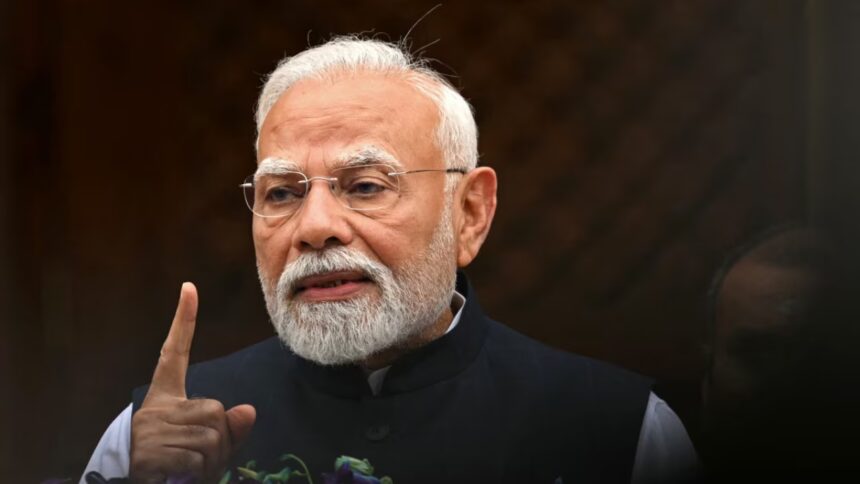
Prime Minister Narendra Modi is set to visit Bihar and West Bengal on Friday, marking a significant step in advancing infrastructure, urban development, health, connectivity, and energy projects across the two states. During the tour, he will inaugurate, lay foundation stones, and flag off numerous initiatives worth over ₹18,000 crore, aimed at enhancing the quality of life for residents, improving transport networks, strengthening energy security, and providing better healthcare facilities. The tour also reflects a broader focus on strategic developmental priorities ahead of upcoming political events in Bihar, while addressing long-term urban and rural needs in West Bengal. With engagements scheduled in Gaya, Bihar, and Kolkata, West Bengal, PM Modi’s agenda underscores the government’s commitment to fostering inclusive growth and regional connectivity, while highlighting major infrastructural achievements across transport, power, urban planning, and public welfare sectors.
Bihar Engagements : Infrastructure, Energy, and Healthcare
The Prime Minister’s first engagement on the Bihar tour will begin at 11 AM in Gaya, where development projects valued at nearly ₹13,000 crore are set to be dedicated to the nation. The projects encompass a range of initiatives aimed at improving transport infrastructure, energy capacity, and healthcare accessibility. One of the key projects includes the inauguration of the 8.15 km-long Aunta–Simaria bridge on NH-31, featuring a 1.86 km six-lane bridge across the Ganga. Built at a cost of over ₹1,870 crore, this bridge is designed to significantly reduce travel distances for heavy vehicles, which currently face detours of over 100 km due to the poor condition of the old Rajendra Setu. The new bridge will not only ease congestion on this critical route but also improve access to Simaria Dham, the birthplace of poet Ramdhari Singh Dinkar, enhancing cultural tourism and regional connectivity simultaneously.
In addition to the Aunta–Simaria bridge, PM Modi will dedicate the four-lane Bakhtiyarpur–Mokama section of NH-31, a project valued at approximately ₹1,900 crore, aimed at easing traffic flows and improving freight transport efficiency. Other highway projects, such as the Bikramganj–Dawath–Nawanagar–Dumraon section of NH-120, have been completed to enhance rural road connectivity and promote economic activity in smaller towns. These projects collectively strengthen Bihar’s transport network, reduce travel times, and facilitate smoother movement of goods and passengers. The expansion of road infrastructure also aligns with broader objectives of regional economic development, connecting remote areas with industrial hubs and enabling easier access for trade and commerce.
Energy security is another central focus of PM Modi’s Bihar visit. The Buxar Thermal Power Plant, with a capacity of 660×1 MW, has been constructed at a cost of ₹6,880 crore and is expected to provide a substantial boost to the state’s energy infrastructure. This addition will improve the reliability of power supply across Bihar, supporting residential, industrial, and agricultural needs while promoting sustainable energy management in the region. The power plant is poised to strengthen the state’s economic competitiveness, enabling industries to operate efficiently and supporting long-term developmental goals.
Healthcare initiatives form an important part of the Bihar agenda. The Homi Bhabha Cancer Hospital and Research Centre in Muzaffarpur, equipped with modern oncology OPD, ICU, HDU, operation theatres, and a blood bank, will be inaugurated. This facility aims to provide affordable cancer treatment to patients not only from Bihar but also from neighboring states, addressing critical healthcare needs and improving accessibility for complex medical treatments. By establishing such advanced healthcare infrastructure, the government seeks to reduce dependency on distant metropolitan centers, ensuring that rural and semi-urban populations have access to state-of-the-art medical care close to home.
Urban development is also highlighted through sewerage and water supply projects under Namami Gange and AMRUT 2.0. PM Modi will inaugurate sewerage projects worth over ₹520 crore in Munger and lay the foundation stones for similar initiatives in Daudnagar, Jehanabad, Barahiya, and Jamui. Water supply projects in Aurangabad, Bodhgaya, and Jehanabad will enhance urban living standards, improve sanitation, and strengthen public health infrastructure. These projects are part of a long-term vision to integrate urban planning with environmental sustainability, ensuring that cities are equipped to meet future growth demands.
Railway infrastructure will also see significant upgrades, with the Prime Minister flagging off two new trains to address rising commuter demands. The Amrit Bharat Express between Gaya and Delhi will feature upgraded passenger facilities, while the Buddhist Circuit Train connecting Vaishali and Koderma is expected to boost tourism across key Buddhist heritage sites. These initiatives reflect a coordinated effort to enhance regional mobility, promote cultural tourism, and improve public transport accessibility for both urban and rural populations.
PM Modi will also participate in a Grih Pravesh ceremony for 12,000 rural and 4,260 urban beneficiaries under the Pradhan Mantri Awas Yojana, symbolically handing over keys to some families. This event underscores the government’s commitment to affordable housing and social welfare, aiming to provide secure and dignified living conditions for citizens across Bihar.
West Bengal Agenda: Transforming Kolkata Metro, Connectivity, and Urban Infrastructure
In West Bengal, PM Modi’s agenda focuses on improving urban connectivity and infrastructure in Kolkata. He will dedicate three new metro sections covering 13.61 km to the public, enhancing commuter convenience and reducing travel times. Key routes include the Noapara–Jai Hind Bimanbandar, Sealdah–Esplanade, and Beleghata–Hemanta Mukhopadhyay lines. These developments are expected to significantly ease congestion, shorten commuting times, and improve access to the airport and IT hubs. For instance, the Sealdah–Esplanade section will reduce travel time from approximately 40 minutes to just 11 minutes, while the Noapara–Jai Hind Bimanbandar link enhances connectivity for airport-bound passengers, and the Beleghata route strengthens access to Kolkata’s rapidly expanding IT corridor.
PM Modi will also inaugurate a newly built subway at Howrah Metro Station, a project designed to streamline passenger movement and enhance station capacity. Furthermore, he will lay the foundation stone for the six-lane Kona Expressway, a 7.2 km elevated road project worth over ₹1,200 crore, aimed at improving transport links between Howrah, Kolkata, and surrounding areas. This project is expected to reduce travel time, boost trade and commerce, and support tourism development across the region. The expressway will complement existing road and metro infrastructure, facilitating smoother logistics, reducing urban congestion, and enabling efficient movement of goods and people.
These initiatives collectively aim to strengthen Kolkata’s public transport network, improve regional connectivity, and support sustainable urban growth. By integrating metro expansion with major road projects, the government seeks to create a comprehensive infrastructure ecosystem that addresses current demands while anticipating future urban growth. The West Bengal projects also highlight the emphasis on enhancing both commuter experience and economic efficiency, ensuring that infrastructure investments yield long-term benefits for the city and surrounding districts.
PM Modi’s visit to Kolkata is further expected to include public interactions and ceremonial engagements to mark the launch of these transformative projects. The initiatives span sectors critical to urban development, including transport, commerce, trade facilitation, and tourism, reflecting a multi-faceted approach to regional growth. By inaugurating metro sections, elevated roadways, and improved transport corridors, the government signals its commitment to modernizing urban infrastructure while simultaneously enhancing accessibility, efficiency, and connectivity for citizens and businesses alike.
The coordinated approach of combining transport, energy, health, and urban development projects demonstrates the government’s strategy of integrated regional planning. In both Bihar and West Bengal, PM Modi’s initiatives reflect a holistic vision of infrastructure development, economic growth, and social welfare. From enhancing mobility and reducing congestion to providing modern healthcare and affordable housing, the projects inaugurated and launched during this visit aim to create long-term, sustainable improvements in the quality of life for residents.
By addressing critical infrastructure gaps, modernizing urban spaces, and expanding public amenities, the Bihar and West Bengal tour represents a significant milestone in regional development. The Prime Minister’s engagement highlights the government’s focus on inclusive growth, urban modernization, and strategic investments that benefit both urban and rural populations. This comprehensive agenda underscores the transformative potential of targeted development projects in enhancing connectivity, facilitating economic activity, and improving social welfare outcomes across two of India’s key states.
The integration of road, rail, metro, housing, water, and healthcare initiatives also reflects a forward-looking governance model, combining efficiency with public service. PM Modi’s Bihar and West Bengal visit demonstrates a commitment to delivering tangible results, bridging infrastructural gaps, and creating opportunities for long-term regional prosperity, with a clear focus on improving the standard of living, supporting economic growth, and strengthening public services.