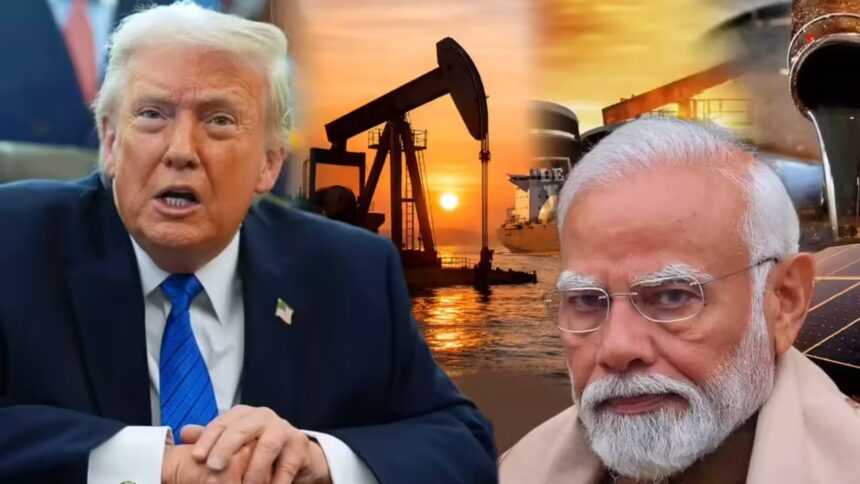
In a dramatic shift that underscores evolving global energy geopolitics, U.S. President Donald Trump recently announced that India will begin buying crude oil from Venezuela, purportedly to replace at least part of its reliance on Russian supplies. This claim comes amid a period of diplomatic negotiation, shifting tariff policies and strategic recalibration in New Delhi’s energy procurement plans. While India had significantly reduced purchases of Venezuelan oil following U.S. sanctions imposed in 2025, Donald Trump’s comments signal a possible reopening of trade channels, highlighting a broader effort by Washington to influence global oil flows and reduce Russian energy revenues. At the same time, New Delhi’s historical energy ties with Iran remain disrupted by longstanding U.S. sanctions, creating a complex backdrop for its evolving import mix. Trump’s announcement also touched on broader international relations, suggesting that China could also strike a deal to buy Venezuelan crude — a remark that points to the increasingly competitive dynamics shaping global crude markets. These developments come during a time when India is working to balance its energy security needs with geopolitical pressures from multiple global powers.
India’s Energy Realignment: From Sanctions to New Opportunities
India’s crude oil import strategy has undergone several notable transformations over the past decade, influenced by both global market forces and international diplomatic pressures. Historically, Iran was one of India’s key oil suppliers until U.S. sanctions were reimposed in 2019, prompting New Delhi to significantly reduce imports from Tehran. At that time, Indian refiners turned to alternative sources to fill the gap, initially increasing imports from the United States before gradually becoming a leading buyer of discounted Russian crude oil following the outbreak of the Ukraine conflict in 2022. Russia’s invasion triggered a wide array of Western sanctions that reshaped global energy flows, making Russian barrels economically attractive to India’s large refining sector even as Western capitals pressed New Delhi to diversify.
However, the changing contours of global energy geopolitics continued to exert pressure on India’s import strategy. In March 2025, the Donald Trump administration imposed a 25 % tariff on countries importing Venezuelan oil, a punitive measure aimed at discouraging continued trade with Caracas. This move halted India’s purchases from Venezuela, which had previously been an important supplier — in 2024, India imported millions of barrels of Venezuelan crude, making up a notable share of its total crude basket. The tariff and sanctions regime made Venezuelan imports economically challenging, especially as New Delhi simultaneously increased purchases of Russian crude at discounted rates.
Despite these hurdles, Donald Trump’s recent statements suggest a potential reversal of this trend. According to the U.S. President, India “has already made that deal” to buy Venezuelan oil, a comment made aboard Air Force One during travel and reported widely by global media. Donald Trump also asserted that China is “welcome” to negotiate a similar arrangement, signaling an openness to broader engagement with Venezuelan crude. While there has been no official confirmation from the Indian government regarding a finalized agreement, these remarks coincide with signals from Washington that the United States could soon permit New Delhi to resume Venezuelan oil purchases. This development would not only diversify India’s crude sources but could also reduce its reliance on Russian barrels that have dominated its import profile in recent years.
The strategic logic behind encouraging India to import Venezuelan oil stems in part from the desire to diminish revenues flowing into Russia amid its ongoing conflict with Ukraine, a core objective of U.S. foreign policy. By offering an alternative supply from Venezuela, Washington aims to redirect energy trade toward sources less entangled with Russian geopolitical interests. At the same time, U.S. policymakers have hinted that reduced purchases of Russian crude by India could lead to relief from punitive tariffs imposed on Indian goods over the past year. In August of 2025, the U.S. administration doubled duties on certain Indian imports to 50 % as a form of economic pressure linked to India’s continued purchases of discounted Russian oil. More recently, senior U.S. officials have suggested that the additional tariff could be rolled back if India sharply reduces its acquisition of Russian crude.
In this context, Venezuela’s return as a potential supplier represents a strategic pivot with implications for both energy markets and diplomatic alignments. Indian refiners, particularly major players with the capacity to process heavier and sour crude grades, could find Venezuelan barrels commercially attractive if sanctions and tariff barriers are eased. The reopening of Venezuelan oil trade may offer a new avenue for India to diversify its crude portfolio and balance urgent energy needs with growing geopolitical pressures from the United States, Europe and other global actors.
Geopolitical and Economic Implications of a New Oil Trade Dynamic
The prospect of India resuming imports of Venezuelan crude carries significant geopolitical and economic implications. At the heart of this potential shift is the interplay between global power politics and the practicalities of securing reliable energy supplies for one of the world’s fastest-growing economies. India’s energy demand continues to rise as its industrial and transportation sectors expand, making stable access to crude oil a strategic imperative. Yet this necessity is constantly weighed against diplomatic pressures and international sanctions regimes that influence which suppliers remain viable.
Donald Trump’s announcement that India will buy Venezuelan oil instead of Iranian crude underscores a broader diplomatic message: that energy policy cannot be divorced from geopolitical alignment. Iran’s exclusion from India’s supply mix has been longstanding due to U.S. sanctions related to Tehran’s nuclear program, leading New Delhi to pivot first to U.S. and then to Russian crude. However, this pivot toward Russia invited its own set of geopolitical strains, as Washington sought to reduce Moscow’s revenue streams amid the Ukraine conflict. Now, with the United States easing some restrictions on Venezuela’s oil industry to facilitate crude sales by U.S. companies, the geopolitical calculus appears to be shifting once again.
Should India proceed with Venezuelan imports, the move would reflect a nuanced balancing act. On the one hand, resuming trade with Caracas offers New Delhi an opportunity to diversify away from Russia without reopening ties to Iran — a supplier whose relationship with India has long been complicated by external diplomatic pressures. On the other hand, re-entering the Venezuelan market under terms acceptable to both India and the United States could help ease tariff tensions that have impacted trade across other sectors. The possibility that punitive tariffs on Indian goods could be rolled back if energy ties with Russia diminish adds a layer of economic incentive to this geopolitical equation.
Moreover, Donald Trump’s suggestion that China could also make a deal to buy Venezuelan oil opens the door to a broader realignment in global energy markets. Beijing’s potential participation in Venezuelan crude trade would signal a multi-polar energy landscape where major Asian economies engage with diverse suppliers to secure energy needs. Such a development would likely influence pricing, supply dynamics and strategic partnerships on a global scale. It would also reflect a shift in Venezuela’s own role in international markets. Long isolated due to sanctions and political turmoil, Venezuela’s vast oil reserves — some of the largest in the world — could re-emerge as a significant source of crude if international barriers are lowered and new diplomatic frameworks are established.
For India’s refining sector, which includes major players with structural capacity to process a range of crude grades, the return of Venezuelan oil could provide a valuable input stream. Heavy and sour crudes, historically produced by Venezuela, require specific refinery configurations that certain Indian facilities possess. If tariffs are eased and sanctions are lifted or relaxed, Indian refiners could capitalize on this capacity to secure diverse crude inputs while managing cost and supply risk. Furthermore, diversifying away from heavy reliance on any single source — whether Russia or the Middle East — aligns with broader energy security objectives. A more varied import mix could enhance India’s resilience against future geopolitical shocks or disruptions.
At the same time, the economic implications extend beyond crude procurement. Reducing reliance on Russian oil may strengthen India’s trade relations with Western powers and multinational partners who view energy ties with Moscow as counterproductive to broader geopolitical goals. The potential easing of tariffs on Indian goods, conditional on reduced oil purchases from Russia, exemplifies how energy and trade policy intersect in complex and consequential ways. Adjustments in this domain could have ripple effects across sectors, influencing export competitiveness, bilateral economic cooperation, and long-term diplomatic engagement.
Yet challenges remain. Despite Donald Trump’s assertions, there has been no formal confirmation from Indian authorities regarding the finalization of a Venezuela oil purchase deal. While Washington’s policies may signal openness to renewed trade, New Delhi must navigate domestic priorities, commercial considerations and its broader foreign policy framework in deciding how and when to engage with Venezuelan crude suppliers. Additionally, the dynamics of global energy markets — including price volatility, production capacity and logistical considerations — will play a crucial role in shaping the practical feasibility of such a shift.
Another layer to consider is the role of sanctions and how they might evolve. The U.S. administration has already taken steps to ease certain restrictions on Venezuela’s oil industry to facilitate crude sales by American companies, a move that could indirectly benefit Indian refiners looking to diversify. However, balancing this with other foreign policy imperatives — including commitments to democratic norms, human rights, and alliances with Western partners — adds complexity to New Delhi’s strategic calculus. India’s emerging position as an energy importer that must reconcile global pressures with national interests illustrates the challenges faced by emerging economies navigating an increasingly fragmented geopolitical environment.
In this evolving scenario, India’s energy policy stands at a crossroads. The potential inclusion of Venezuelan oil in its import basket — as envisioned by Donald Trump — reflects larger shifts in global alliances, economic cooperation and strategic bargaining. It points to a future where energy diplomacy intertwines with international relations, economic interests and geopolitical strategy in unprecedented ways. Such developments underscore the importance of adaptive policy frameworks that can respond to shifting global realities while safeguarding national energy security and broader economic stability.
Through these unfolding developments, India’s role in global energy geopolitics continues to evolve, shaped by external pressures and internal imperatives alike. Whether the claimed deal with Venezuela materializes into tangible imports will depend on a confluence of diplomatic negotiation, trade policy shifts and commercial viability. What remains clear is that the international energy landscape is in flux, and decisions made today — by Washington, New Delhi, and other global capitals — will have long-lasting implications for how energy supplies are sourced, traded and geopolitically leveraged in the years ahead.