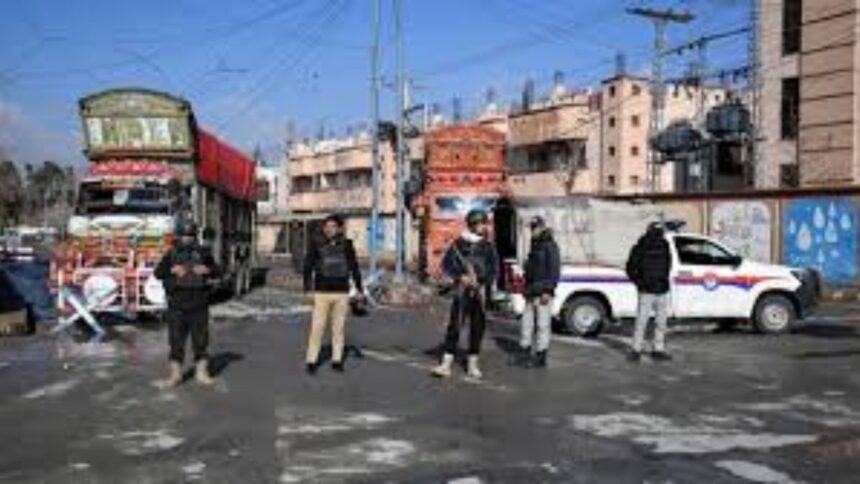
In a dramatic escalation of violence in Pakistan’s southwestern province of Balochistan, Pakistani security forces have killed 145 separatist militants in a 40-hour-long counterinsurgency operation. The operation was launched following a series of coordinated attacks by the Baloch Liberation Army, which left around 50 people dead, including law enforcement personnel and civilians. These events mark one of the most intense bursts of militant violence in recent years, highlighting the persistent instability in a region long plagued by insurgency, economic neglect, and ethnic tensions. The clashes underscore the complex interplay of local grievances, militant ambitions, and geopolitical narratives that continue to shape Balochistan’s troubled security landscape.
The violence erupted after the Baloch Liberation Army (BLA), a separatist organization seeking greater autonomy for the Baloch people and enhanced control over the province’s vast natural resources, carried out simultaneous gun and bomb attacks across multiple districts. The Pakistani government immediately responded with a massive security operation spanning Quetta, Gwadar, Mastung, and Noshki, deploying military personnel and law enforcement agencies to neutralize the threat. Officials described the operation as meticulously planned, citing prior intelligence that allowed authorities to preempt certain elements of the militant attacks. The ensuing clashes, however, were highly lethal, with both sides suffering significant casualties, but Pakistani authorities emphasizing that the operation successfully eliminated a substantial number of active militants.
The attacks have further complicated the security situation in Balochistan, which has historically been Pakistan’s largest but poorest province. Chronic underdevelopment, ethnic marginalization, and disputes over resource allocation have fueled decades-long insurgency movements, providing fertile ground for militant groups such as the BLA. While the Pakistani military framed the operation as a defensive measure against terrorist threats, the BLA has portrayed its actions as part of a broader struggle for political recognition and autonomy. International reactions to the violence have ranged from condemnation of the attacks to calls for Pakistan to address the longstanding grievances of the Baloch population, underscoring the delicate balance between counterinsurgency efforts and regional stability.
Coordinated Attacks and Pakistan’s Security Response
The BLA’s operation, dubbed “Herof” or “Black Storm,” represented one of the most coordinated and lethal militant campaigns in recent memory. According to Pakistani authorities, the attacks were carried out nearly simultaneously across Quetta, Gwadar, Mastung, and Noshki, targeting both security personnel and civilian populations. The militants reportedly disguised themselves as ordinary citizens to gain access to sensitive areas, employing civilians as human shields while indiscriminately opening fire. These tactics increased both the psychological and physical impact of the assaults, causing panic and disruption across the province.
In the provincial capital, Quetta, the violence claimed the lives of 17 law enforcement personnel and 31 civilians. Additional clashes resulted in 92 militant fatalities on Saturday and 41 on Friday, according to military statements. Pakistani officials emphasized that the 40-hour-long operation represented a carefully orchestrated response to prior intelligence reports that indicated an impending large-scale militant offensive. Balochistan’s Chief Minister described the scale of casualties among the militants as unprecedented, asserting that no similar operation had previously resulted in such a high number of fatalities within such a short timeframe.
The tactical response involved coordinated deployments of military and police forces to areas identified as high-risk zones. Pakistani authorities claimed that the swift and comprehensive nature of the operation prevented further loss of life and minimized damage to critical infrastructure. While the operation was underway, local communities were advised to remain indoors, and several public facilities were temporarily closed to ensure civilian safety. Officials framed the campaign as a necessary measure to uphold the rule of law, maintain order, and prevent the spread of insurgent influence within both urban and rural areas of Balochistan.
Analysts note that the intensity and scale of the BLA’s operation highlight the enduring strength and organizational capabilities of militant networks within the province. Despite years of counterinsurgency measures, the BLA has demonstrated an ability to recruit, mobilize, and coordinate attacks across multiple districts. The use of improvised explosive devices, ambushes, and coordinated shooting sprees reflects a sophisticated understanding of tactical operations, as well as a willingness to engage in indiscriminate violence to achieve strategic objectives. The Pakistani military’s response, while effective in neutralizing a large number of militants, also underscores the challenges of containing insurgency in a province characterized by rugged terrain, dispersed populations, and long-standing grievances.
The BLA has historically framed its campaign as a struggle for political autonomy and greater control over the province’s vast mineral and energy resources. Militants argue that the central government has systematically marginalized Baloch communities, depriving them of economic opportunities and adequate political representation. By targeting both security forces and symbols of state authority, the group seeks to challenge the legitimacy of the Pakistani government while drawing attention to the economic and political inequities experienced by local populations. While the government emphasizes the criminal nature of these attacks, separatist narratives continue to resonate with certain segments of the population, complicating efforts to achieve lasting stability in the region.
Regional Implications and International Reactions
The latest wave of violence in Balochistan has sparked international attention and elicited a range of responses from regional and global actors. Pakistan’s military officials claimed that the attacks were orchestrated by “Indian-sponsored militants,” a recurring allegation that New Delhi has categorically denied. Indian authorities emphasized that Islamabad should focus on addressing the legitimate and longstanding demands of its own citizens in the region rather than attributing internal unrest to external interference. This exchange highlights the broader geopolitical tensions that frequently intersect with local security dynamics in Balochistan, where internal grievances are often amplified by cross-border narratives.
The United States condemned the attacks, describing them as acts of terrorist violence and expressing solidarity with Pakistan. U.S. officials emphasized the importance of counterterrorism cooperation and maintaining stability in South Asia while also noting the designation of the Balochistan Liberation Army as a foreign terrorist organization. This international attention underscores the dual nature of the conflict: while it is primarily a domestic insurgency, it also has ramifications for regional security, counterterrorism policies, and diplomatic relations.
The conflict in Balochistan is deeply intertwined with economic and social conditions within the province. Chronic underdevelopment, poverty, and limited access to education and healthcare have fueled resentment among local populations. The BLA and other insurgent groups exploit these conditions to recruit members and sustain operations. Additionally, disputes over revenue-sharing from natural resources such as gas, coal, and minerals have been central to the Baloch nationalist agenda. Militants argue that despite the province’s significant contributions to Pakistan’s economy, local communities have historically received minimal benefits, further entrenching feelings of marginalization and fueling ongoing conflict.
Pakistan’s security apparatus faces the dual challenge of combating well-organized militant groups while simultaneously addressing the root causes of insurgency. Military operations can temporarily suppress violence but are unlikely to resolve the underlying grievances that drive separatist movements. Experts argue that a combination of security measures, political dialogue, and targeted socio-economic development is essential to achieve sustainable peace in the region. Without such an integrated approach, violent outbreaks are likely to continue, further destabilizing Balochistan and posing risks for Pakistan’s national security and regional stability.
The recent operation and its unprecedented militant casualties have broader implications for Pakistan’s counterinsurgency strategy. The scale and speed of the operation demonstrate the capabilities of the Pakistani military to respond effectively to coordinated attacks, but also reveal the persistent operational sophistication of militant groups. Analysts suggest that while the immediate threat has been mitigated, the root causes of insurgency remain unaddressed, including political disenfranchisement, economic inequality, and social marginalization. Furthermore, the portrayal of attacks as externally sponsored complicates potential diplomatic efforts to engage neighboring countries in collaborative security initiatives, even as cross-border tensions continue to influence local insurgency dynamics.
Looking forward, the sustainability of security and stability in Balochistan will depend on Pakistan’s ability to balance robust counterterrorism measures with meaningful engagement with local communities. Reducing the appeal of insurgency will require addressing long-standing grievances, investing in infrastructure, expanding educational opportunities, and ensuring equitable distribution of resources. The government’s approach to insurgency and security will also influence Pakistan’s international standing, regional partnerships, and its ability to attract foreign investment to the province. As the situation evolves, both domestic and international stakeholders will be closely monitoring how Pakistan navigates the delicate balance between enforcement, governance, and socio-economic development in Balochistan.
In essence, the coordinated BLA attacks and subsequent counterinsurgency operation highlight the ongoing volatility in Balochistan, a province long marked by insurgency, underdevelopment, and ethnic tensions. Pakistan’s response, while effective in neutralizing a significant number of militants, underscores the enduring complexity of security and governance in the region. The interplay of domestic grievances, militant strategies, and regional geopolitics ensures that Balochistan will remain a focal point for security analysts, policymakers, and international observers in the foreseeable future.