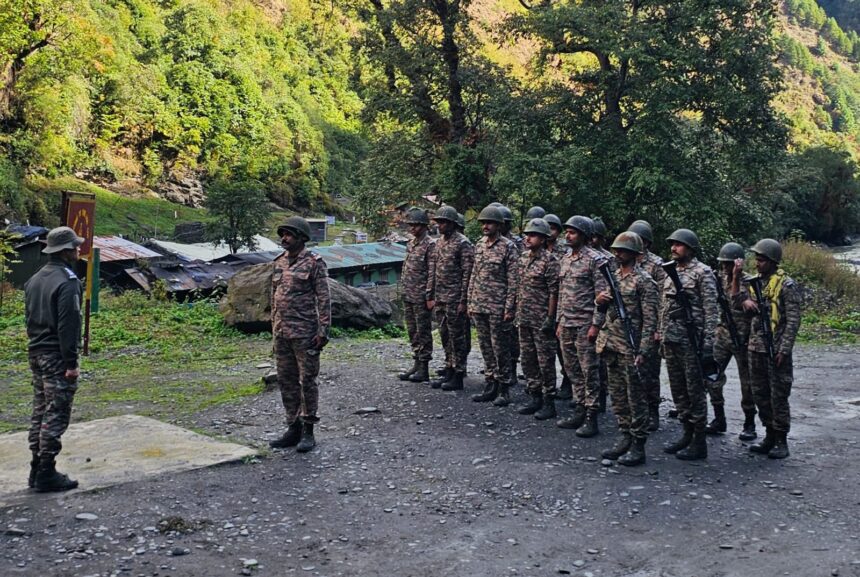
In a remarkable display of operational preparedness and medical innovation, the Indian Army conducted a high-intensity medical response drill deep within the dense forests of Arunachal Pradesh. The exercise, designed to simulate real-time emergency conditions, tested the Army’s ability to establish a self-sustained and fully functional medical facility in one of India’s most difficult terrains. The drill underscored the Army’s capacity to deliver life-saving healthcare in remote and inaccessible areas while operating independently under challenging climatic and logistical constraints.
Testing medical response in extreme terrains
The recently conducted field exercise aimed to evaluate the Army’s medical readiness in extreme and unpredictable environments. Set against the backdrop of Arunachal’s rugged topography, the drill replicated an emergency scenario where quick deployment of medical infrastructure was critical to saving lives. Army medical teams were tasked with navigating treacherous forest routes, steep gradients, and unpredictable weather to set up an autonomous medical post capable of performing surgeries and providing critical care.
The operation required meticulous coordination between various Army units, from logistics to medical specialists. Teams carried medical supplies, field surgical kits, and life-support equipment across challenging terrain without external assistance. Once established, the temporary medical facility functioned as a miniature hospital, equipped to perform life-saving interventions, stabilise casualties, and sustain operations for an extended period in isolation. This demonstration reflected the Indian Army’s growing focus on self-sufficiency, mobility, and resilience in field conditions where traditional support systems are unavailable.
The exercise also provided a real-time assessment of how effectively medical teams could respond to simultaneous emergencies, handle multiple injuries, and ensure seamless coordination between doctors, paramedics, and field units. With communication infrastructure limited in such remote zones, the teams relied heavily on radio coordination, hand signals, and field intelligence—factors that tested their adaptability and precision under pressure.
The drill served as both a training and testing ground for enhancing operational efficiency in disaster response scenarios. From managing battlefield injuries to responding to natural calamities like landslides or floods, the medical teams demonstrated their readiness to extend rapid humanitarian assistance whenever and wherever required.
What made this exercise particularly noteworthy was the Army’s ability to maintain uninterrupted operations despite facing physical fatigue, limited visibility, and unpredictable weather conditions typical of the northeastern terrain. The adaptability displayed during the drill is emblematic of the Army’s evolving approach to field medicine—one that integrates innovation, mobility, and resilience to meet modern challenges head-on.
Focus on trauma management and field medicine excellence
A major highlight of the exercise was the emphasis on trauma management and emergency medical care under field constraints. The participating personnel underwent rigorous training that covered patient triage, emergency resuscitation, and battlefield casualty evacuation. These procedures were executed under simulated high-stress conditions, ensuring that the teams could respond with accuracy and composure in actual crises.
The scenario-based training aimed to replicate real-time combat and disaster conditions, providing valuable experience in handling complex injuries within limited timeframes and resources. Each step—from assessing injury severity to conducting rapid surgical interventions—was carried out with the precision required in battlefield medicine. The teams also worked on refining their standard operating procedures to improve the speed and efficiency of medical evacuation and treatment.
Equipped with cutting-edge portable medical equipment, the teams demonstrated how advanced healthcare can be delivered in resource-scarce conditions. The mobile facility included field anaesthesia units, sterilisation tools, patient monitoring devices, and modular emergency stations. Despite the minimal infrastructure, the teams successfully showcased the ability to deliver advanced medical care equivalent to that of a fully functional field hospital.
The training also highlighted the growing importance of cross-functional teamwork. In a crisis situation, time is the most critical factor, and the exercise focused on perfecting coordination between medical staff, evacuation teams, and logistical support units. Each participant was trained to multitask—providing medical assistance, coordinating evacuations, maintaining communication with command units, and ensuring continuous supply chain management.
The exercise reinforced the significance of psychological resilience and situational awareness among field medics. Working in dense jungles, often with limited visibility and high humidity, tested both physical and mental endurance. The ability to maintain composure and clinical accuracy under such circumstances remains a cornerstone of military medicine.
By incorporating elements of both battlefield casualty management and humanitarian disaster response, the Indian Army demonstrated the dual role of its medical corps. Beyond their combat duties, Army doctors and paramedics often serve as the first responders in civilian crises—be it earthquakes, floods, or other natural disasters. Exercises like this ensure that their expertise remains sharp, dynamic, and adaptable to any situation.
The drill also offered valuable insights into future improvements in field medical operations. Data collected from the exercise will help refine evacuation protocols, supply chain logistics, and treatment workflows for future operations in similar terrains. It also reaffirmed the importance of continuous innovation in medical technology and training, ensuring that the Army’s healthcare infrastructure evolves in sync with its operational needs.
Commitment to readiness and humanitarian service
This medical response drill in Arunachal Pradesh reflects more than just tactical preparedness—it embodies the Indian Army’s enduring motto, “Forever in the Line of Duty.” The initiative reaffirms the Army’s commitment to safeguarding lives, whether in combat zones or during humanitarian missions.
Exercises like these are integral to maintaining operational readiness across India’s diverse terrains—from the icy heights of Siachen to the tropical jungles of the Northeast. The Army’s medical wing plays a pivotal role in ensuring that soldiers receive immediate and effective medical attention, regardless of where they are deployed. In regions like Arunachal Pradesh, where terrain and weather can isolate troops for extended periods, such drills are essential for ensuring self-reliance and operational continuity.
The broader objective of this exercise extends beyond military preparedness. It also strengthens the Army’s role as a key pillar in India’s disaster management framework. Over the years, Army medical teams have been at the forefront of relief operations—providing healthcare, evacuation, and logistical support during floods, earthquakes, and other emergencies. The experience gained through exercises like this enhances their ability to respond swiftly and effectively to civilian crises as well.
The Indian Army’s focus on developing its medical capabilities also aligns with its vision of modernisation and indigenisation. The use of lightweight, portable, and energy-efficient medical equipment in the exercise highlights the integration of innovation and sustainability in field operations. This self-sustaining model ensures that critical healthcare can be provided even in complete isolation, a crucial factor in regions where infrastructure is limited.
Moreover, the emphasis on continuous learning and collaboration reflects the Army’s proactive approach toward evolving global standards of military medicine. The lessons derived from such field drills contribute significantly to strengthening India’s overall defence healthcare system and its readiness to tackle multifaceted challenges—both at the national and international levels.
The medical response drill in Arunachal Pradesh thus stands as a testament to the Indian Army’s resilience, adaptability, and unwavering dedication to service. It not only showcased the strength of its medical corps but also reaffirmed the institution’s broader philosophy—protecting lives, promoting humanitarian values, and standing ready to serve the nation in every circumstance.