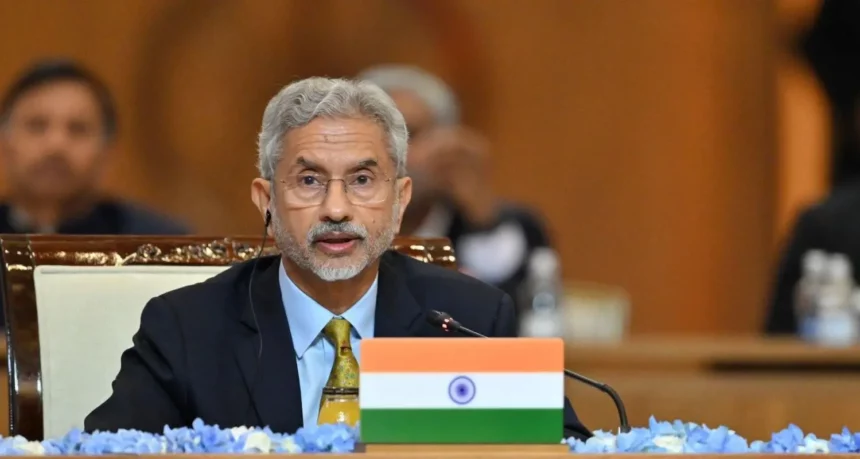
External Affairs Minister S. Jaishankar is set to visit Moscow in the third week of November to attend the Shanghai Cooperation Organisation (SCO) Heads of Government Meeting, marking another significant step in India’s proactive engagement with Eurasian partners. The visit will not only focus on regional cooperation under the SCO framework but also serve as a crucial precursor to the upcoming 23rd India-Russia Annual Summit scheduled in early December. During his stay, S. Jaishankar is expected to hold detailed discussions with Russian Foreign Minister Sergey Lavrov and senior officials to finalise the framework and deliverables for the high-level summit between Prime Minister Narendra Modi and Russian President Vladimir Putin.
Strengthening India-Russia Strategic Partnership
S. Jaishankar’s visit comes at a time when both New Delhi and Moscow are seeking to reaffirm their strategic partnership amid evolving global dynamics and geopolitical challenges. The upcoming SCO meeting will provide a platform to reinforce India’s commitment to multilateral cooperation in Eurasia, with a particular focus on trade, connectivity, energy, and defence collaboration.
According to diplomatic sources, S. Jaishankar’s discussions in Moscow will revolve around fine-tuning bilateral priorities ahead of the annual India-Russia summit, which is expected to take place from December 4 to 6. The summit will be attended by Russian President Vladimir Putin and will mark yet another chapter in the long-standing strategic partnership that has defined India-Russia relations for over seven decades.
The external affairs minister’s Moscow visit highlights India’s intent to maintain strong engagement with all major powers, even as it deepens ties with Western allies. Russia remains a crucial partner for India in defence production, nuclear energy, hydrocarbons, and space cooperation. The two sides are also exploring newer areas of collaboration such as digital technology, pharmaceuticals, and Arctic exploration.
During the SCO meeting, Moscow is set to assume the chairmanship of the organisation from China, a move that is expected to shape the regional agenda for the coming year. For India, the SCO platform offers an opportunity to emphasise its priorities of counterterrorism cooperation, regional stability, economic connectivity, and the strengthening of multilateral institutions rooted in equality and mutual respect.
India is also expected to reiterate its stance on upholding sovereignty and territorial integrity within the SCO framework, a principle that forms the core of its regional diplomacy. S. Jaishankar’s participation will reaffirm India’s position as a responsible and constructive player in Eurasian geopolitics while balancing its global partnerships in an increasingly complex international landscape.
The engagement is expected to focus not only on bilateral cooperation with Russia but also on enhancing India’s role within the SCO, especially on issues of regional connectivity, counterterrorism, and trade facilitation. The meeting provides India an avenue to underline the importance of transparent and inclusive connectivity projects that respect national sovereignty—an indirect reference to concerns surrounding China’s Belt and Road Initiative.
Beyond its geopolitical significance, the visit also holds symbolic value. As Moscow takes over the SCO chairmanship, S. Jaishankar’s presence will underline India’s continued commitment to multilateral diplomacy and its readiness to contribute to collective decision-making on pressing regional challenges, including security, energy sustainability, and economic recovery.
India’s Expanding Global Engagements
While the Moscow visit will focus on consolidating India-Russia relations, S. Jaishankar’s diplomatic calendar this month also underscores New Delhi’s expanding global footprint. Before heading to Russia, the external affairs minister will travel to Canada on November 12 to participate in the G7 Foreign Ministers’ Meeting. The visit marks another step in India’s efforts to normalise bilateral ties with Canada following a period of strained relations.
S. Jaishankar will attend the outreach session for G7 partners in Ontario at the invitation of his Canadian counterpart, Anita Anand. His participation, according to the Ministry of External Affairs, signifies India’s continued commitment to working closely with international partners in addressing global challenges such as climate change, food security, energy transition, and geopolitical stability. It also reflects India’s efforts to strengthen the voice of the Global South in global decision-making forums.
The G7 outreach provides India with an opportunity to articulate its vision for an equitable and multipolar world order, emphasising dialogue, cooperation, and inclusivity. S. Jaishankar’s presence at the meeting is expected to enhance India’s engagement with major global economies and reinforce its position as a key bridge between the developed and developing worlds.
On the sidelines of the G7 meeting, S. Jaishankar is expected to hold several bilateral discussions, including one with his Canadian counterpart, to explore ways to stabilise and revitalise India-Canada relations. The dialogue is expected to cover trade, mobility, education, and security cooperation, marking an important phase in bilateral engagement following recent diplomatic tensions.
The back-to-back visits to Canada and Russia reflect India’s pragmatic and balanced foreign policy approach—one that seeks to engage with diverse partners across ideological and geopolitical divides. This strategic outreach reinforces India’s growing stature as a global diplomatic player capable of navigating complex alignments while prioritising its national interests and global responsibilities.
The SCO meeting in Moscow also holds added importance as it comes at a time of increasing geopolitical volatility, with ongoing conflicts and shifting alliances reshaping the global order. For India, participation in multilateral platforms like SCO and G7 provides an avenue to project its strategic autonomy and independent foreign policy stance, which is not aligned to any single bloc but rooted in issue-based cooperation.
The discussions between S. Jaishankar and Russian leaders are also expected to cover regional security developments, including the situation in Afghanistan, West Asia, and Ukraine. India has consistently called for diplomacy and dialogue as the means to resolve conflicts, a position that resonates with both Moscow and other SCO members.
In addition to security issues, energy cooperation will remain high on the agenda. India continues to source crude oil from Russia, and discussions are expected to include the possibility of expanding energy partnerships through joint ventures, technological collaboration, and alternative payment mechanisms to mitigate the impact of Western sanctions. The two countries are also exploring deeper engagement in sectors like renewable energy, nuclear power, and defence manufacturing under the Make in India initiative.
Another key focus will be connectivity projects in the Eurasian region. Both sides have expressed interest in enhancing cooperation through the International North-South Transport Corridor (INSTC) and the Chennai-Vladivostok maritime route, which could significantly boost trade connectivity between South Asia and the Arctic.
Furthermore, S. Jaishankar’s discussions in Moscow are likely to address long-term economic cooperation under the framework of the Eurasian Economic Union (EAEU). Talks on a potential free trade agreement between India and the EAEU have been ongoing, and both sides are expected to explore pathways to accelerate progress.
Cultural and educational ties are also expected to feature in the agenda. India and Russia share a legacy of strong people-to-people exchanges, and efforts are underway to boost cooperation in education, tourism, and scientific research. Such initiatives reinforce the human dimension of the bilateral relationship and contribute to fostering mutual understanding between the two nations.
The upcoming India-Russia Annual Summit in December is expected to culminate in several key announcements across sectors, including energy, defence, trade, and cultural exchange. The groundwork laid during S. Jaishankar’s visit will play a decisive role in shaping the outcome of the summit.
At a time when global politics is marked by fragmentation and uncertainty, India’s engagement with both Russia and Western powers reflects its ability to maintain strategic balance. By engaging with Moscow through SCO and with Western allies through G7, India continues to project itself as an independent and constructive player capable of building consensus across diverse global platforms.
S. Jaishankar’s visit to Moscow for the SCO Heads of Government Meeting marks a continuation of India’s diplomatic momentum. It underscores New Delhi’s focus on enhancing multilateral engagement, strengthening traditional partnerships, and asserting its leadership in shaping a more balanced and inclusive international order. Through such engagements, India reaffirms its strategic vision—one that is anchored in dialogue, mutual respect, and global cooperation for collective progress.