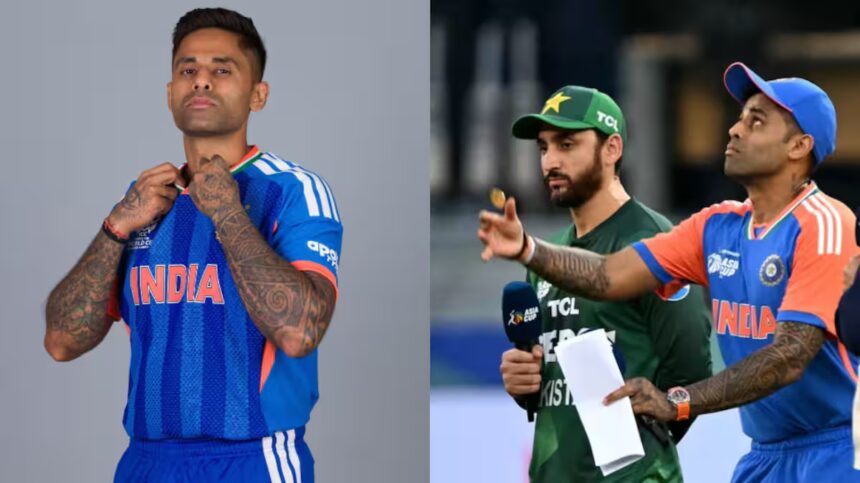
The high-voltage T20 World Cup 2026 encounter between India and Pakistan in Colombo brought intense anticipation, not only for the on-field contest but also for the off-field diplomatic protocols. The Indian cricket team, led by Suryakumar Yadav, continued its no-handshake stance against Pakistan, a policy that has been in place since the Asia Cup 2025. As thousands of fans and global audiences tuned in, the toss itself became a focal point of discussion, reflecting ongoing political and historical tensions between the two cricketing neighbours. India’s leadership, squad composition, and tactical decisions came under the microscope, while Pakistan’s captain Salman Ali Agha sought to navigate the challenge of facing a strong Indian team under intense scrutiny. This match, held at a crucial stage of the tournament, was emblematic of both sporting excellence and the complexities of India-Pakistan cricketing relations, where competitive intensity often intersects with national sentiment and diplomacy.
No-Handshake Protocol and Historical Context
Suryakumar Yadav’s decision to avoid shaking hands with Pakistan captain Salman Ali Agha at the toss drew significant attention, continuing a stance that began in Dubai during the Asia Cup last year. The no-handshake protocol was first introduced following sensitive geopolitical incidents, including the Pahalgam massacre and subsequent Indian military operations, which influenced India’s position on symbolic gestures with Pakistan. Since that period, Indian teams across all formats—men’s, women’s, and age-group competitions—have adhered to this approach, reflecting a broader policy beyond individual matches. The stance sparked strong reactions from Pakistan cricket authorities, including PCB chairman Mohsin Naqvi, who publicly criticized the refusal to engage in the customary handshake during high-profile events.
This controversy first reached a flashpoint during the Asia Cup, drawing international media attention and political commentary. Pakistan had even threatened to boycott subsequent fixtures due to the perceived diplomatic slight, but ultimately continued participation. The issue resurfaced in the Asia Cup final, when India’s refusal to accept the trophy from Naqvi drew further attention and highlighted the intertwining of cricket and diplomacy in South Asia. By maintaining this protocol at the World Cup 2026 match, Suryakumar Yadav and the Indian team reinforced a consistent position, balancing sporting professionalism with national considerations. Observers noted that the gesture—or lack thereof—carries symbolic weight, representing broader narratives about historical grievances, national pride, and the role of sport in cross-border engagement.
The protocol’s persistence has influenced on-field and off-field dynamics, affecting the manner in which teams interact during tosses, presentations, and official ceremonies. Analysts have debated the potential impact of such symbolic measures on player psychology, team morale, and international relations, underscoring how cricket in South Asia transcends conventional sporting boundaries. The tension surrounding the toss was palpable, as fans and commentators interpreted each action through the lens of historical context, regional politics, and sporting rivalry.
Team Selection, Tactical Decisions, and Match Preparations
Ahead of the match, India made two strategic changes to its playing XI. Fit-again Abhishek Sharma returned to the squad, replacing Sanju Samson, while Kuldeep Yadav replaced Arshdeep Singh. The inclusion of Sharma and Kuldeep highlighted India’s tactical focus on balancing batting depth with bowling versatility, ensuring adaptability under varying pitch and weather conditions. Suryakumar Yadav, reflecting on the toss and match preparation, emphasized that the team’s approach would remain consistent with prior strategies, particularly the decision to bat first. India had successfully defended totals in previous matches at the same venue, and the captain emphasized the importance of executing a proven game plan while maintaining composure and focus under high-pressure circumstances.
Suryakumar’s remarks highlighted a philosophy grounded in present-focused execution, skill confidence, and situational awareness. He advised his team to back their individual abilities, put forward their best performances, and remain mindful of the high-stakes context without succumbing to external pressures. This approach demonstrated a blend of strategic insight and leadership, balancing performance expectations with mental resilience, particularly crucial in encounters with Pakistan, where historical rivalry often amplifies emotional intensity.
Pakistan, under Salman Ali Agha, opted to bowl after winning the toss, assessing that the pitch conditions would favor bowlers during the initial overs. Agha commented that the track appeared slower and tacky compared to the SSC venue, influencing his decision to utilize the bowling attack aggressively from the outset. The Pakistani captain’s strategy reflected an understanding of the pitch’s behavior, prior match outcomes, and the necessity of early breakthroughs to contain India’s top-order batting. Pakistan maintained an unchanged playing XI, reflecting confidence in the existing lineup while signaling stability and preparedness in high-pressure situations.
The squad composition for both teams highlighted a mix of experienced players and young talent, reflecting broader strategic objectives. India’s lineup, featuring Suryakumar Yadav, Hardik Pandya, Ishan Kishan, Tilak Varma, and Rinku Singh, combined explosive batting options with versatile all-rounders capable of adapting to dynamic match scenarios. The bowling unit, anchored by Jasprit Bumrah, Axar Patel, and Kuldeep Yadav, provided a balance of pace, spin, and tactical variation suited to subcontinental conditions. Pakistan’s squad, led by Babar Azam alongside Salman Ali Agha, Shaheen Afridi, Shadab Khan, and Mohammad Nawaz, emphasized an aggressive blend of batting depth and wicket-taking potential, aiming to challenge India’s strengths while leveraging local pitch conditions.
Beyond team selection, preparation encompassed pitch analysis, practice sessions, mental conditioning, and contingency planning. Both sides sought to anticipate potential match developments, including weather variations, toss outcomes, and player form. India’s captain underscored the importance of flexibility and adaptability, encouraging players to execute skills with confidence while responding to evolving match scenarios. Similarly, Pakistan’s leadership emphasized strategic consistency and communication within the team, ensuring clarity on objectives and roles under high-pressure circumstances.
The broader tactical context involved assessing historical matchups, player performance data, and in-game scenarios. Analysts highlighted that India’s previous successes against Pakistan in World Cup encounters provided psychological advantage, though the competitive intensity of the fixture demanded meticulous attention to detail, error minimization, and real-time decision-making. The presence of global audiences, live broadcasts, and extensive media scrutiny further amplified the stakes, making the toss and pre-match interactions symbolic as well as strategic.
High-Stakes Rivalry, Spectator Engagement, and Cricket Diplomacy
The India-Pakistan T20 World Cup rivalry extends beyond sporting competition into cultural, social, and diplomatic spheres. The match in Colombo was observed globally, attracting massive live viewership and extensive media coverage. The no-handshake protocol at the toss reinforced existing narratives about historical tension and national sentiment, while simultaneously drawing attention to cricket as a platform where diplomacy, symbolism, and sport intersect. Commentary highlighted how ceremonial interactions—such as handshakes, presentations, and trophy acceptances—can reflect broader political dynamics, illustrating cricket’s role as a soft-power medium in South Asia.
Spectator engagement at the venue and via broadcast channels was amplified by pre-match discussions around the handshake protocol, team compositions, and tactical decisions. Fans actively analyzed player selections, leadership choices, and pitch conditions, while social media platforms became forums for debate, commentary, and historical reflection. Analysts noted that the intensity of India-Pakistan encounters elevates audience involvement, with fan expectations and emotional investment contributing to the match’s cultural significance.
The psychological dimension for players was equally important. India’s team adopted a strategy of focus and mental resilience, emphasizing present-moment execution over external narratives. Suryakumar Yadav’s leadership involved managing not only technical aspects but also emotional pressures, ensuring players remained composed under high-stakes conditions. Pakistan’s players similarly navigated competitive and psychological challenges, seeking to convert tactical preparation into effective in-game performance while managing the influence of historical rivalry on focus and concentration.
The no-handshake stance, while symbolic, became a point of narrative for commentators, analysts, and policymakers observing the game. It represented continuity in India’s approach since the Asia Cup 2025, reinforcing the intersection of sports and national policy. Discussions around the protocol highlighted how cricket matches between India and Pakistan function as multi-layered events, combining sporting strategy, spectator engagement, media narratives, and diplomacy.
The event underscored the significance of tournament structure, group dynamics, and match sequencing in shaping strategic priorities. India’s approach to batting first, Pakistan’s choice to bowl, and both teams’ lineup adjustments reflected detailed analysis of statistical data, pitch behavior, and historical outcomes. These decisions demonstrated the interplay between preparation, leadership, and execution in high-stakes cricketing encounters, illustrating the complexity inherent in managing performance under global scrutiny.
In summary, the India vs Pakistan T20 World Cup 2026 clash in Colombo represented a convergence of competitive sport, diplomatic signaling, and cultural symbolism. The continuation of India’s no-handshake protocol, combined with strategic team adjustments, tactical decisions, and mental conditioning, illustrated how modern cricket encompasses far more than gameplay. This match exemplified the layered complexity of India-Pakistan cricketing contests, where historical narratives, national sentiment, and sporting excellence interact dynamically, and where every pre-match, on-field, and post-match action carries multiple dimensions of significance for players, officials, spectators, and global audiences alike.