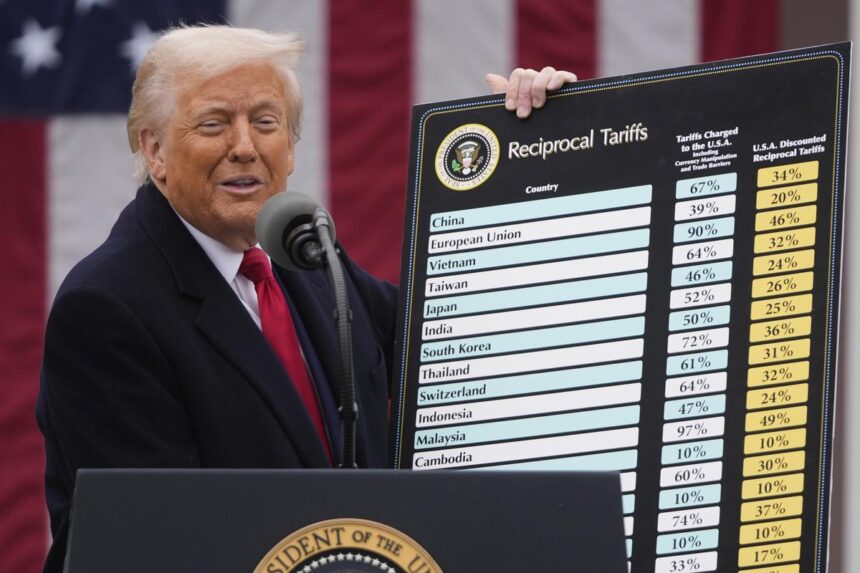
India is unlikely to retaliate against the steep 26% reciprocal tariffs imposed by the US President Donald Trump’s trade policy, choosing instead to prioritize ongoing negotiations for a comprehensive trade deal. According to government officials, New Delhi is banking on a clause in US President Donald Trump’s tariff order that allows exemptions for countries taking substantial steps to correct non-reciprocal trade arrangements.
Hope in flexibility clause
Officials say India has identified a provision in the US order that provides flexibility to exempt countries from punitive tariffs if they demonstrate commitment to remedy trade imbalances. Leveraging this, India believes it can avoid escalation by proving its intent through ongoing negotiations. During Prime Minister Narendra Modi’s visit to Washington earlier this year, both sides had agreed to finalize a preliminary trade agreement by autumn.
A government source emphasized that India views itself in a relatively stronger position than other Asian nations such as China, Vietnam, and Indonesia, which have borne the brunt of US President Donald Trump’s trade clampdown. India’s early initiation of talks with the US has given it leverage and potential space to maneuver diplomatically rather than through economic countermeasures.
Avoiding escalation amid global tensions
Unlike the European Commission or China, which have threatened or implemented retaliatory duties, India, along with nations like Taiwan and Indonesia, has chosen a non-confrontational route. New Delhi is keen to maintain the momentum in trade talks and avoid further instability in global markets already rocked by the US-China trade war. Stock markets across the world, including in the US, have experienced significant volatility due to these tensions.
India has also shown willingness to make concessions. According to a previous Reuters report, the Modi government is open to lowering tariffs on US imports worth $23 billion. This includes reductions on high-end American motorcycles and bourbon whiskey, as well as the rollback of a digital services tax that had affected major US tech companies.
Economists caution that US President Donald Trump’s tariff measures could dent India’s GDP growth by 20 to 40 basis points in the current financial year. The diamond industry, which exports a significant portion of its products to the US, is particularly vulnerable, potentially putting thousands of jobs at risk.
For now, India appears to be walking a tightrope, balancing strategic trade interests while trying to prevent economic fallout from a full-blown tariff conflict.