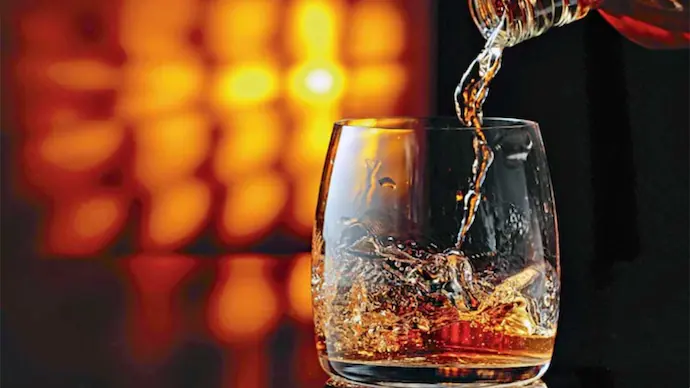
In a significant move ahead of Prime Minister Narendra Modi’s scheduled meeting with former US President Donald Trump, India has announced a reduction in tariffs on bourbon whiskey imports from 150% to 100%. The decision, which was notified on February 13, comes as part of efforts to improve bilateral trade relations between India and the United States. The tariff cut is seen as a response to Trump’s longstanding criticism of what he called “very unfair” levies imposed by South Asian markets on American exports.
The new tariff structure entails a basic customs duty of 50%, along with an additional levy of 50%, bringing the total effective tariff to 100%. This reduction is expected to make American bourbon whiskey more competitive in the Indian market and could pave the way for further trade negotiations between the two nations.
The United States is the largest exporter of bourbon whiskey to India, accounting for nearly one-fourth of the country’s total whiskey imports. In the financial year 2023-24, India imported bourbon whiskey worth approximately USD 2.5 million. The tariff reduction is expected to give a significant boost to imports and contribute to the overall expansion of the liquor market in India. Washington and New Delhi have also reaffirmed their commitment to expanding bilateral trade, aiming to more than double the two-way trade volume to USD 500 billion by 2030. The decision to slash tariffs on bourbon whiskey aligns with the broader goal of facilitating smoother trade and reducing trade barriers between the two nations.
The announcement has turned attention toward bourbon whiskey itself, a distinctly American spirit with a rich history. Bourbon whiskey is the only spirit recognized as a native American product, as declared by the US Congress in 1964. The whiskey is primarily made from corn, with at least 51% of its composition consisting of this grain. Other ingredients include rye, wheat, and malt. The distinctive production process of bourbon whiskey requires it to be aged in brand-new charred white oak barrels, ensuring a unique and consistent flavor profile. Unlike other whiskeys, bourbon cannot have any added flavors or artificial colors, maintaining its natural taste. Additionally, the spirit must be between 80 and 160 proof, determining its alcohol content and strength.
The history of bourbon whiskey dates back to the 1800s, originating in Bourbon County, Kentucky. While the name suggests that bourbon can only be produced in Kentucky, this is a common misconception. According to US regulations, any whiskey that meets the stringent manufacturing criteria, regardless of where it is produced, can be labeled as bourbon whiskey.
The barrels used for aging bourbon are a crucial component of its production. Once a barrel has been used to age bourbon, it cannot be reused for another batch of bourbon. Instead, these barrels find new life aging other spirits, such as single malt scotch and various other whiskeys, contributing to the distinct flavors of these drinks.
Bourbon whiskey is highly versatile and is widely used in cocktails, making it a favorite among mixologists and whiskey enthusiasts. Some of the most popular bourbon-based cocktails include the ‘Old Fashioned,’ ‘Mint Julep’—the official drink of the Kentucky Derby—and the ‘Manhattan.’ The whiskey’s primary flavor notes, which include vanilla, oak, and caramel, make it an ideal base for a wide range of drinks, further enhancing its global popularity.
The tariff reduction on bourbon whiskey is expected to positively impact the Indian spirits market by increasing affordability and consumer interest in premium American liquors. With the growing demand for international alcoholic beverages in India, the decision could lead to further tariff adjustments on other high-end liquor imports, fostering stronger trade ties between India and the United States. While the move is being welcomed by American exporters and Indian whiskey enthusiasts alike, it remains to be seen how this tariff adjustment will influence the broader trade negotiations between the two economic giants in the years to come.