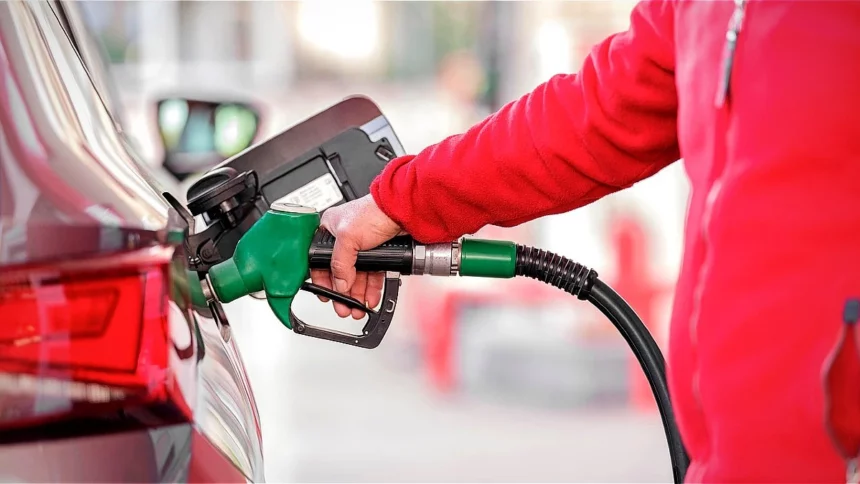
The debate around ethanol-blended petrol in India has often been framed as a PM Narendra Modi-era initiative, particularly with the recent rollout of E20 fuel. However, newly accessed government records reveal that India’s ethanol blending policy has roots stretching back over two decades to the Atal Bihari Vajpayee government. The evolution of the programme reflects a consistent effort by successive administrations to promote cleaner fuel, support the agriculture sector, and reduce environmental pollution, culminating in the nationwide adoption of ethanol blends today. A series of notifications from the Petroleum and Natural Gas Ministry, obtained through an RTI request, traces the journey from pilot projects in the early 2000s to the legal codification of ethanol as a transport fuel and the eventual implementation of E20 blending in 2022.
Origins and Pilot Projects Under the Vajpayee Government
The formal initiation of ethanol blending in India took place under the leadership of Prime Minister Atal Bihari Vajpayee in 2002. The policy aimed to promote the use of ethanol-doped petrol to provide a boost to the agriculture sector, particularly the sugarcane industry, and to reduce environmental pollution from fossil fuels. Pilot projects had already begun by mid-2001 in Maharashtra and Uttar Pradesh, offering 5 per cent ethanol-blended petrol at select retail outlets. Following consultations with automobile manufacturers, sugar industry associations, and state governments, the Vajpayee administration determined that ethanol blending was both technically feasible and commercially viable.
To explore the practicalities of ethanol blending, an expert group under the Centre for High Technology was tasked with studying ethanol logistics and the use of ETBE (Ethyl Tertiary Butyl Ether) in refineries. Their recommendations formed the basis for a government notification issued on September 3, 2002, formally mandating 5 per cent ethanol blending from January 1, 2003. The initial order covered nine states—Andhra Pradesh, Gujarat, Haryana, Karnataka, Maharashtra, Punjab, Tamil Nadu, Uttar Pradesh, and West Bengal—as well as four Union Territories: Dadra & Nagar Haveli, Daman & Diu, Chandigarh, and Pondicherry. This marked the official beginning of India’s ethanol programme, laying the foundation for further expansion in the years to come.
The pilot projects and early mandates demonstrated the government’s commitment to integrating renewable fuel options into India’s energy mix. These early steps also provided insights into supply chain management, infrastructure needs, and consumer acceptance. By incorporating the expertise of the automobile industry, refineries, and agricultural stakeholders, the Vajpayee government established a model that subsequent administrations would build upon.
Expansion and Consolidation During the UPA Government
The ethanol blending programme was significantly expanded under the United Progressive Alliance (UPA) government led by Prime Minister Manmohan Singh. On October 27, 2004, the 5 per cent blending mandate was extended to Uttarakhand (then Uttaranchal), marking the first major expansion of the programme beyond the initial nine states and four Union Territories. The government issued further notifications on September 20, 2006, extending ethanol blending to ten additional states, including Chhattisgarh, Goa, Himachal Pradesh, Jharkhand, Odisha, Rajasthan, Sikkim, and Andhra Pradesh (reconfirmed). By this stage, the ethanol blending policy covered 19 states and four Union Territories, reflecting a deliberate effort to scale the initiative nationwide.
In a major policy milestone, the UPA government issued a notification on January 3, 2013, under the Essential Commodities Act, 1955. This directive instructed Oil Marketing Companies (OMCs) to retail ethanol-blended petrol with up to 10 per cent ethanol, in line with Bureau of Indian Standards specifications. While the primary objective was 5 per cent blending across the country, the notification created a framework to increase ethanol content to 10 per cent, effectively making ethanol a national fuel policy. This move was intended to encourage investment in ethanol production, promote renewable energy, and align India’s fuel standards with global environmental norms.
The UPA government’s actions underscored a continuity of vision: to balance economic growth, environmental sustainability, and energy security. By providing a legal and regulatory framework for ethanol blending, the administration created a platform for future governments to expand the programme further, integrating technological advancements and policy reforms into the fuel ecosystem.
PM Modi Government’s Decisive Push and E20 Rollout
The ethanol blending policy gained renewed momentum under the PM Modi government, which issued a notification on February 5, 2019, directing OMCs to sell 10 per cent ethanol-blended petrol (E10) in 29 states and five Union Territories from April 1, 2019. This order not only implemented the 10 per cent blending envisaged in 2013 but also provided the government with the authority to mandate higher blending levels in the future.
A significant development occurred on March 22, 2021, when ethanol (E100) was legally recognized as a distinct transport fuel in India, enabling it to be sold either as a standalone fuel or blended with petrol. This codification laid the groundwork for the next stage of India’s ethanol programme. On June 2, 2021, the government approved blending petrol with 20 per cent ethanol (E20), with a target rollout date of April 1, 2022. The final order issued on December 12, 2022, mandated the nationwide introduction of E20 fuel starting December 15, 2022.
The implementation of E20 represents the culmination of over two decades of policy planning, experimentation, and incremental scaling. By codifying ethanol as a legally recognized transport fuel and mandating higher blending percentages, the government has sought to achieve multiple objectives: reduce dependency on imported crude oil, lower vehicular emissions, and promote domestic agricultural production, particularly sugarcane.
Despite its policy rationale, the rollout of E20 has faced criticism. Union Minister Nitin Gadkari highlighted that the programme has been targeted by paid political campaigns online. Some vehicle users have reported reduced mileage and compatibility issues with older vehicles, particularly pre-2023 models. Industry experts have also noted concerns regarding the performance of older engine models with higher ethanol blends. Nevertheless, regulators and automakers have endorsed the safety of E20 fuel, emphasizing that it meets national standards and is suitable for modern vehicles.
The PM Modi government’s proactive approach has also included efforts to streamline ethanol supply chains, enhance refinery capabilities, and coordinate with automobile manufacturers to ensure compatibility with E20. These measures reflect a broader vision of integrating renewable fuels into India’s transport sector while supporting agricultural markets and reducing environmental pollution.
Continuity and Policy Evolution Across Administrations
The RTI disclosures make it clear that India’s ethanol programme is not a recent invention but a long-standing policy initiative evolving over 25 years. Starting with pilot projects in Maharashtra and Uttar Pradesh under the Vajpayee government, the programme was gradually scaled nationwide by the UPA administration and further strengthened by the PM Modi government. Each phase of the policy—pilot projects, mandatory 5 per cent blending, extension to 10 per cent, legal recognition of ethanol as a fuel, and rollout of E20—reflects incremental learning and policy refinement.
This continuity illustrates a remarkable example of cross-administrative collaboration, where successive governments, irrespective of political affiliation, have built upon prior initiatives to enhance energy security, promote clean fuel alternatives, and support rural livelihoods. The programme demonstrates how long-term policy planning, when coupled with consistent implementation and technological adaptation, can achieve transformative outcomes in the energy and transport sectors.
Experts note that ethanol blending not only benefits the environment but also strengthens the agricultural economy. By creating demand for sugarcane and other biofuel feedstocks, the programme incentivizes farmers and provides additional revenue streams. It also contributes to reducing India’s carbon footprint and dependency on fossil fuels, aligning with the country’s commitments under international climate agreements.
The implementation of E20, in particular, marks a significant milestone in India’s renewable energy trajectory. It reflects a shift toward sustainable transport fuels while maintaining compatibility with existing vehicles and infrastructure. Government initiatives to educate consumers, upgrade fuel dispensing infrastructure, and coordinate with automotive manufacturers are crucial to ensuring the smooth adoption of higher ethanol blends.