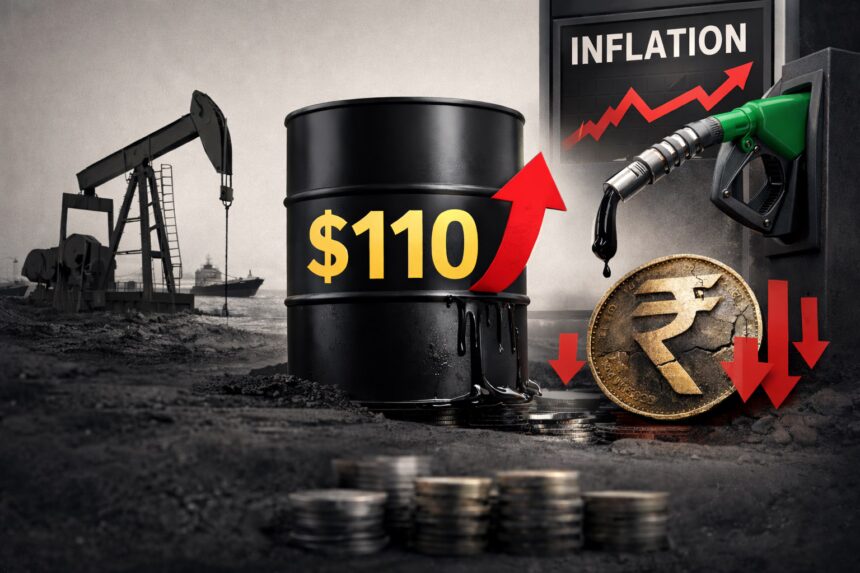
In its latest Monthly Economic Review for March 2026, the Government of India has acknowledged emerging signs of a slowdown in economic growth, alongside rising inflation risks. The report highlights that escalating tensions in West Asia and increasing crude oil prices are beginning to impact domestic economic conditions, particularly through higher input costs and supply chain disruptions.
According to the Finance Ministry, while the Indian economy remained resilient and strong until February 2026, global developments have started to exert pressure from March onwards. The report underscores that the slowdown is not due to weak demand but is largely driven by external shocks affecting production and logistics.
Strong Growth Momentum Until Early 2026
The report notes that India’s economic performance remained robust in the initial months of 2026. Growth was supported by strong domestic demand, sustained infrastructure development, and proactive government policies.
Both the manufacturing and services sectors showed steady expansion, while indicators such as vehicle sales and digital transactions reflected healthy consumer activity. The continued rise in Unified Payments Interface (UPI) transactions highlighted the strength of consumption and digital adoption across the country.
This period of stability indicated that the underlying fundamentals of the economy remained strong before global uncertainties began to take effect.
Global Pressures Begin To Impact Economy
From March 2026 onwards, the economic landscape started to shift due to external factors. Rising tensions in West Asia disrupted global energy markets and increased volatility in crude oil prices.
As India relies heavily on energy imports, higher oil prices have directly translated into increased production costs for businesses. Additionally, disruptions in global logistics have led to higher freight charges and insurance premiums, further adding to operational expenses.
These developments have begun to slow down economic activity, as reflected in key indicators such as e-way bill generation and Flash Purchasing Managers’ Index (PMI) data.
Rising Input Costs And Supply Chain Challenges
The Finance Ministry has identified three major factors contributing to the current economic pressure:
Expensive crude oil: Higher global oil prices have increased costs for industries and businesses
Logistics and insurance costs: Disruptions in maritime routes have raised freight and insurance expenses
Supply chain delays: Manufacturing is being affected due to delays in the availability of essential inputs
These factors have collectively created a challenging environment for producers, leading to a moderation in economic growth.
Demand Remains Resilient Despite Challenges
Despite the emerging slowdown, the report highlights that domestic demand continues to remain stable. Data on vehicle registrations and digital transactions indicate that consumer spending has not significantly weakened.
However, there are early signs of softening sentiment in rural areas, which could become a concern if the trend continues. The divergence between strong demand and constrained supply suggests that the slowdown is primarily supply-driven rather than demand-driven.
Inflation Risks Begin To Emerge
One of the key concerns highlighted in the report is the potential rise in retail inflation. While food prices have been the main driver of inflation so far, the ministry has warned that the full impact of rising crude oil prices is yet to be reflected in domestic markets.
If global energy prices remain elevated, inflationary pressures could intensify in the coming months. This poses a significant risk to economic stability, as higher inflation can affect both consumer purchasing power and business profitability.
Infrastructure Spending Provides Hope
Despite the challenges, the government remains optimistic about the role of infrastructure and capital expenditure in sustaining growth. Increased production of steel and cement indicates that construction activities and government-led projects are continuing at a strong pace.
These sectors are expected to act as key drivers of economic activity, helping to offset some of the negative impacts of global uncertainties.
The focus on infrastructure development also aligns with the government’s long-term growth strategy, which aims to strengthen the economy’s foundation and create employment opportunities.
Need For Close Monitoring Of Global Risks
The Finance Ministry has emphasised the importance of closely monitoring both domestic and global developments. The evolving situation in West Asia and its impact on energy markets will play a critical role in shaping economic outcomes in the near future.
Policymakers are likely to remain vigilant and may introduce additional measures if required to stabilise the economy and manage inflation.
Balancing Growth And Stability
The current scenario highlights the challenge of balancing growth with economic stability. While India’s strong fundamentals provide a buffer against external shocks, sustained global disruptions could pose significant risks.
The government’s proactive approach, including continuous monitoring and policy adjustments, will be crucial in navigating these challenges.
The Finance Ministry’s latest review underscores that while India’s economic foundation remains strong, global uncertainties—particularly rising crude oil prices and geopolitical tensions—are beginning to impact growth and inflation.
The slowdown appears to be driven more by supply-side constraints than a decline in demand, offering some reassurance about the resilience of the economy. However, the emerging inflation risks and external pressures call for careful monitoring and timely policy responses.
As the global situation continues to evolve, India’s ability to adapt and respond effectively will determine the trajectory of its economic growth in the coming months