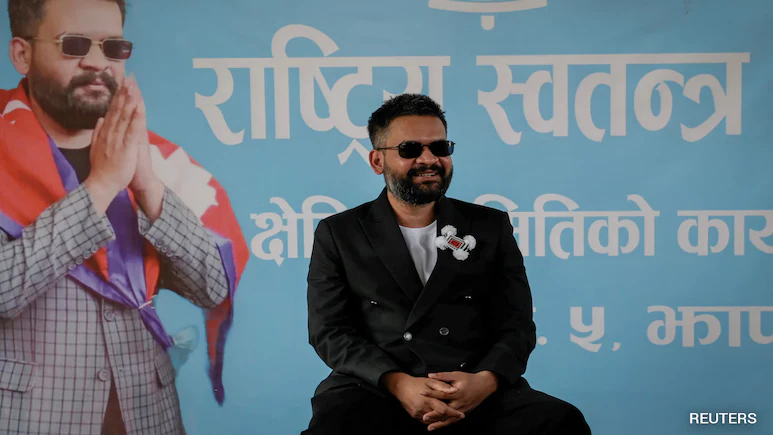
The newly formed government under Balendra Shah has ignited a major political and social debate after proposing sweeping reforms that include banning political affiliations in government institutions and removing student unions from campuses. While the government claims the move is aimed at improving efficiency and reducing political interference, critics argue that it could weaken democratic foundations and restrict fundamental rights.
The controversial decisions were part of a broader 100-point governance reform agenda approved during the first Cabinet meeting at Singha Durbar. These reforms are being positioned as a bold attempt to reshape governance in Nepal, but they have also drawn sharp criticism from academics, activists, and student leaders.
Major Reform Push By Balen Shah Government
The administration led by Balendra Shah has introduced a wide-ranging reform blueprint aimed at restructuring governance systems across multiple sectors. Officials describe the initiative as a transformational step designed to depoliticise administration and streamline institutional functioning.
Among the most debated proposals are:
Ban on political affiliations for civil servants and teachers
Abolition of trade unions within government institutions
Removal of student unions from campuses
Creation of non-political student councils within 90 days
Supporters of these reforms argue that they will reduce political interference in governance and improve efficiency in public institutions. However, the scope and intensity of the changes have raised concerns about their long-term impact on democratic participation.
Ban On Political Influence In Administration
One of the central pillars of the reform agenda is the decision to prohibit political affiliations among civil servants and educators. The government believes that removing political connections will help ensure neutrality and professionalism in public service.
Additionally, the Cabinet has approved the abolition of trade unions within state institutions. This move is intended to eliminate what the government sees as politically motivated disruptions and inefficiencies.
Supporters claim that such steps could:
Improve administrative efficiency
Reduce political interference in decision-making
Strengthen institutional accountability
However, critics warn that eliminating unions could leave workers without a platform to protect their rights and address grievances.
Student Unions To Be Replaced With Councils
Another key proposal involves removing political student unions from educational institutions and replacing them with non-partisan “Student Councils” within a 90-day timeframe.
The government argues that student politics has often led to disruptions, strikes, and instability on campuses. By introducing neutral councils, it aims to create a more academic-focused environment.
However, this decision has sparked intense debate among scholars and student leaders, who view student unions as essential platforms for political awareness and democratic participation.
Critics Call Move ‘Anti-Democratic’
Several activists and experts have strongly opposed the proposed reforms, describing them as a threat to democratic rights.
Student leader Rajesh highlighted concerns about constitutional freedoms, stating that the right to form unions and associations is a fundamental democratic principle. According to him, banning such organizations could undermine these rights.
Social activist Ansuda also criticised the move, emphasising the importance of unions in protecting workers from exploitation. She argued that instead of abolishing unions, the government should focus on regulating them to address existing issues.
Key concerns raised by critics include:
Erosion of constitutional rights
Increased risk of worker exploitation
Lack of accountability mechanisms
Weakening of democratic participation
Experts Warn Of Long-Term Risks
Anthropologist Suresh Dhakal expressed concern about dismantling existing institutional structures. He pointed out that unions play a crucial role in balancing power, especially in systems where market forces dominate.
Dhakal questioned the government’s authority to restrict student participation in political activities, arguing that such engagement is essential for nurturing informed citizens and future leaders.
He warned that eliminating unions entirely could:
Reduce political awareness among youth
Limit platforms for dissent and dialogue
Concentrate power within institutions
His remarks reflect a broader concern that the reforms may prioritise efficiency over democratic values.
Student Organisations Push Back
The Nepal Student Union, affiliated with the Nepali Congress, has issued a strong warning against the proposed changes. Its leadership stated that any attempt to dissolve student organisations could lead to significant backlash.
Union president Dujang Sherpa emphasised the historical role of student unions in shaping political leadership and promoting democratic engagement. He argued that these organisations have contributed to the rise of several public figures, including current leaders.
The union has also pointed out that it has been formally recognised by the Supreme Court, reinforcing its legitimacy as a representative body for student rights.
Balancing Reform And Rights
The debate surrounding the reforms highlights a critical challenge for the government: balancing the need for efficient governance with the preservation of democratic freedoms.
While the intention to reduce political interference may resonate with some sections of society, the approach of banning unions entirely has raised questions about proportionality and inclusiveness.
Experts suggest that a more balanced approach could involve:
Regulating unions instead of abolishing them
Introducing transparency measures in student politics
Strengthening accountability mechanisms
Such measures could address existing concerns without compromising fundamental rights.
Global Perspective On Unions And Democracy
Globally, trade unions and student organisations are considered integral to democratic systems. They provide platforms for collective bargaining, advocacy, and political participation.
In many countries, student unions serve as training grounds for future leaders, helping them develop critical thinking, leadership skills, and political awareness.
The proposed reforms in Nepal, therefore, stand out as a significant departure from established democratic practices.
Public Reaction And Political Implications
Public opinion on the issue appears divided. While some citizens support the idea of reducing political interference in institutions, others fear that the reforms could weaken democratic safeguards.
Politically, the move could have far-reaching implications for the government led by Balendra Shah. The administration’s ability to navigate this controversy will likely shape its public perception and long-term credibility.
The proposal by Nepal’s government to ban political and student unions marks a turning point in the country’s governance approach. While aimed at improving efficiency and reducing political interference, the reforms have sparked widespread concern about their impact on democratic rights.
As debates continue, the challenge for the government will be to strike a balance between reform and representation. The outcome of this issue could define not only the future of governance in Nepal but also the strength of its democratic institutions.