India has received a major diplomatic relief as the United States extended the sanctions waiver for operations at Iran’s strategic Chabahar Port till early next year. The extension is crucial for New Delhi, which uses the port as a key trade and connectivity corridor to Afghanistan and Central Asia—bypassing Pakistan’s territory. This move ensures uninterrupted progress for India’s regional infrastructure and connectivity initiatives while allowing it to maintain a delicate balance between Washington and Tehran amid shifting global geopolitical dynamics.
Chabahar Port’s Strategic Relevance and India’s Expanding Role
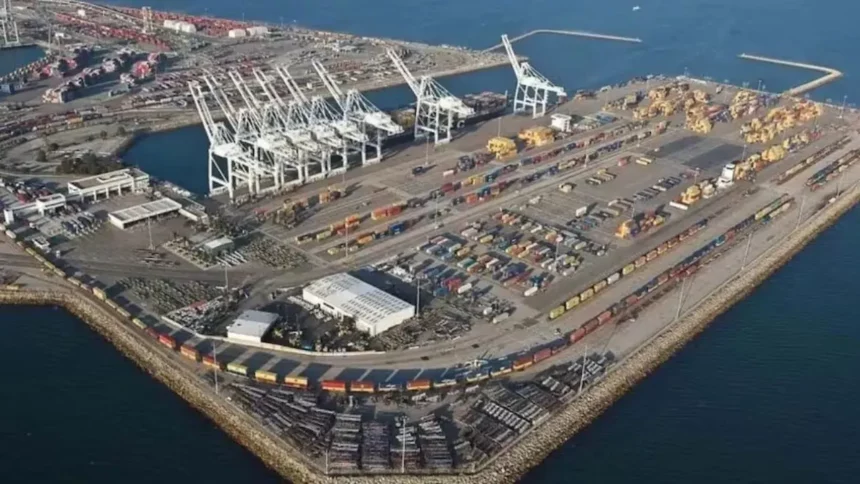
The Chabahar Port has evolved into a cornerstone of India’s foreign policy, trade strategy, and regional diplomacy. Operated by India Ports Global Limited (IPGL), a public sector entity, the port’s Shahid Beheshti Terminal represents India’s long-term strategic investment in Iran. With the renewed waiver, India can continue developing and managing the port without the risk of sanctions, ensuring the continuity of its regional outreach program.
Chabahar’s importance goes far beyond commerce—it carries immense geopolitical weight. Situated along Iran’s southeastern coast, the port provides India with a critical alternative route to Afghanistan, avoiding reliance on Pakistan. This route has proven essential for delivering humanitarian aid, food grains, and medical supplies to Afghanistan, particularly during times of political instability and humanitarian crises.
In 2024, India signed a 10-year agreement with Iran to operate the Shahid Beheshti Terminal, reaffirming its commitment to the project. Under this deal, India is responsible for managing port operations, upgrading infrastructure, and promoting multimodal trade connectivity linking South Asia to Central Asia through both sea and land routes. The agreement also reflects India’s intention to strengthen long-term economic and strategic ties with Tehran, despite international challenges surrounding Iran’s sanctioned economy.
Chabahar Port serves as a gateway to Central Asian nations such as Uzbekistan, Kazakhstan, and Turkmenistan, offering them direct access to the Indian Ocean. India’s ongoing efforts to link Chabahar with the International North-South Transport Corridor (INSTC) further amplify its strategic value. This corridor—connecting India, Iran, Russia, and Central Asia—aims to reduce transit time and cost for trade between South Asia and Europe. Once fully operational, the integration of Chabahar into the INSTC is expected to transform India into a major hub for regional logistics and connectivity.
The port’s growing importance also underscores India’s vision of becoming a regional leader in infrastructure-led diplomacy. By using Chabahar as an anchor for trade and development, New Delhi seeks to counter China’s Belt and Road Initiative (BRI), particularly its investments in Pakistan’s Gwadar Port—located barely 170 kilometers away. Through Chabahar, India offers an alternative model of connectivity built on transparency, sustainability, and mutual benefit, distinguishing it from China’s debt-driven model.
US Policy, Geopolitical Dynamics, and India’s Strategic Balancing
Since 2018, the United States has imposed a series of sanctions targeting Iran’s energy, finance, and transport sectors. However, Washington has consistently exempted the Chabahar project, recognizing its humanitarian and strategic significance. The port facilitates Afghanistan’s access to global markets and supports regional stability—key objectives aligned with US interests during and after its withdrawal from Afghanistan.
By extending the waiver, the US has once again acknowledged India’s pivotal role in ensuring stability and connectivity across South and Central Asia. The move also demonstrates growing trust between Washington and New Delhi, as both nations deepen cooperation under frameworks such as the Quad and Indo-Pacific partnerships.
For India, the waiver represents not just an economic reprieve but also a geopolitical advantage. It enables New Delhi to sustain engagement with Iran while preserving strong ties with the US. Balancing these relationships has long been a challenge in India’s foreign policy, particularly amid heightened US-Iran tensions. Yet, India’s nuanced diplomacy has allowed it to maintain access to both capitals without compromising its strategic autonomy.
The Chabahar Port is a manifestation of India’s “Act West” policy—an extension of its broader connectivity vision complementing the “Act East” policy in Southeast Asia. Together, these approaches reflect India’s aspiration to become a global connector between markets and cultures. The port also aligns with India’s efforts to build multi-aligned partnerships rather than being confined to rigid alliances, enabling it to engage constructively with diverse powers, including the US, Iran, Russia, and Central Asian republics.
From a strategic lens, Chabahar enhances India’s presence in the Persian Gulf and the Arabian Sea—regions that are critical for global energy supplies and maritime trade. The port also strengthens India’s maritime security framework, supporting its broader vision of a free, open, and rules-based Indo-Pacific. It complements India’s naval presence in the region, ensuring that critical sea lanes remain secure and accessible for trade.
Moreover, India’s investment in Chabahar allows it to indirectly support Afghanistan’s reconstruction and economic revival without depending on unstable land routes through Pakistan. Even after the Taliban takeover, India has continued dispatching humanitarian aid through this corridor, reinforcing its role as a reliable partner committed to regional welfare and stability.
The waiver also helps New Delhi maintain economic leverage in a region where China’s footprint is expanding rapidly. While Beijing continues to finance projects under the BRI framework in Iran and Pakistan, India’s steady progress at Chabahar offers an alternative narrative—one centered on sustainable development and equitable partnerships.
Economic Benefits and Emerging Regional Cooperation
Beyond its strategic significance, Chabahar Port carries immense economic potential. It serves as a transit hub that can connect South Asia, Central Asia, and Eurasia through integrated land and sea routes. Once linked with the INSTC, the port could shorten trade routes between India and Europe by nearly 40%, substantially cutting transportation costs and time.
The port’s development has already started attracting interest from regional players seeking to diversify their trade routes. Uzbekistan and Kazakhstan have engaged in discussions with India to explore trade corridors through Chabahar, viewing it as a viable alternative to existing routes dominated by China or Russia. This growing interest underscores Chabahar’s emerging role as a linchpin in regional trade and logistics.
India’s vision for Chabahar is not limited to economic gains—it aims to transform the port into a platform for regional cooperation. By fostering trade, infrastructure connectivity, and cultural exchange, New Delhi envisions a more integrated South and Central Asia. Such integration could lead to long-term stability, creating shared economic interests among neighboring nations.
The port also supports India’s aspiration to become a global logistics hub. With improved infrastructure and digital connectivity, Chabahar could evolve into a major center for transshipment, warehousing, and industrial activity. Indian officials have highlighted plans to expand facilities for container handling, cold storage, and bulk cargo operations. These enhancements will enable the port to handle higher trade volumes and attract private sector investment in shipping, logistics, and allied industries.
Economically, the extension of the waiver ensures that India can continue investing in port modernization without fear of financial penalties or diplomatic friction. It also allows India to negotiate future trade agreements with Central Asian states from a position of strength. By demonstrating consistency and commitment, New Delhi reinforces its credibility as a dependable partner capable of delivering on infrastructure promises.
Chabahar’s development also contributes to India’s broader economic diplomacy, which seeks to align trade corridors with energy security goals. The port can serve as a key node in facilitating the import of energy resources from Iran, Central Asia, and beyond. Diversifying supply chains through this corridor reduces India’s dependence on traditional routes and enhances resilience in the face of geopolitical disruptions.
From a regional perspective, Chabahar represents a shared opportunity for prosperity. It can help unlock Central Asia’s untapped potential, particularly in energy, mining, and manufacturing sectors. For landlocked nations in the region, access to the Indian Ocean through Chabahar could redefine their economic outlook, offering them new avenues for exports and integration with global markets.
The waiver’s extension, therefore, signals not only a diplomatic success for India but also a strategic alignment of interests between Washington, Tehran, and New Delhi. It underscores the recognition that Chabahar is not merely a commercial venture—it is a linchpin for humanitarian access, regional development, and long-term peace in a geopolitically sensitive region.
Ultimately, India views the Chabahar project as more than an infrastructure investment—it is a diplomatic bridge linking diverse regions, ideologies, and economies. The extended waiver provides India with the space to deepen cooperation with its neighbors, sustain its humanitarian commitments, and advance its strategic autonomy amid a complex global order.
As India continues to develop Chabahar and expand its regional footprint, the port stands as a symbol of its evolving foreign policy—pragmatic, balanced, and forward-looking—anchored in the belief that connectivity and cooperation are the true foundations of peace and prosperity.