In a grand tribute to India’s Iron Man, Sardar Vallabhbhai Patel, the government will mark his 150th birth anniversary on October 31 with a Republic Day-style parade at Ekta Nagar in Gujarat. The celebration, unprecedented in scale and grandeur, will feature contingents from India’s elite paramilitary forces, police units from several states, cultural tableaux, martial arts performances, and an aerial display by the Indian Air Force. Prime Minister Narendra Modi will receive the ceremonial salute, underscoring the significance of Patel’s vision of unity and national integration that continues to inspire modern India.
Nation Gears Up for a Republic Day-Scale Parade
The Rashtriya Ekta Diwas, celebrated every year on October 31 since 2014, will witness its grandest-ever edition this year as the nation commemorates the 150th birth anniversary of Sardar Vallabhbhai Patel. The event will be held near the Statue of Unity, the world’s tallest statue that symbolizes Patel’s monumental role in uniting 562 princely states into the Indian Union after Independence.
The Ministry of Home Affairs announced that the parade will feature contingents from all central armed police forces, including the Border Security Force (BSF), Central Reserve Police Force (CRPF), Central Industrial Security Force (CISF), Indo-Tibetan Border Police (ITBP), and Sashastra Seema Bal (SSB). In addition, police contingents from states such as Assam, Tripura, Odisha, Chhattisgarh, Madhya Pradesh, Maharashtra, Punjab, Jammu and Kashmir, Kerala, and Andhra Pradesh will also participate. The National Cadet Corps (NCC) will add youthful energy to the march, showcasing India’s spirit of discipline and unity.
A full-dress rehearsal took place on Wednesday at the parade ground in Kevadia, where contingents displayed synchronized formations, ceremonial drills, and colorful tableaux representing over a dozen states. The parade will also include a majestic display of indigenous dog breeds such as Rampur Hounds and Mudhol Hounds, symbolizing India’s growing emphasis on self-reliance and cultural pride. Adding to the spectacle, cavalry and camel-mounted units will march in formation, reviving India’s traditional regimental heritage.
The Indian Air Force’s Surya Kiran Aerobatic Team will perform an air show, painting the skies with the colors of the national flag. Their synchronized aerial maneuvers are expected to be one of the most anticipated moments of the celebration. The full-dress rehearsal was inspected by Union Home Secretary Govind Mohan and Intelligence Bureau Director Tapan Deka, who reviewed the readiness of the participating contingents and the overall security arrangements.
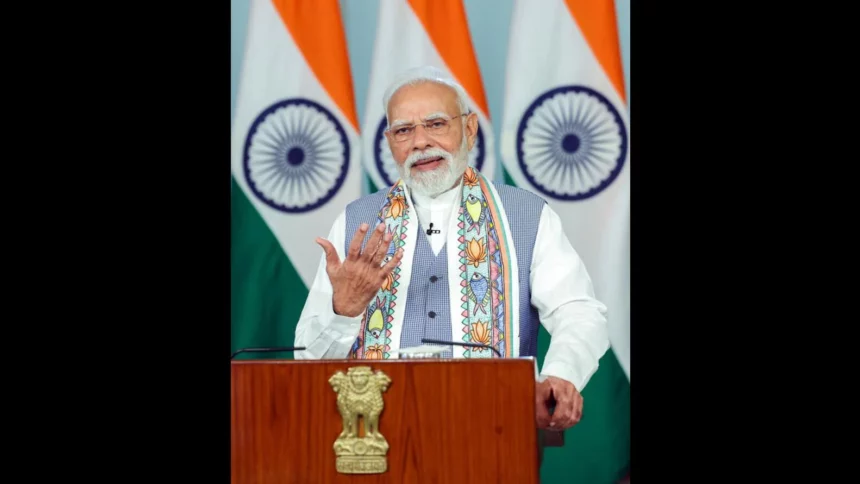
Prime Minister Narendra Modi will take the ceremonial salute and is expected to address the gathering, paying homage to Patel’s enduring contribution to the unity and integrity of India. The PM will also receive a special salute from 16 gallantry award-winning BSF personnel who played a crucial role in Operation Sindoor, India’s strategic response to the Pahalgam terror attack in Pakistan earlier this year.
Union Home Minister Amit Shah is also scheduled to hold a press conference in Patna on Thursday to outline the details of the Rashtriya Ekta Diwas events and emphasize Patel’s relevance in contemporary India.
Women Officers Lead Parade with Pride and Honour
A significant feature of this year’s Rashtriya Ekta Diwas parade is the leadership of women officers across multiple contingents, reflecting India’s progressive approach to gender representation in security forces. The parade commander, Simran Bhardwaj, a 2022 batch IPS officer from the Gujarat cadre, expressed her pride and honor at leading the event on such a historic occasion.
“It is a great privilege to participate in the parade marking the 150th birth anniversary of Sardar Patel. The event not only celebrates his legacy but also showcases the unity and strength of our security forces,” Bhardwaj told reporters after the rehearsal.
Among the leading women officers is Nadiya Farooq, an officer from the Kashmir Police Service, who will lead the Jammu and Kashmir contingent. Speaking ahead of the event, she said, “This is the first time I am participating in a national parade outside Jammu and Kashmir and that too before the Prime Minister. It is a proud and emotional moment for all of us.”
Another young officer, Garima Dadar, Deputy Superintendent of Police from Chhattisgarh, will lead her state’s police contingent. Dadar shared that she was selected through a rigorous screening process. “It is an honor to represent Chhattisgarh at such a prestigious event. Sardar Patel’s vision of unity continues to guide our duty as law enforcement officers,” she said.
The presence of women leading multiple contingents symbolizes India’s evolving security framework where inclusion, diversity, and empowerment stand at the forefront. It also mirrors Patel’s own belief in the power of collective strength and equal participation in nation-building.
This year’s parade is designed to represent the entire spectrum of India’s security and administrative apparatus — from paramilitary and state police forces to NCC cadets and animal units. Each contingent is being trained to maintain perfect synchronization, discipline, and coordination to reflect the unity that Patel envisioned for the newly independent India in 1947.
A Celebration of Unity, Culture, and Patriotism
The Rashtriya Ekta Diwas celebrations are not confined to the parade alone. Across the nation, government institutions, schools, and civil organizations are preparing to organize runs for unity, debates, exhibitions, and awareness campaigns focused on national integration. The Ministry of Home Affairs stated that the events aim to “highlight the spirit of national unity, harmony, and patriotism, inspiring citizens to embrace these values and actively participate in the nation’s progress.”
In Ekta Nagar, the celebration will extend beyond October 31. From November 1 to 15, 2025, the city will host Bharat Parv, a cultural festival featuring folk performances, traditional crafts, and a diverse food festival representing the cuisines of different Indian states. The two-week event will turn Ekta Nagar into a vibrant hub of culture, tradition, and unity, welcoming thousands of visitors from across the country.
The Ministry added that these celebrations aim to make Rashtriya Ekta Diwas not just a day of remembrance but a national movement of unity. It emphasized that Patel’s legacy is not limited to history but continues to guide India’s journey in maintaining its democratic and territorial integrity.
Sardar Vallabhbhai Patel, India’s first Deputy Prime Minister and Home Minister, played a decisive role in integrating the country post-independence. His political acumen and iron resolve led to the merger of over 562 princely states into the Indian Union, shaping the federal structure of modern India. Patel’s legacy is immortalized through the Statue of Unity, which stands at 182 meters, symbolizing India’s strength, determination, and unity in diversity.
In recent years, the Rashtriya Ekta Diwas parade has evolved from a symbolic commemoration into a full-fledged national event celebrating the values Patel stood for — courage, discipline, and unity. The inclusion of paramilitary forces, police contingents, and cultural tableaux reinforces the message that national integration is a continuous effort requiring the participation of every citizen.
As the country prepares for the 150th anniversary of the Iron Man of India, Ekta Nagar is transforming into a vibrant center of patriotic fervor. The streets are being adorned with tricolor decorations, security arrangements are being strengthened, and artists from across India are rehearsing their cultural performances. The celebrations are expected to attract dignitaries, military personnel, and citizens from across the country, making it one of the most memorable national events in recent history.
The Rashtriya Ekta Diwas parade, to be held at the foothills of the Statue of Unity, will thus stand as a living tribute to Sardar Vallabhbhai Patel — the man who transformed a fragmented nation into a unified republic. Through this grand event, the government seeks not only to honor Patel’s memory but also to rekindle the spirit of unity and nationhood that forms the bedrock of India’s democracy.
As preparations continue at full pace, the sound of marching boots, patriotic songs, and cultural rehearsals at Ekta Nagar echo the timeless message that Patel championed — that India’s strength lies in its unity. On October 31, when the national flag rises and the parade begins, it will not merely be a spectacle of discipline and coordination but a reflection of India’s collective identity — diverse, resilient, and bound by the spirit of oneness that Sardar Vallabhbhai Patel envisioned for the nation.