Amid rising geopolitical tensions and supply uncertainties linked to the ongoing Iran conflict, the Government of India has initiated discussions to diversify its sources of liquefied petroleum gas (LPG). State-run energy giants including Indian Oil Corporation, Bharat Petroleum, Hindustan Petroleum, and GAIL are reportedly in talks with Angola’s state-owned oil company Sonangol to secure long-term LPG supplies.
The move comes as India seeks to reduce its heavy dependence on Gulf countries for cooking gas imports and mitigate risks associated with supply disruptions. If finalised, the deal would mark the first time India imports LPG from Angola, opening a new chapter in its energy diversification strategy.
Currently, around 92% of India’s LPG imports come from Gulf nations such as the UAE, Qatar, Saudi Arabia, and Kuwait. Most of these shipments pass through the Strait of Hormuz, a narrow but critical maritime route through which nearly 20% of the world’s oil and gas trade flows. Any disruption in this corridor poses a significant threat to India’s energy security.
Strategic Shift to Safer Energy Routes
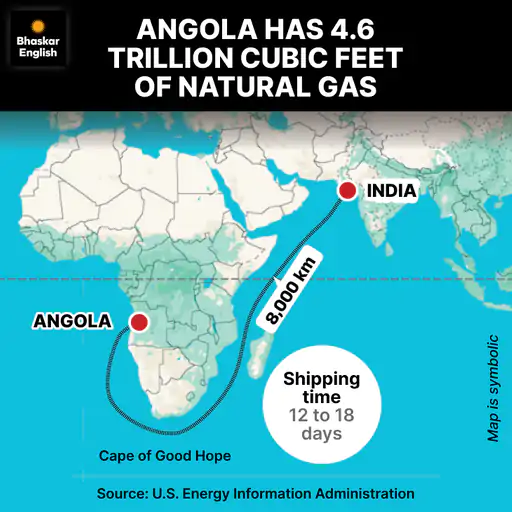
One of the key motivations behind exploring imports from Angola is the possibility of bypassing the Strait of Hormuz. LPG shipments from Angola would travel via the Atlantic Ocean and Arabian Sea, avoiding this geopolitical chokepoint entirely.
This alternative route reduces exposure to regional conflicts and maritime risks, offering India a more secure and stable supply chain. In the current geopolitical climate, where tensions in West Asia have increased volatility, such diversification is seen as a strategic necessity.
In addition, Angola’s location allows relatively efficient shipping timelines. LPG cargo from Angola can reach India within 12 to 18 days, making it a competitive option compared to other distant suppliers like the United States.
The ability to secure supplies through multiple routes enhances India’s resilience against global disruptions and strengthens its long-term energy planning.
Why Angola Emerges as a Key Partner
Angola has emerged as a promising partner for India due to several factors. The country possesses significant natural gas reserves, estimated at around 4.6 trillion cubic feet, and has well-developed export infrastructure.
Moreover, Angola produces propane and butane, the primary components of LPG, enabling direct supply without additional processing requirements. This makes the logistics more efficient and cost-effective.
India and Angola already share a history of energy trade, particularly in crude oil and liquefied natural gas (LNG). In the financial year 2025, Angola was among India’s top LNG suppliers, indicating an existing level of trust and cooperation between the two nations.
The presence of a government-controlled energy sector in Angola further simplifies negotiations, as agreements can be facilitated at the official level. This is particularly important for long-term contracts that require policy alignment and regulatory support.
Early-Stage Talks and Long-Term Plans
Discussions between Indian companies and Sonangol are currently in the early stages. Reports suggest that both sides are exploring the possibility of long-term agreements, with LPG contracts potentially spanning around one year and LNG deals extending up to a decade.
Government-level engagement is also underway, indicating the strategic importance of the deal. If successful, it could pave the way for deeper energy cooperation between India and African nations.
Experts believe that diversifying supply sources is essential for ensuring energy security, especially in a rapidly changing global environment. The Angola deal could serve as a model for similar agreements with other countries.
Expanding Energy Sourcing Beyond the Gulf
India’s exploration of Angola is part of a broader strategy to diversify its energy imports. The country is also considering sourcing LPG from nations such as Australia, Algeria, and Russia.
This multi-pronged approach aims to reduce dependence on any single region and create a more balanced supply portfolio. By engaging with multiple suppliers, India can better manage price fluctuations and supply risks.
Such diversification is particularly important given the volatility in global energy markets. Rising geopolitical tensions, supply chain disruptions, and fluctuating demand have made energy security a top priority for policymakers.
Growing Demand and Supply Challenges
India’s LPG demand has been rising steadily, driven by increasing consumption and government initiatives. The country is currently the world’s second-largest consumer of LPG and relies heavily on imports to meet its needs.
In 2024-25, India imported approximately 20.67 million tonnes of LPG, a significant increase from 14.81 million tonnes in 2019-20. During the same period, domestic production remained largely stagnant at around 12.79 million tonnes.
Total consumption reached 31.32 million tonnes in 2024-25, reflecting a sharp rise in demand. This gap between production and consumption has made imports essential, increasing exposure to global market risks.
A major driver of this demand growth is the Pradhan Mantri Ujjwala Yojana, which has expanded access to clean cooking fuel in rural areas. The scheme has resulted in over 330 million active LPG connections across the country.
While the initiative has improved living standards and reduced reliance on traditional fuels, it has also increased the pressure on supply chains.
Impact of Supply Disruptions
The current geopolitical situation has raised concerns about potential supply disruptions, which could affect not only households but also key industries such as fertilisers and steel.
Any prolonged shortage of LPG or LNG could lead to higher prices, impacting both consumers and businesses. Industries that rely on gas as a raw material or energy source may face increased costs, affecting overall economic activity.
The government has acknowledged these risks and stated that necessary measures are being taken to ensure stable supplies. Recently, shipments carrying around 94,000 metric tonnes of LPG have been dispatched to India to address immediate needs.
Reducing Dependence on Hormuz Route
The reliance on the Strait of Hormuz has long been a strategic concern for India. Given that a large portion of its energy imports passes through this narrow passage, any disruption could have significant consequences.
By sourcing LPG from Angola and other regions, India aims to reduce this dependency and create alternative supply routes. This not only enhances energy security but also strengthens the country’s bargaining power in global markets.
Diversification also allows India to respond more effectively to geopolitical developments, ensuring that supply disruptions in one region do not severely impact overall availability.
Future Outlook and Strategic Importance
The potential LPG deal with Angola represents a forward-looking approach to energy security. As global energy markets continue to evolve, countries are increasingly focusing on diversification and resilience.
For India, securing reliable and diversified energy supplies is critical to sustaining economic growth and meeting the needs of its population. The move towards sourcing LPG from Africa reflects a broader shift in strategy aimed at reducing vulnerabilities.
If the Angola deal is finalised, it could mark the beginning of a new phase in India’s energy diplomacy, with increased engagement in African markets.
India’s plan to import LPG from Angola highlights its proactive approach to addressing energy security challenges. By exploring alternative suppliers and routes, the country is taking steps to reduce dependence on traditional sources and mitigate geopolitical risks.
The move comes at a time when rising demand, limited domestic production, and global uncertainties are reshaping the energy landscape. Diversification, therefore, is not just a strategic choice but a necessity.
As discussions progress, the success of this initiative will depend on effective negotiations, infrastructure readiness, and long-term planning. If implemented successfully, it could significantly strengthen India’s energy resilience and ensure a stable supply of cooking gas for millions of households.