The World Trade Organization (WTO) concluded its 14th Ministerial Conference (MC14) in Yaoundé, Cameroon, without reaching consensus on several critical global trade issues, underscoring growing divisions between developed and developing nations. The high-level meeting, held from March 26 to March 30, brought together trade ministers, negotiators, and officials from across member countries, but ultimately failed to deliver a comprehensive outcome on key agendas such as e-commerce rules and fisheries subsidies.
The Ministerial Conference, which is the highest decision-making body of the WTO and typically held every two years, was expected to address long-pending issues that have increasingly become contentious in a rapidly evolving global trade environment. However, the lack of agreement at MC14 highlights the challenges facing multilateral trade negotiations in a fragmented global economy.
E-Commerce Moratorium Sparks Major Divide
One of the central issues at MC14 was the future of the long-standing moratorium on customs duties on electronic transmissions. Introduced in 1998, this moratorium prevents countries from imposing tariffs on digital goods and services transmitted electronically.
WTO Director-General Ngozi Okonjo-Iweala flagged the potential expiry of the moratorium as a major concern, as member countries failed to reach consensus on extending it. The issue has become increasingly significant in the digital age, where cross-border data flows and digital services form a substantial part of global trade.
India emerged as one of the strongest voices opposing a permanent extension of the moratorium. The Indian government has consistently argued that continuing duty-free treatment of electronic transmissions limits the policy space of developing countries and leads to significant revenue losses.
From New Delhi’s perspective, the moratorium disproportionately benefits major digital exporters, primarily developed economies, while restricting the ability of developing nations to build their domestic digital industries. India has therefore called for a re-evaluation of the policy rather than making it permanent.
This divergence in views reflects broader tensions between developed and developing countries over digital trade rules. While developed economies advocate for free and open digital trade, developing nations are increasingly concerned about digital sovereignty, taxation rights, and industrial policy.
TRIPS Moratorium Adds to Uncertainty
Another contentious issue at MC14 was the moratorium on non-violation and situation complaints under the Agreement on Trade-Related Aspects of Intellectual Property Rights (TRIPS). These complaints allow countries to challenge policies that may undermine expected benefits, even if they do not directly violate WTO agreements.
Developing countries, including India, have traditionally supported continuing this moratorium to avoid increased litigation risks and legal uncertainties in intellectual property disputes. They argue that allowing such complaints could expose them to complex legal challenges and constrain their policy flexibility.
However, some developed countries favour lifting the moratorium, arguing that it would strengthen enforcement mechanisms within the WTO framework. The inability of members to agree on extending this moratorium has added another layer of uncertainty to global trade governance.
The lack of consensus on both e-commerce and TRIPS issues indicates the growing difficulty of aligning diverse national interests within the multilateral trading system.
Fisheries Subsidy Talks Remain Inconclusive
Negotiations on fisheries subsidies, another key agenda item, also failed to reach a conclusive outcome. The talks focused on addressing issues such as overcapacity and overfishing, which are critical for ensuring sustainable marine ecosystems.
While ministers agreed to continue negotiations and carry forward draft texts to future discussions in Geneva, no final agreement was reached at MC14. The issue remains complex, with differing perspectives on how to balance environmental sustainability with economic development.
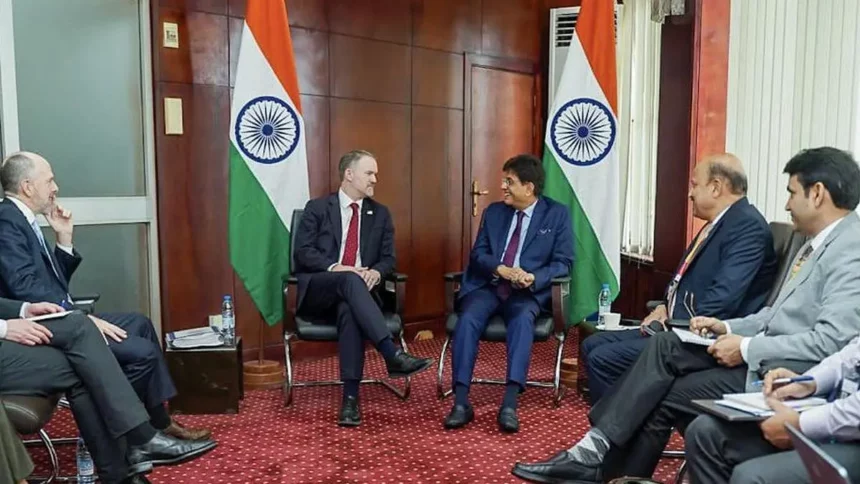
Leading the Indian delegation, Piyush Goyal emphasised that overfishing is largely driven by heavily subsidised industrial fleets operated by developed countries, rather than small-scale fishers in developing nations.
India argued for a development-oriented approach, highlighting that its fisheries sector supports over nine million families and is primarily composed of traditional and artisanal fishers who follow sustainable practices.
The country proposed several measures, including a 25-year transition period for developing countries, stronger regulations on distant-water fishing fleets, and exemptions for small-scale fishers. India also invoked principles such as Special and Differential Treatment and Common but Differentiated Responsibilities to support its position.
Despite these efforts, differences among member countries prevented a final agreement, leaving the issue unresolved.
Limited Progress in “Yaoundé Package”
Although major negotiations remained inconclusive, some limited outcomes were achieved during the conference. Ministers adopted decisions aimed at improving the integration of small economies into the global trading system and enhancing the implementation of special and differential treatment provisions.
These measures, part of what has been referred to as the “Yaoundé package,” were endorsed earlier in Geneva and represent incremental progress in addressing the concerns of smaller and developing economies.
However, the broader package of agreements that many had hoped would emerge from MC14 remains incomplete. The inability to finalise key components highlights the challenges of achieving consensus in a diverse and often divided membership.
Conference Chair Luc Magloire Mbarga Atangana acknowledged that members had “run out of time” to bridge differences across critical negotiating areas, including digital trade and WTO reform.
A Divided Global Trade Landscape
The outcome of MC14 reflects deeper structural issues within the global trading system. Diverging priorities between developed and developing countries have made it increasingly difficult to reach consensus on key issues.
Developed nations tend to prioritise issues such as digital trade liberalisation, intellectual property protection, and market access. In contrast, developing countries focus on policy flexibility, development concerns, and equitable treatment.
These differences have become more pronounced in recent years, as technological advancements and geopolitical shifts reshape global trade dynamics.
The rise of digital economies, in particular, has introduced new challenges for the WTO, which was originally designed to address trade in goods and services rather than data and digital platforms.
Implications for Multilateral Trade System
The inconclusive outcome of MC14 raises important questions about the future of the multilateral trading system. The WTO has long been seen as a cornerstone of global trade governance, providing a platform for negotiations and dispute resolution.
However, repeated failures to reach consensus on key issues have led to concerns about its effectiveness and relevance in a rapidly changing world.
Some countries have begun exploring alternative trade arrangements, including bilateral and regional agreements, which may offer more flexibility but could also fragment the global trading system.
The challenges faced at MC14 highlight the need for reform within the WTO to address emerging issues and ensure that it remains relevant in the 21st century.
India’s Position and Strategic Approach
India’s stance at MC14 reflects its broader approach to global trade negotiations, which emphasises development, equity, and policy space. By opposing a permanent e-commerce moratorium and advocating for flexible fisheries rules, India has positioned itself as a voice for developing countries.
The country’s approach is rooted in the belief that global trade rules must account for differences in economic development and capacity. India has consistently argued that one-size-fits-all solutions may not be appropriate in a diverse global economy.
At the same time, India has highlighted its own efforts in areas such as sustainability and digital growth, positioning itself as a responsible stakeholder in the global system.
The conclusion of the WTO’s 14th Ministerial Conference without consensus on key issues underscores the growing complexity of global trade negotiations. Disagreements over e-commerce, intellectual property, and fisheries subsidies reflect deeper divisions between developed and developing nations.
While some progress was made in specific areas, the overall outcome highlights the challenges facing the multilateral trading system. As global trade continues to evolve, the need for dialogue, compromise, and reform within the WTO becomes increasingly important.
The road ahead will require member countries to find common ground on critical issues while balancing diverse interests. Until then, uncertainty is likely to persist, shaping the future of global trade governance.