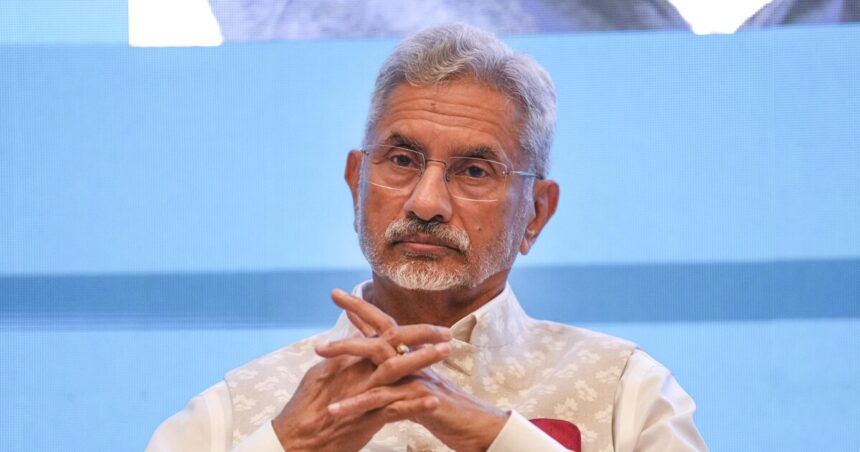
In a significant diplomatic push ahead of the December deadline, India’s External Affairs Minister S. Jaishankar has underlined the importance of expediting the India-European Union (EU) free trade agreement (FTA), describing it as a transformative step that could strengthen the global economy and reinforce democratic values. As negotiations enter their final stretch, Jaishankar’s remarks reflect India’s growing urgency to conclude the long-awaited trade pact that has been under discussion for nearly a decade.
Speaking after a high-level meeting with a visiting delegation from the European Parliament, Jaishankar emphasized that the timely finalization of the trade deal would not only enhance bilateral cooperation but also contribute to global economic stability. His comments come at a moment when both India and the EU are aligning their strategic and economic priorities amid shifting global trade dynamics, regional conflicts, and the challenge of rising protectionism.
“Discussed how India and the European Union can maximize convergences and deepen cooperation. This can stabilize the global economy and strengthen democratic forces,” Jaishankar wrote in a social media post. He further added, “The early conclusion of the India-EU FTA can make a big difference to these objectives.”
The urgency of his statement is underscored by the approaching December deadline set jointly by Prime Minister Narendra Modi and European Commission President Ursula von der Leyen. The two leaders reaffirmed their commitment last month to complete the agreement by year-end, a goal that was first established during Von der Leyen’s visit to India earlier in February with the EU College of Commissioners.
Strategic Imperative Behind the India-EU Trade Pact
The India-EU trade deal has long been viewed as a cornerstone of India’s broader trade diversification strategy and a means to enhance its economic footprint in Europe. For the European Union, the agreement represents an opportunity to engage with one of the fastest-growing major economies in the world, as well as to reduce supply chain dependencies amid ongoing global uncertainties.
The EU is currently India’s largest trading partner, with two-way trade in goods valued at $135 billion in the 2023–24 fiscal year. Despite the robust figures, policymakers from both sides have expressed that the potential remains largely untapped. The FTA, once finalized, is expected to significantly boost trade volumes by reducing tariffs, facilitating investment, and creating new opportunities in sectors such as digital trade, green technology, pharmaceuticals, and manufacturing.
Over the years, negotiations for the India-EU trade pact have encountered multiple hurdles—ranging from disagreements over intellectual property rights and agricultural subsidies to differing standards on labor and environmental regulations. However, the recent rounds of talks have been notably more productive, signaling renewed political will on both sides to overcome long-standing differences.
The 14th round of negotiations, held in Brussels on October 10, marked substantial progress, with both parties reportedly closing discussions on several key chapters, including customs and trade facilitation, dispute settlement, digital trade, sustainable food systems, and small and medium-sized enterprises. These developments have fueled optimism that a mutually beneficial framework could soon emerge, even as some sensitive areas remain unresolved.
European Union ambassador Hervé Delphin echoed this sentiment, stating that both sides are now in “continuous negotiation mode” and are aiming to reach an agreement before the end of the year. “Substantial progress has been made in the negotiations,” Delphin confirmed, following Commerce Minister Piyush Goyal’s visit to Brussels earlier this week for talks with top EU officials.
The stakes are particularly high for India, which has sought to enhance trade ties with major economic blocs to offset potential disruptions from ongoing global tensions and to secure access to advanced European markets. For the EU, which has been pursuing closer engagement with the Indo-Pacific region, a partnership with India aligns with its broader geopolitical objectives, especially as it seeks to counterbalance China’s growing economic and political influence.
Economic and Political Dimensions of the Negotiations
The significance of the India-EU trade agreement extends beyond commerce and into the realm of global diplomacy. Both India and the EU have projected the proposed deal as a partnership of democracies, underpinned by shared values of transparency, sustainability, and rule-based trade. Jaishankar’s remarks about “strengthening democratic forces” were widely interpreted as a subtle assertion of this shared vision in a time of increasing geopolitical polarization.
At the same time, India’s simultaneous trade talks with the United States highlight its effort to strike a careful balance in its foreign economic policy. With Washington and Brussels being India’s two most important Western partners, New Delhi’s engagement with both on trade issues underscores its determination to build a diversified network of global alliances.
Jaishankar’s appeal for a speedy conclusion comes as the Trump administration’s high tariff regime—imposing duties of up to 50 percent—continues to reshape global trade flows, forcing emerging economies to seek alternative pathways to market stability. Against this backdrop, the India-EU FTA could serve as a stabilizing framework for democratic economies looking to reinforce open trade and mutual economic resilience.
Diplomatic observers note that the EU delegation’s visit to India this week is not merely procedural but aimed at addressing specific areas of contention and finalizing the remaining chapters. The delegation of members of the European Parliament is also engaging with Indian industry representatives, civil society, and trade associations to better assess the opportunities and challenges linked to the FTA.
India’s Commerce Ministry, led by Piyush Goyal, has been working in close coordination with other ministries to ensure that the agreement protects India’s domestic industries while promoting export competitiveness. The government has maintained that the FTA must be economically meaningful, mutually beneficial, and sensitive to India’s developmental priorities.
For the EU, ensuring that the deal reflects its standards on environmental protection, labor rights, and sustainable growth remains a key priority. The EU has consistently emphasized its “open strategic autonomy” approach, balancing trade interests with ethical and regulatory considerations. The challenge for negotiators lies in reconciling these differing priorities while crafting a framework that satisfies both political and economic objectives.
Experts believe that if the India-EU FTA is concluded successfully, it could mark one of the most significant trade milestones in India’s recent history. It would not only deepen India’s integration into global value chains but also strengthen its position as a reliable economic partner in a rapidly evolving world order.
Jaishankar’s strong advocacy for early conclusion reflects New Delhi’s broader vision of leveraging economic diplomacy to advance its strategic goals. By aligning with the EU—one of the largest and most stable economic entities—India aims to secure not just market access but also technological collaboration, sustainable investment, and innovation-driven growth.
The ongoing talks, therefore, hold implications that go well beyond the negotiation table. They are part of a larger story about India’s ascent as a global power and its pursuit of equitable, inclusive, and rules-based economic partnerships. Whether the final agreement is reached by December remains uncertain, but the momentum generated in recent months suggests that both sides recognize the historic opportunity at hand.
As the clock ticks toward the year-end deadline, Jaishankar’s call for urgency serves as a reminder that in the complex arena of global trade, timing and political will can make all the difference. If concluded successfully, the India-EU trade deal could set the tone for a new chapter in international economic cooperation—one rooted in shared democratic ideals, strategic convergence, and a vision for sustainable global growth.