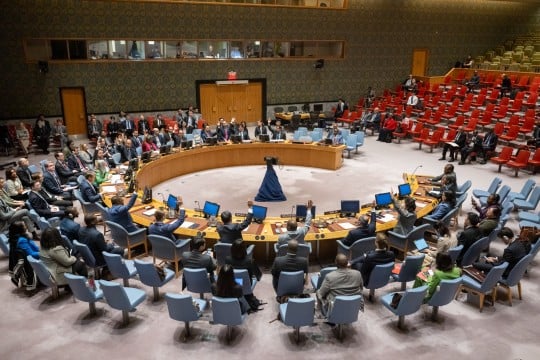
India strongly condemned Pakistan at the United Nations, accusing it of supporting cross-border terrorism and announcing the suspension of the 65-year-old Indus Waters Treaty. This decision came in the wake of the deadly Pahalgam terror attack, which killed 26 people and exposed Pakistan’s continuous role as a hub for terrorism. India’s UN Ambassador Parvathaneni Harish highlighted the country’s patience and responsible stance over decades, while emphasizing Pakistan’s repeated violations and obstruction regarding the treaty and regional peace.
India’s Stance on Terrorism and Treaty Suspension
Ambassador Harish addressed the UN after Pakistan raised concerns about the Indus Waters Treaty, calling water “life and not a weapon of war.” India countered this by recalling how the treaty, signed in 1960 in good faith, has been repeatedly violated by Pakistan’s actions, including three wars and thousands of terror attacks over the last four decades. Harish stated that over 20,000 Indians have lost their lives due to terrorism sponsored by Pakistan. He stressed that despite India’s extraordinary patience and magnanimity, the ongoing cross-border terror activities endanger civilian lives, religious harmony, and economic prosperity.
He further explained that significant changes in security concerns, climate demands, and technology over the past 65 years have made it necessary to update dam infrastructure and treaty provisions. However, Pakistan has persistently blocked all attempts at modification, including requests from India for discussions. The ambassador also cited specific incidents like the 2012 attack on the Tulbul navigation project, highlighting Pakistan’s role in threatening the safety of infrastructure and civilians alike.
Escalation of Tensions and Recent Military Responses
Following the Pahalgam terror attack, which revealed cross-border links, India launched “Operation Sindoor” targeting terror camps in Pakistan and Pakistan-occupied Kashmir. This led to a sharp escalation in tensions, with Pakistan responding through missile and drone strikes. India’s forces successfully repelled these attacks and retaliated by targeting Pakistani airfields. The hostilities ceased with a ceasefire on May 10, but diplomatic and security tensions remain high.
Ambassador Harish reiterated that India will keep the Indus Waters Treaty suspended until Pakistan ends its credible and irrevocable support for terrorism, underscoring that Pakistan remains the primary violator of the treaty. This firm stance sends a clear message on India’s commitment to protecting its sovereignty and regional peace.