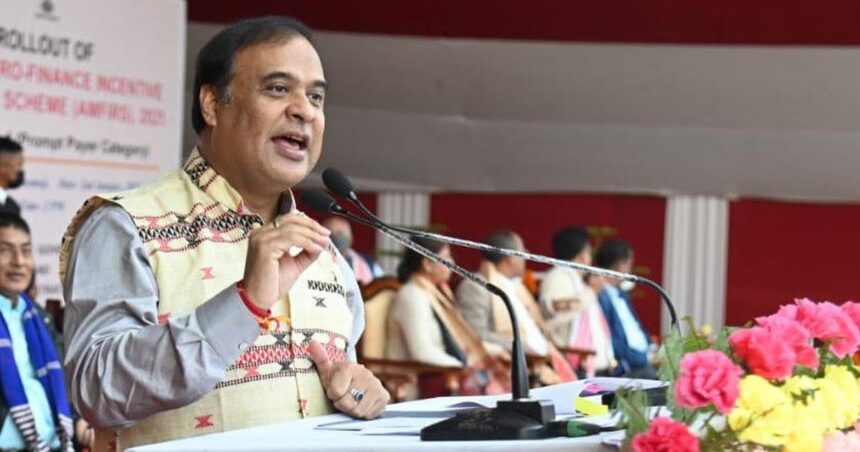
Assam Chief Minister Himanta Biswa Sarma recently made a controversial prediction regarding the demographic future of the state, claiming that Bengali-speaking Muslims, commonly referred to as ‘Miya-Muslims,’ will emerge as the largest community in Assam in the next census. Speaking to reporters in Dibrugarh, Himanta Biswa Sarma linked this demographic projection to the state government’s ongoing policies and hinted at legislative measures aimed at protecting what he described as the interests of the indigenous population. The Chief Minister’s remarks have sparked intense debate, highlighting sensitive issues related to ethnicity, migration, political representation, and demographic changes in Assam, a state historically marked by cultural and communal complexities.
Himanta Biswa Sarma’s Demographic Claim and Government Plans
During his interaction with the media, Himanta Biswa Sarma stated with confidence that Miya-Muslims are likely to constitute 38 percent of Assam’s population following the next census, positioning them as the largest community in the state. According to Himanta Biswa Sarma, this demographic trend is a reflection of long-standing socio-political developments in Assam, where migration and settlement patterns have historically influenced the composition of the population. The Chief Minister underscored that the state government, led by the Bharatiya Janata Party (BJP), is actively working to safeguard the interests of indigenous communities through targeted policies and initiatives, although he did not elaborate fully on the mechanisms at that time.
Himanta Biswa Sarma framed his remarks within a narrative of long-term governmental planning, suggesting that had certain interventions been implemented decades earlier, the current demographic dynamics might have been different. He emphasized that the government’s work over the past five years has been critical in shaping the state’s future trajectory. While the term ‘Miya’ has historically been used pejoratively to describe Bengali-speaking Muslims in Assam, recent decades have seen the community embracing the label as a mark of identity and resilience. This nuanced sociolinguistic evolution adds a complex layer to the political and demographic discourse surrounding the term.
The Chief Minister also highlighted the government’s legislative agenda aimed at addressing what he described as pressing challenges related to land, property, and community rights. Himanta Biswa Sarma indicated that in the upcoming Assam Legislative Assembly session, two important bills would be introduced to protect the interests of the indigenous population, including what he referred to as ‘jati, mati, bheti’—community, land, and home. While details of these proposed legislations remain undisclosed, Himanta Biswa Sarma’s comments signal the administration’s intent to formally institutionalize protective measures for certain demographic groups in the state. These remarks have inevitably fueled discussions on political prioritization, minority rights, and governance strategies in Assam.
Political and Demographic Context
The demographic claims made by Himanta Biswa Sarma must be understood against the backdrop of Assam’s complex history of migration, communal identities, and electoral politics. Assam has long grappled with tensions arising from the settlement of Bengali-speaking Muslims, often viewed by indigenous communities as immigrants from Bangladesh. These tensions have influenced political campaigns, local governance, and policymaking for decades, shaping both community interactions and administrative responses. Sarma’s remarks appear to reinforce the BJP’s broader narrative that highlights demographic challenges as a central issue in Assam’s political landscape.
The Chief Minister’s commentary also reflects concerns about political influence through demographic shifts. Himanta Biswa Sarma suggested that the indigenous population has faced pressure due to settlement patterns and that measures to safeguard their interests are crucial for ensuring long-term stability. He emphasized the need to “keep the Miyas under pressure” for a sustained period, framing this approach as essential to protecting the demographic and cultural integrity of the state. Such statements underline the politically sensitive nature of demographic discussions in Assam, where identity, religion, and electoral outcomes are deeply intertwined.
Prime Minister Narendra Modi, during his visit to Assam the previous month, had similarly expressed concerns about demographic changes, attributing the challenge to alleged support provided by previous Congress-led governments to illegal settlers. Modi’s remarks aligned with the BJP’s political rhetoric surrounding demographic concerns, reinforcing the narrative of perceived threats to indigenous populations. This broader political discourse has heightened debates around citizenship, migration, and the implementation of policies aimed at regulating population movements in Assam.
The issue of demographic change in Assam is further complicated by legal and constitutional frameworks governing citizenship, land ownership, and minority rights. Policies such as the National Register of Citizens (NRC) and the Citizenship Amendment Act (CAA) have played a significant role in shaping public perceptions and political strategies, adding layers of legal, social, and ethical considerations to discussions about population composition. Himanta Biswa Sarma’s statements can be seen as part of this larger political and administrative strategy aimed at addressing concerns about population dynamics while consolidating electoral support among indigenous communities.
Beyond the political narrative, the demographic projections have significant implications for social cohesion and communal harmony. Assam’s history of ethnic and religious tensions, often exacerbated by migration disputes, underscores the delicate balance that policymakers must navigate. Himanta Biswa Sarma’s statements, by predicting the ascendancy of Miya-Muslims as the largest community, highlight potential flashpoints in inter-community relations and the importance of careful governance to prevent unrest or alienation. Analysts argue that demographic trends cannot be addressed solely through legislative measures but require comprehensive social, economic, and political strategies that promote inclusivity, dialogue, and equitable development.
Himanta Biswa Sarma’s remarks also implicitly address questions of identity politics, a recurring theme in Assam. The Chief Minister’s use of terms such as ‘jati, mati, bheti’ reflects a conscious emphasis on cultural preservation and indigenous identity, which has been a key narrative in Assam’s political discourse. By framing the demographic shift in terms of protecting these core elements, Himanta Biswa Sarma positions the government’s initiatives as measures to uphold cultural and territorial integrity in the face of changing population dynamics. This framing resonates with broader concerns about the preservation of Assamese language, heritage, and land rights.
The community identified as ‘Miya’ has, over time, developed a complex identity negotiation, balancing between recognition of historical migration patterns and the assertion of belonging within Assam. Activists from this community have increasingly reclaimed the term ‘Miya’ as a symbol of defiance, pride, and resilience. Himanta Biswa Sarma’s demographic predictions, coupled with the government’s stated protective measures for indigenous populations, contribute to a charged environment where political, cultural, and demographic narratives intersect, shaping public opinion and influencing policy decisions.
The upcoming legislative session, as indicated by Himanta Biswa Sarma, will be a critical platform for the state government to introduce measures that aim to regulate land, community rights, and population-related policies. While the specifics of the two proposed legislations remain undisclosed, observers anticipate that they will directly address issues related to citizenship verification, property protection, and community security. These measures could have long-term implications for social cohesion, electoral politics, and the relationship between indigenous and migrant communities in Assam.
Experts note that Assam’s demographic future cannot be isolated from historical migration trends, political interventions, and legal frameworks that govern citizenship and property rights. The Chief Minister’s statements reflect the government’s approach to proactively shaping these dynamics while simultaneously addressing perceived threats to indigenous identity. The emphasis on legislative protection, strategic oversight, and population monitoring aligns with the BJP’s broader political strategy of consolidating support among key demographic groups.
Himanta Biswa Sarma’s narrative also highlights the tension between demographic realities and political aspirations. While predicting the rise of Miya-Muslims as the largest community, he simultaneously underscores the government’s commitment to protecting indigenous interests. This dual approach illustrates the challenges of managing population dynamics in a politically sensitive environment, where policy interventions must balance demographic trends, cultural preservation, and electoral considerations.
Himanta Biswa Sarma’s statements on Assam’s demographic landscape and the anticipated rise of Miya-Muslims represent a significant intervention in the state’s ongoing discourse on population, identity, and governance. By linking demographic predictions with legislative measures and governmental strategies, the Chief Minister has positioned the BJP-led administration as proactive in addressing perceived challenges, while simultaneously highlighting the political, social, and cultural stakes inherent in Assam’s evolving demographic landscape.