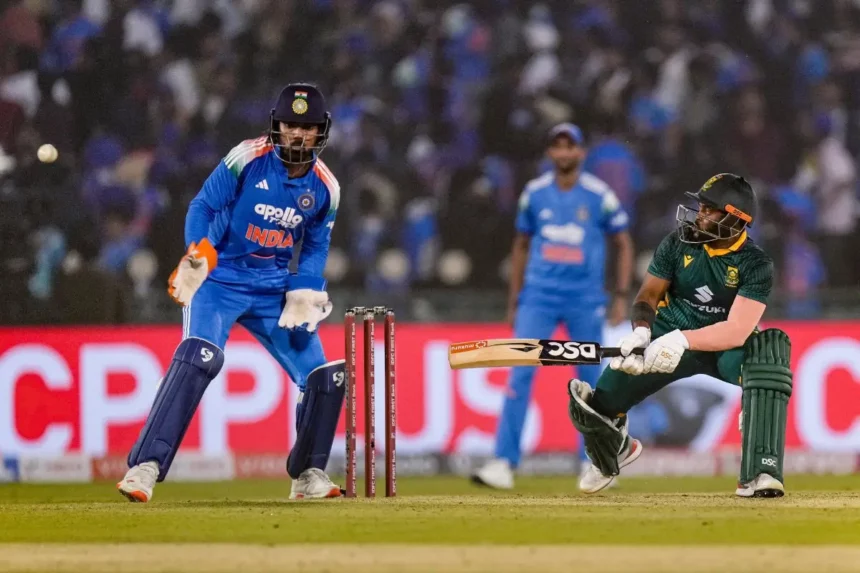
The decisive third ODI between India and South Africa in Visakhapatnam arrives at a moment when both teams carry the momentum of a fiercely competitive series, and the conditions at the Dr Y S Rajasekhara Reddy ACA-VDCA Cricket Stadium are expected to play a significant role in shaping the contest. With the series tied and both sides having delivered high-scoring performances in earlier matches, the setting in Vizag brings together environmental factors, pitch behaviour and strategic planning that together define the significance of this match for players, analysts and fans awaiting a gripping finale.
Pitch behaviour in Visakhapatnam and its role in a decisive ODI shaped by dew and late-evening conditions
The pitch at the ACA-VDCA Stadium has historically offered a reliable batting surface that gradually shifts in character through the course of an innings. In this series, where run scoring has been exceptional and where South Africa has come close to successfully chasing 350 in the first match before achieving a record-equalling chase in Raipur, the expectation for another high-scoring encounter is firmly established. Groundsmen have been preparing the surface under stable weather conditions, ensuring that pitch activity will not be disrupted by atmospheric interference ahead of the match.
One of the central themes influencing every tactical decision in the series has been the intensity of dew, which has already altered the shape of contests in dramatic ways. Bowlers have struggled to control the wet ball in the second innings, and batters have used the evening moisture to their advantage by striking more freely once the ball becomes difficult to grip. This challenge is expected to repeat in Visakhapatnam, with meteorological forecasts suggesting the appearance of dew shortly after sunset, reinforcing its role as a decisive factor in determining match dynamics and strategic approaches from both sides.
The rule mandating the use of the same ball between overs 34 and 50 has amplified the weight of dew in second-innings scenarios. This regulation, aimed at maintaining continuity and consistency in ball usage, becomes far more impactful in conditions where moisture softens the ball and reduces seam movement. During the chase in Raipur, South African batters accelerated their scoring after the 35th over precisely because conditions became more favourable, offering minimal resistance to strokeplay. The brief phase in which India regained control by getting the ball replaced around the 40th over demonstrated how pivotal the ball’s condition remains in high-pressure chases.
This insight underscores how the toss could be among the most important moments of the match. Captains may weigh not only the advantages of batting under clear afternoon conditions but also the inevitability of facing a wetter ball under stadium lights. With both teams prepared for another run-heavy contest, winning the toss may determine whether they choose to bat when the ball behaves predictably or chase when boundaries become easier to access due to dew-assisted conditions.
South Africa, carrying renewed confidence from their performances so far, will see this match as an opportunity to secure an unprecedented achievement in modern Indian cricketing history. No visiting team has managed to win both the Test and ODI series on the same Indian tour since Pakistan achieved the feat in 1986–87. This statistic adds substantial historical weight to the contest and elevates the intensity of preparations from both sides. India, traditionally dominant at home and especially strong at venues like Visakhapatnam, will view this match as a crucial moment to reaffirm their supremacy under challenging circumstances.
The pitch’s tendency to support fluent batting throughout the first half of the match also means bowlers must adapt quickly to extract any help available. Seamers have historically relied on early swing and seam movement at this venue, while spinners benefit from the pitch’s gradual abrasiveness as the match progresses. However, the onset of dew neutralises spin significantly and limits the effectiveness of slower bowlers in the latter part of the innings. This compels captains to adopt front-loaded bowling strategies, deploying spinners early when grip is more reliable and saving seamers for later stages where wet conditions favour pace through skid and bounce.
In this environment, team selection becomes a finely balanced act. All-rounders capable of contributing both with ball and bat in demanding conditions become crucial assets. Bowlers with variations suited to skiddy surfaces, including cutters, back-of-the-hand deliveries and cross-seam balls, are likely to be more successful during phases where traditional seam and spin lose their effectiveness. The match therefore invites experimentation blended with experience, as teams must assess not only skill sets but also the psychological resilience required for a contest shaped by conditions as much as by ability.
Weather conditions in Visakhapatnam and their influence on match strategy, player performance and overall game environment
Weather forecasts for Visakhapatnam indicate a mostly stable day with no expected rainfall, ensuring uninterrupted preparation and match play. Clouds will persist, but there is no indication that they will pose challenges for visibility or pitch management. With temperatures predicted to hover around 27°C in the morning and 28°C in the afternoon before dropping rapidly to approximately 11°C in the late evening, players will experience a stark temperature shift that may influence physical exertion, ball handling and overall endurance during the match.
This temperature drop lends a unique feel to the evening session. While early conditions may produce a slightly dry pitch encouraging free strokeplay, the cooling atmosphere is expected to contribute to heavier dew formation as the night progresses. Teams must anticipate these shifts not only tactically but also in their warm-up routines, equipment preparation and hydration strategies. Fielders frequently struggle with wet outfields, slower ball approach speeds and slippery throws, factors that become increasingly prominent in late-night cricket under coastal moisture conditions.
Additionally, the air quality index for Visakhapatnam is expected to register in the “very unhealthy” category, a condition that has unfortunately become common across many parts of India. This may affect players’ respiratory comfort levels, particularly fast bowlers and those involved in high-intensity efforts such as sprinting between wickets. Support staff will need to monitor players closely, incorporating breathing exercises, mask usage during breaks and hydration protocols to mitigate the impacts of poor air quality on athletic performance.
Despite these environmental challenges, the absence of rain is a crucial relief for teams and organisers, ensuring that pitch preparations remain unaffected in the build-up to the match. A dry and uninterrupted preparation period allows curators to focus on maintaining a firm surface that promotes consistent bounce and clean carry, both of which are desirable for high-scoring limited-overs cricket. Batters often thrive in such conditions, and bowlers must rely more on variations, tactical intelligence and field placement than on pitch assistance.
Fans attending the match will also experience the transition from warm daytime temperatures to a significantly cooler nighttime environment, creating an atmosphere where comfort levels vary across the duration of the event. The cooler evening breeze combined with dew enhances the visual appeal of stadium lighting and creates distinct conditions that contribute to the signature feel of cricket in coastal Andhra Pradesh.
As both India and South Africa prepare for this defining contest, the weather plays not just a supporting role but a decisive influence in shaping both team strategies and individual performances. Coastal venues like Visakhapatnam are known for producing dramatic shifts in match rhythm based on atmospheric conditions, and this match is expected to follow the same script, presenting opportunities and challenges that penetrate every aspect of the game.
The series so far has been defined by batting dominance, strategic acceleration in the latter overs and the psychological ebb and flow of defending totals in dew-affected conditions. With South Africa seeking a historic achievement and India aiming to protect their formidable home record, the match in Visakhapatnam becomes a symbol of what modern limited-overs cricket represents: a blend of skill, resilience, tactical clarity and adaptability to environmental variables that can change rapidly between the first and second innings.
The anticipation surrounding this match speaks to the broader narrative of India–South Africa cricket, where competitiveness has consistently remained high and where conditions in each venue introduce different layers of complexity. As the teams walk into the stadium on match day, they carry not only the expectations of millions but also the awareness that the pitch beneath their feet and the air above them will shape how the contest unfolds. With the stage set for an exhilarating finish to a tightly contested series, all eyes turn to Visakhapatnam for what promises to be a gripping evening of one-day international cricket.