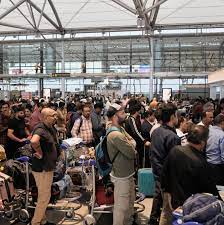
In one of the biggest operational breakdowns in recent Indian aviation history, IndiGo faced an unprecedented crisis when more than a thousand flights were cancelled in a single day, leaving passengers stranded across airports, triggering political debate, prompting a government investigation, and forcing the airline’s leadership to issue a public apology. What unfolded appeared not just as a temporary scheduling failure, but a deeper reflection of structural stress within India’s rapidly expanding aviation sector. The events of the day, combined with reactions from travellers, regulators, pilots, political leaders and the airline’s own management, created a narrative that highlighted both operational vulnerabilities and the complexities of managing large-scale air travel in a fast-growing market.
IndiGo’s Turbulent Day: Operational Failures, Passenger Chaos and the CEO’s Public Apology
IndiGo’s operational crisis escalated dramatically on Friday, when airports across major Indian cities including Delhi, Bengaluru, Chennai and in the Union Territory of Jammu & Kashmir reported widespread cancellations. By the end of the day, the disruption had crossed the thousand-flight mark, making it the airline’s most severely affected operational day since its inception. Airports saw chaotic scenes as passengers waited for hours without clarity, while some resorted to protests as anger and frustration mounted.
IndiGo chief executive Pieter Elbers addressed the public shortly after the turbulence became national news. He admitted that the airline had cancelled “more than half” of its daily flights and acknowledged the scale of inconvenience experienced by travellers. Elbers described the day as the “most severely impacted” and expressed regret on behalf of the airline. According to him, while disruptions would continue into Saturday, the airline expected fewer than a thousand cancellations as it attempted to stabilise crew schedules and realign operations.
Elbers further stated that the airline anticipated “full normalisation between December 10 and 15.” However, he cautioned that even though recovery was underway, the scale of IndiGo’s network, fleet size and daily passenger volume meant that stabilisation would take time. This admission signalled that the crisis was not merely a single-day failure, but part of a larger set of logistical and regulatory challenges developing across India’s aviation system.
The Ministry of Civil Aviation stepped in quickly, ordering a high-level inquiry into the reasons behind the mass cancellations and directing officials to assign accountability. The ministry’s statement reflected seriousness, emphasising that such large-scale disruption could not be dismissed as routine operational variance. Aviation Minister K. Rammohan Naidu briefed the media, stating that urgent measures were being undertaken to restore normalcy, especially for passengers stranded at airports.
The situation worsened when it was revealed that the cancellations were linked to a set of newly implemented crew duty rules. The Directorate General of Civil Aviation had recently increased mandatory weekly pilot rest from 36 to 48 hours and limited night landings for pilots to two per week instead of six. The rules, meant to improve pilot fatigue management and enhance safety, created a sudden shortage of available crew, exposing gaps in IndiGo’s planning.
IndiGo admitted to “misjudgment and planning gaps,” openly acknowledging that the new regulations required far more careful transition management than the airline had anticipated. To mitigate the situation, the government temporarily suspended the new Flight Duty Time Limit (FDTL) norms for a day.
However, the decision sparked immediate controversy. The Airlines’ Pilots Association strongly objected to the relaxation, claiming it set a “dangerous precedent.” According to the pilots’ body, easing safety norms, even temporarily, undermined the purpose of fatigue management regulations and increased risks for both crew and passengers. The disagreement exposed a deeper conflict between operational pressures and pilot welfare, an issue that continues to simmer beneath the surface in Indian aviation.
Meanwhile, the crisis spilled into the political arena. Congress leader Rahul Gandhi blamed the situation on what he described as the government’s “monopoly model.” He argued that IndiGo, being the dominant private carrier, had accumulated excessive market power, leaving passengers vulnerable when the airline encountered operational stress. Sharing a newspaper column he authored, Gandhi stated that the “cost of the government’s monopoly model is being paid by ordinary Indians.” His remarks triggered a political back-and-forth, with some BJP leaders dismissing the criticism as opportunistic.
BJP MP Jagdambika Pal, however, urged the government to step in more proactively to arrange alternative travel options for stranded passengers. He acknowledged that even Members of Parliament were affected by the cancellations, demonstrating the widespread reach of the meltdown.
The massive disruption also led to a sudden explosion in airfares across domestic routes. With flights either cancelled or fully booked, ticket prices soared to extraordinary levels. The last remaining Mumbai–Delhi flight cost nearly ₹52,000 for a one-way journey, while the sole Delhi–Mumbai option for the day was priced at nearly ₹49,000. On other routes, the situation was equally dire. No seats were available for Mumbai–Bengaluru, while Delhi–Bengaluru fares started at an alarming ₹39,101. These exorbitant fares exposed another systemic issue: India’s dynamic pricing model, which often responds aggressively during supply shortages.
Despite the chaos, IndiGo attempted to ease tensions by offering full refunds for cancelled flights. The airline announced that refunds would be automatically processed via the original mode of payment. It also offered fee waivers for cancellations and rescheduling for all bookings between December 5 and 15. Additionally, IndiGo arranged thousands of hotel rooms across key cities and arranged surface transport options to accommodate stranded travellers. The airline claimed it was doing everything possible to provide food, water and basic assistance to customers waiting at airports.
However, for many passengers, the measures came too late. Numerous accounts from travellers described how they waited with young children, elderly relatives and luggage for hours without information. Social media was flooded with videos showing long queues, exhausted passengers lying on terminal floors, and heated confrontations between frustrated customers and airline staff.
A closer examination of the crisis highlighted how closely India’s aviation ecosystem is tied to crew availability and regulatory compliance. With most airlines operating at near-maximum utilisation levels to maintain revenue margins, even small fluctuations in crew scheduling can lead to cascading disruptions. As the industry expands and airport traffic climbs each year, such vulnerabilities become more apparent. The IndiGo crisis may therefore lead to broader questions about fleet redundancy, pilot availability, training protocols and the pace of regulatory reform.
Regulatory Changes, Pilot Rest Rules and Systemic Pressures Expose Fragility of India’s Aviation Ecosystem
The root of the crisis lay in the new DGCA-mandated Flight Duty Time Limit regulations. These rules, designed to strengthen pilot rest periods and reduce fatigue-related risks, required airlines to significantly adjust their scheduling strategies. IndiGo, the largest carrier by fleet size and passenger volume, struggled most visibly. The FDTL changes included a mandatory increase in weekly rest hours and new restrictions on night landings. Such measures are internationally recognised as essential for safety, especially for pilots who operate long back-to-back schedules.
However, the transition required intricate planning, particularly for an airline with thousands of pilots and hundreds of daily flight sectors. IndiGo’s admission of planning gaps indicated that its rostering systems and forecast models failed to anticipate the scale of disruption these new rules would generate. This gap created a wave of crew unavailability, leading to cancellations that quickly snowballed beyond manageable levels.
The government’s decision to offer a brief, one-day exemption from the stricter rules was intended to allow airlines breathing space. But it came at the cost of criticism from pilot organisations, who argued that relaxing rules meant to protect safety and well-being could compromise long-term aviation standards. Their objections signalled deeper tensions within the industry: airlines struggle to maintain profitability and efficiency, while pilots seek humane working conditions in a high-pressure environment.
The crisis also revived conversations about India’s heavy dependence on a small number of major carriers. With IndiGo holding a dominant market share, disruptions on its network create ripple effects across the entire aviation system. Other airlines often lack sufficient capacity to absorb stranded passengers, leading to surging prices and overcrowded terminals. As one of the fastest-growing aviation markets in the world, India faces a delicate balancing act between promoting expansion and ensuring stability.
Airports, too, bore the fallout. With thousands stranded, airport authorities were forced to coordinate crowd control, safety measures and communication efforts. The sudden spike in footfall created logistical nightmares in departure halls, security zones and waiting lounges. The situation highlighted the need for stronger contingency planning among airport operators as domestic air travel continues to scale rapidly.
Nonetheless, the most emotional impact was felt by passengers. Travellers reported missed weddings, business deals, medical appointments and international connections. Social media became a real-time archive of distressing passenger experiences and on-ground confusion. The scale of disruption was such that even days after the cancellations, ripple effects were still expected as aircraft, crew and schedules were rebalanced across the network.
In the coming days, the government’s investigation will likely seek clarity on several crucial questions. Did IndiGo underestimate the effect of the new regulations? Were its rostering systems inadequate? Was communication with passengers conducted responsibly? And to what extent should regulators monitor transitional planning by airlines implementing new safety norms?
Irrespective of the answers, the IndiGo crisis stands as a reminder that India’s aviation sector, despite its impressive growth trajectory, remains vulnerable to structural stress. As passenger numbers soar, airports expand and airlines add new routes, the system must modernise its operational resilience to avoid similar breakdowns in the future.