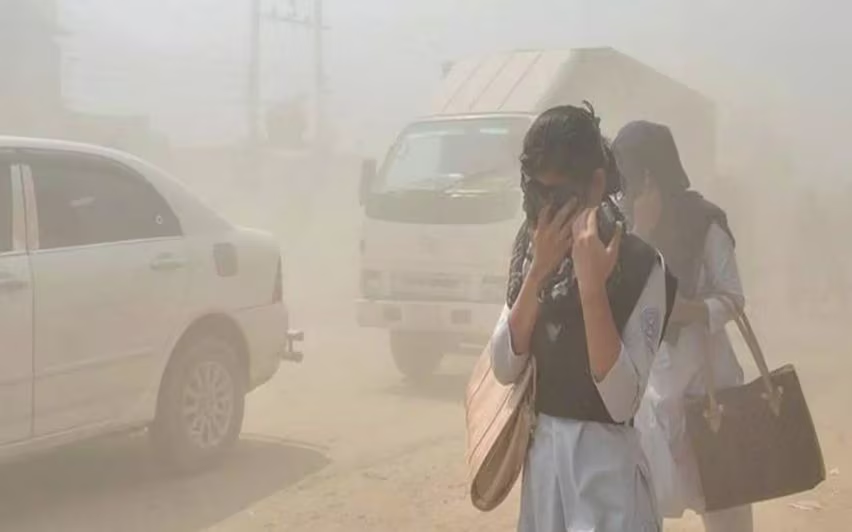
A new report on global air quality has revealed that India continues to struggle with severe pollution, with 13 of the world’s 20 most polluted cities located in the country. Byrnihat in Assam has been identified as the most polluted city worldwide, according to the World Air Quality Report 2024 by Swiss air quality technology company IQAir.
Delhi retains its position as the most polluted capital globally, highlighting the worsening air quality in the national capital region. The report also ranks India as the fifth most polluted country in 2024, marking a slight improvement from its third-place ranking in 2023. Despite this, six of the world’s 10 most polluted cities are in India, underscoring the magnitude of the crisis.
While India experienced a 7 percent reduction in PM2.5 concentrations in 2024 compared to the previous year, the average concentration remains alarmingly high at 50.6 micrograms per cubic meter. Delhi recorded an annual PM2.5 concentration of 91.6 micrograms per cubic meter, showing little change from the 92.7 micrograms per cubic meter recorded in 2023.
The 13 Indian cities listed among the world’s most polluted include Byrnihat, Delhi, Mullanpur, Faridabad, Loni, New Delhi, Gurugram, Ganganagar, Greater Noida, Bhiwadi, Muzaffarnagar, Hanumangarh, and Noida. In total, 35 percent of Indian cities reported annual PM2.5 levels exceeding 10 times the World Health Organization’s recommended limit of 5 micrograms per cubic meter.
Air pollution remains a significant public health hazard, reducing life expectancy in India by an estimated 5.2 years. A study published by Lancet Planetary Health last year estimated that between 2009 and 2019, approximately 1.5 million deaths annually in India were linked to prolonged exposure to PM2.5 pollution. These fine particulate pollutants, measuring less than 2.5 microns, penetrate deep into the lungs and bloodstream, increasing the risk of respiratory illnesses, heart disease, and cancer. Major sources of PM2.5 pollution include vehicle emissions, industrial activities, and the burning of biomass and crop residue.
Health experts, including former WHO chief scientist and Indian health ministry advisor Soumya Swaminathan, have emphasized the need for urgent action. Swaminathan acknowledged India’s progress in air quality data collection but stressed that more decisive measures are required. She suggested expanding the use of clean cooking fuels, such as LPG, and increasing subsidies for underprivileged families to reduce biomass burning.
In urban areas, improved public transport, stricter emissions regulations, and penalties on polluting vehicles could significantly contribute to air quality improvements. Stricter enforcement of industrial emissions laws and the mandatory installation of pollution-control equipment at construction sites were also recommended as crucial steps toward mitigating pollution levels.
While the report highlights a minor decline in pollution levels, it also signals that India’s air quality crisis remains a pressing issue requiring immediate and sustained action to protect public health and the environment.