India has reaffirmed its commitment to the people of Afghanistan, emphasizing its ongoing engagement with the Taliban regime while closely monitoring the situation in the country. Addressing the United Nations Security Council (UNSC) during discussions on the United Nations Assistance Mission in Afghanistan (UNAMA), India’s Permanent Representative to the UN, Ambassador Parvathaneni Harish, highlighted the significance of India’s historical ties with Afghanistan and its continued humanitarian and developmental efforts.
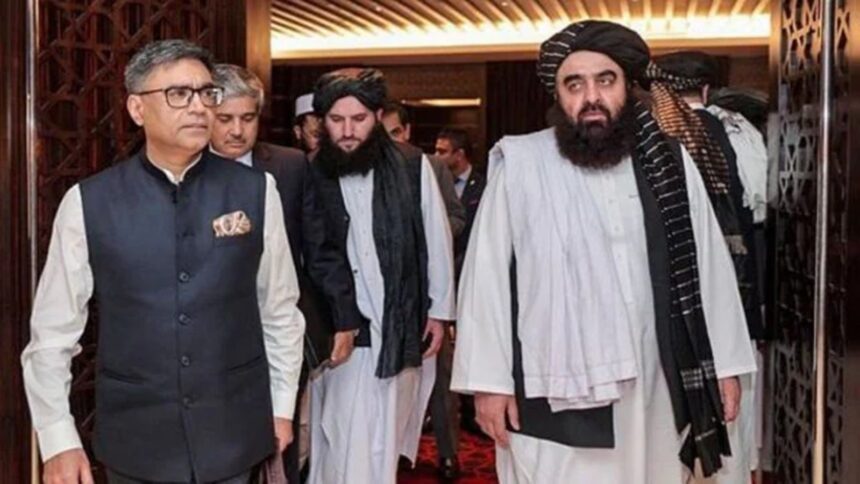
Harish informed the Council that earlier this year, India’s Foreign Secretary Vikram Misri held discussions with Afghanistan’s Acting Foreign Minister Mawlawi Amir Khan Muttaqi in Dubai. During the meeting, both sides discussed bilateral relations and regional developments, with the Afghan leadership expressing appreciation for India’s sustained engagement and assistance. The two sides also agreed that India would explore new development projects in Afghanistan alongside its ongoing humanitarian programs. This meeting marked the highest-level contact between India and the Taliban since the latter took control of Kabul in 2021.
India’s long-standing relationship with Afghanistan is built on strong people-to-people ties, and its approach remains focused on providing humanitarian assistance while working towards an international consensus under the UN framework. India has actively participated in key international forums, including the UN meetings in Doha and the Moscow Format, to contribute to peace and stability in Afghanistan. The country has been working closely with various UN agencies to support Afghan people in critical areas such as health, education, food security, sports, and capacity building.
Since 2001, India has been involved in over 500 development projects across Afghanistan. Following the Taliban’s takeover in August 2021, India has continued its aid efforts, delivering 27 tonnes of relief material, 50,000 tonnes of wheat, 40,000 liters of pesticides, and over 300 tonnes of medical supplies. Additionally, India has partnered with the United Nations Office on Drugs and Crime (UNODC) to support the welfare of Afghan drug users, particularly women, supplying essential items such as hygiene kits, baby food, clothing, and medical aid.
During the discussions, the Indian envoy reiterated the country’s readiness to respond to Afghanistan’s humanitarian needs while maintaining dialogue with relevant stakeholders. India remains committed to fostering regional stability and development while ensuring that its security concerns are addressed. In this context, India and Afghanistan also discussed strengthening sports cooperation, particularly in cricket, which is widely popular among Afghan youth. Additionally, both sides agreed to enhance trade and commercial activities through the Chabahar port to facilitate humanitarian assistance.
At the UNSC meeting, UN Secretary-General’s Special Representative for Afghanistan, Roza Otunbayeva, underscored the need for the Taliban to demonstrate their commitment to international obligations. She stressed that while the Taliban selectively accept certain responsibilities, concerns remain over the presence of terrorist groups in Afghanistan, as highlighted in a recent UN sanctions monitoring report. The international community continues to seek assurances that Afghanistan will not become a security threat to other nations.
Following the January meeting between Misri and Muttaqi, India’s Ministry of External Affairs (MEA) stated that in response to the Afghan request, India would extend material support, particularly in healthcare and refugee rehabilitation. The Afghan leadership also acknowledged India’s concerns regarding regional security.
India’s engagement with Afghanistan reflects a pragmatic approach, balancing humanitarian support with strategic considerations. As the situation in Afghanistan continues to evolve, India remains committed to playing a constructive role in ensuring stability, peace, and prosperity in the region.