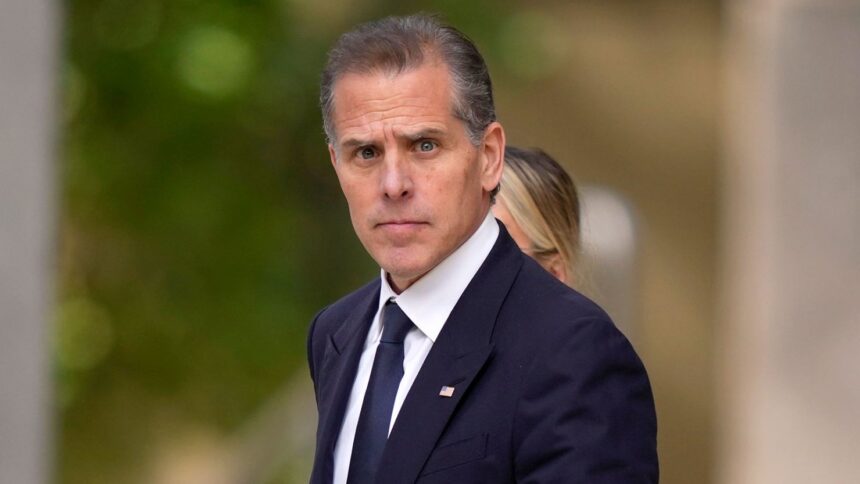
The special counsel overseeing the investigation into Hunter Biden, the son of U.S. President Joe Biden, has strongly criticized the President’s remarks regarding the fairness of the prosecution, calling the claims “gratuitous and wrong.” The accusations surfaced following President Hunter Biden’s comments, in which he alleged that his son had been unjustly targeted and selectively prosecuted by the justice system due to his family name. The special counsel, David Weiss, a longtime federal prosecutor who was appointed by Attorney General Merrick Garland, released his final report on the case on Monday, asserting that the investigations into Hunter Biden were both impartial and appropriate, dismissing the President’s claims as baseless and damaging.
In the 280-page report, Weiss contended that President Biden’s statement undermined the integrity of the justice system. Weiss remarked that other presidents had pardoned family members in the past, but none had used the occasion to attack the public servants within the Department of Justice or make false accusations about the fairness of the legal process. The special counsel emphasized that the investigation into Hunter Biden was not politically motivated and that it had followed the due legal process without any preferential treatment or bias.
Weiss stated, “The notion that the prosecution was selective is unfounded. The decisions to pursue charges against Hunter Biden were based on the same principles that guide all federal investigations – fairness, impartiality, and a commitment to justice.” He continued by emphasizing that undermining such decisions erodes public confidence in an essential institution that serves to preserve the rule of law. Weiss stressed that the prosecution was a clear representation of the equal application of justice in the United States, highlighting that no one, regardless of their status or family name, is above the law.
The special counsel’s report was released following a series of high-profile events, including President Biden’s pardon of his son last month for gun and tax-related convictions. The pardon followed a commitment by the President not to interfere with the investigation using his presidential powers. In his public remarks at the time, President Biden defended his son, stating that any reasonable person reviewing the facts would conclude that Hunter Biden had been prosecuted unfairly due to his family ties. The President also expressed support for his son’s recovery, pointing to Hunter Biden’s efforts in maintaining sobriety for over five years despite facing ongoing public scrutiny and legal challenges.
Hunter Biden had faced legal challenges in relation to firearm charges and tax evasion. In June, he was found guilty of lying about his drug use on a background check form during the purchase of a firearm. In a separate case, he pled guilty to charges of evading $1.4 million in taxes. Hunter Biden had been awaiting sentencing for both cases at the time of the pardon. His lawyer, Abbe Lowell, criticized the special counsel’s report, claiming that it failed to adequately address why prosecutors had pursued what he termed “wild” and “debunked” conspiracy theories about Hunter Biden. Lowell argued that the investigation into the President’s son was a cautionary tale of prosecutorial overreach and abuse of power.
The report also shed light on the broader implications of the case, particularly in the context of the Department of Justice’s role in handling high-profile investigations. Weiss emphasized that while the President’s remarks could influence public perception, they should not be used as an excuse to undermine the efforts of the justice system. The final report closed by reaffirming the impartiality of the investigations and the commitment of the Department of Justice to upholding the law, regardless of the political figures involved.
As the investigation into Hunter Biden’s conduct has drawn significant attention and controversy, the situation has become an ongoing political flashpoint. The issue has sparked widespread debate over the relationship between political power and the legal system, as well as the potential impact of such high-profile cases on public trust in institutions. It remains to be seen how this matter will continue to evolve, particularly in the lead-up to the upcoming elections and beyond.