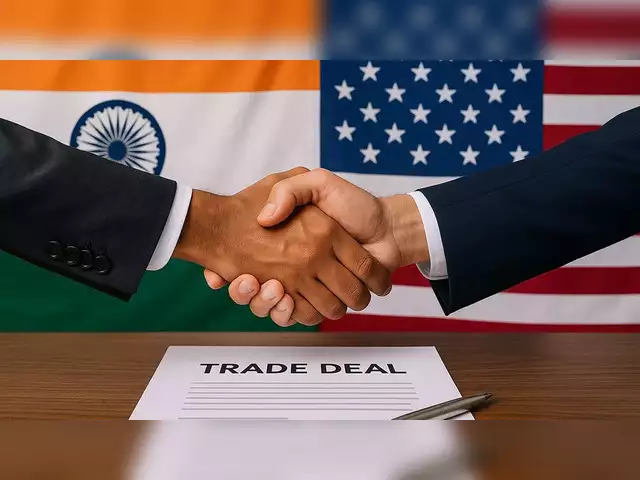
India should tread carefully when considering a comprehensive free trade agreement (FTA) with the United States, according to a new warning from the Global Trade Research Initiative (GTRI). The think tank argues that such a deal could harm domestic sectors such as agriculture, automobiles, and pharmaceuticals, and urges the government to instead pursue a more targeted industrial goods agreement.
Potential risks to domestic industries
GTRI highlighted that a full-scale FTA with the US may come with several conditions that could be detrimental to India’s key sectors. These include weakening the minimum support price (MSP) system for farmers, allowing genetically modified (GM) food imports, reducing agricultural tariffs, and altering patent laws to benefit multinational pharmaceutical companies. The group emphasized that such demands could hurt farmer incomes, threaten food security, affect biodiversity, and compromise public health.
The think tank warned that reducing tariffs on farm goods would impact the livelihoods of hundreds of millions of Indian farmers. Similarly, slashing import duties on cars could damage India’s automobile sector, which contributes nearly a third of the country’s manufacturing output. GTRI cited Australia’s experience in the 1990s, when deep tariff cuts led to the collapse of its domestic car industry, as a cautionary tale.
Call for alternative trade strategy
Instead of a broad FTA, GTRI Founder Ajay Srivastava recommended a “zero-for-zero” tariff agreement with the US, covering 90% of industrial goods but excluding sensitive sectors like automobiles. He noted that a similar approach has already been offered by the European Union to Washington. This limited agreement could evolve into a World Trade Organization (WTO)-compliant deal focused solely on goods.
Srivastava also suggested enhancing regional cooperation with China in sectors like chemicals, machinery, and electronics. By leveraging each other’s raw materials and intermediates, both countries could increase local value addition in final products for domestic use and export.
Furthermore, Srivastava urged the Indian government to prioritize trade negotiations with the European Union, United Kingdom, and Canada, and explore broader partnerships with countries like China and Russia. He also emphasized the need for domestic reforms, such as simplifying tariff structures, improving GST processes, enforcing quality control orders fairly, and streamlining trade procedures to help India benefit from shifting global trade dynamics.