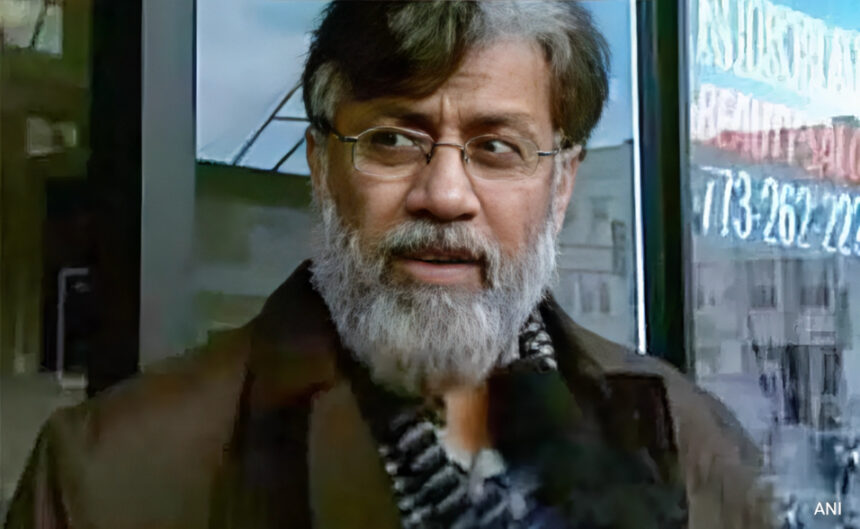
Tahawwur Hussain Rana, once a Pakistani Army doctor and now an accused conspirator in the 26/11 Mumbai terror attacks, was extradited to India from the United States on Thursday. His life story, marked by a striking shift from medicine to militancy, reflects a troubling blend of radicalisation, intelligence operations, and international terror networks. After years of legal proceedings, his return to India marks a significant moment in the long-running investigation into the 2008 attacks that left over 170 people dead in Mumbai.
Born in Sahiwal district of Pakistan’s Punjab province, Tahawwur Hussain Rana was raised under the stern guidance of a father who insisted he pursue medicine. He joined the Pakistan Army’s medical corps, fulfilling both his father’s aspirations and his own desire to be part of the security services. However, in 1998, he left the army and migrated to Canada, a move believed to be influenced by Pakistan’s Inter-Services Intelligence (ISI).
From Immigration Consultant to Intelligence Collaborator
In Canada, Tahawwur Hussain Rana established an immigration services firm. What appeared on the surface as a legitimate enterprise was, according to investigators, a front that enabled surveillance and intelligence operations. His Canadian citizenship offered mobility and discretion — tools that later facilitated covert connections with global terror networks.
Later relocating to Chicago, Tahawwur Hussain Rana expanded his business and forged a pivotal connection with David Coleman Headley, an American of Pakistani origin and the key scout in the 26/11 Mumbai attacks. Headley used Tahawwur Hussain Rana’s business as a front to conduct surveillance on key targets in Mumbai, including the Taj Mahal Palace Hotel. It was through this partnership that Tahawwur Hussain Rana allegedly became instrumental in supporting Lashkar-e-Taiba’s attack planning.
A Calculated Double Life and Surveillance Missions
Tahawwur Hussain Rana himself visited India under the guise of a tourist, traveling with his wife across cities including Delhi, Mumbai, and Agra. Investigators now believe this visit involved preliminary reconnaissance. Despite presenting himself as a physician, Tahawwur Hussain Rana was allegedly working behind the scenes to gather intelligence.
He was arrested in the US in 2009 on unrelated charges involving a plot to attack a Danish newspaper. During that investigation, his links to the 2008 Mumbai attacks came to light. Though he offered limited cooperation, Indian agencies were permitted brief access to him. The National Investigation Agency (NIA) has since sought his extradition, and a US court cleared it on April 9. His arrival in Delhi is expected to bring renewed momentum to the investigation into one of India’s most devastating terror attacks.