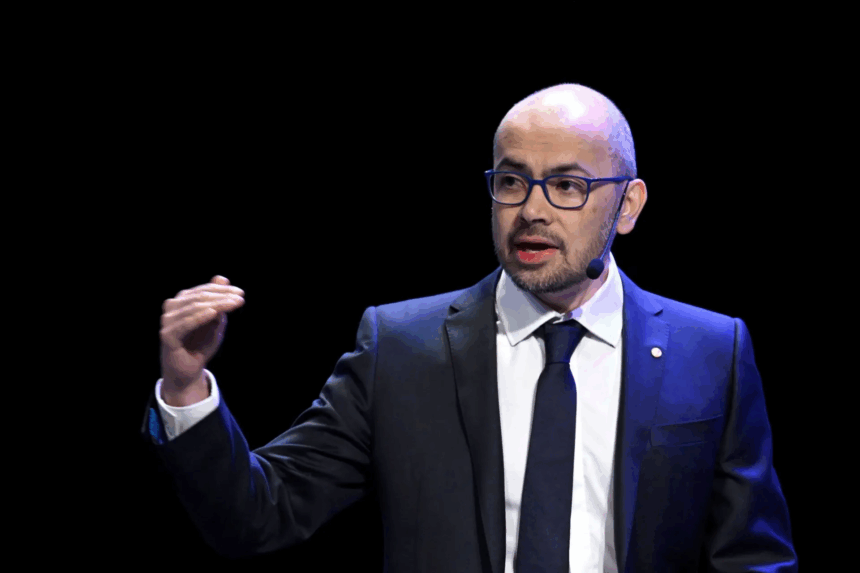
Google DeepMind CEO Demis Hassabis envisions artificial intelligence as a powerful tool that will enhance human intelligence rather than replace effort or creativity. In a recent interview, he shared insights on how AI is reshaping education, coding, and drug discovery, emphasizing that the coming decade will see AI becoming an indispensable partner in learning and professional workflows. From the new AI capabilities unveiled at Google I/O 2025 to the ethical challenges of AI assistants, Demis Hassabis explained how the technology will help people become smarter and more productive.
At Google I/O 2025, Google introduced several advanced AI models and tools, including Gemini 2.5 Pro DeepThink, Veo 3, and Gemini Flash, each designed to push the boundaries of reasoning, multimedia integration, and mobile efficiency. Demis Hassabis highlighted Gemini 2.5 Pro DeepThink as a cutting-edge reasoning model and called Veo 3 the most sophisticated audio-video generation system to date. Another significant announcement was Project Astra, a universal AI assistant designed to be proactive and multimodal across devices like smartphones and wearables. While the promise of proactive assistance excites Demis Hassabis, he also acknowledged the complexities involved in ensuring the assistant is helpful without becoming intrusive, especially as Google aims to enable memory-sharing across devices in the near future.
AI’s Impact on Education and Personalized Learning
Demis Hassabis emphasized AI’s transformative potential in education, describing initiatives like Google’s LearnLM, which personalizes learning by generating flashcards, recommending relevant videos, and identifying knowledge gaps. He argued that AI should not replace educators but serve as an empowering tool that makes learning more accessible worldwide, particularly in underserved regions. Hassabis envisions a future where students benefit from personalized AI tutors both in classrooms and at home, making education more equitable and effective.
Transforming Coding and Drug Disc overy with AI
In the realm of software development, Demis Hassabis sees AI as a productivity multiplier that enables developers to focus on creative problem-solving while AI handles repetitive coding tasks. He predicted that natural language could emerge as a dominant programming interface, simplifying coding for both professionals and hobbyists. On the healthcare front, Demis Hassabis pointed to AI breakthroughs like AlphaFold, which dramatically accelerated protein structure prediction, as proof of AI’s potential to revolutionize drug discovery. He suggested that hybrid AI systems could design hundreds of new drugs in the next decade, though regulatory processes will continue to play a critical role in ensuring safety.
Through his vision, Demis Hassabis portrays AI not as a replacement for human intelligence but as a collaborative force that will redefine how we learn, work, and innovate across various fields.