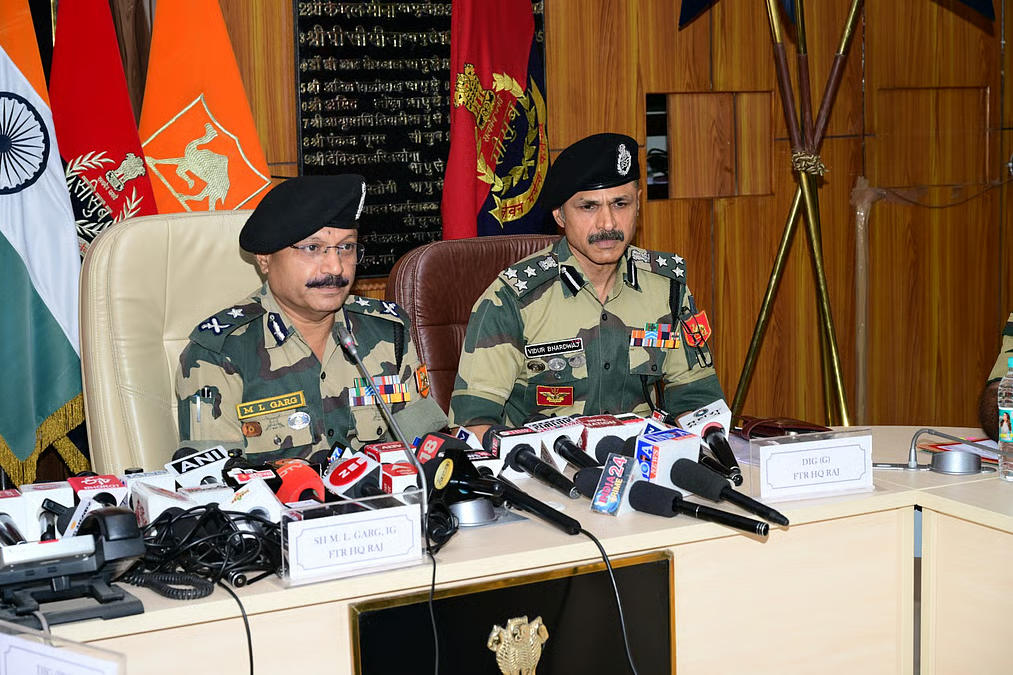
In a candid interview, BSF Rajasthan Frontier IG M L Garg revealed how India neutralized over 400 drones and missiles launched by Pakistan during Operation Sindoor without escalating the situation or harming civilians. The targeted strikes by India on terrorist camps across the border prompted Pakistan to respond with an unprecedented volume of aerial threats, many of which were successfully intercepted. Despite the hostile provocation, India refrained from hitting civilian or military infrastructure and maintained calm across the western border.
Volume of Drone Attacks Surprised Forces, But Not Unprepared
Garg confirmed that while Operation Sindoor didn’t throw unexpected tactical surprises, the sheer number of drone and missile attacks from Pakistan was staggering. A total of 413 drones were launched targeting both military and civilian regions in Rajasthan, especially in Sri Ganganagar, Bikaner, and Jaisalmer. All were neutralized mid-air, thanks to the coordinated preparedness of the BSF, Army, and Air Force. The forces were already on high alert after India’s precision strikes on May 7, which provoked Pakistan’s indiscriminate response.
Unlike Pakistan, which retaliated without discretion and even evacuated its border villages, India chose not to vacate civilian settlements. Instead, it relied on strong air defenses and pre-installed bunkers to protect residents. The BSF ensured no harm came to civilians, maintaining order and focus. Garg reiterated that India’s approach is rooted in precision and restraint, in stark contrast to Pakistan’s random attacks.
Surveillance, Sleeper Cells, and Regional Challenges
The IG also touched on the internal challenge of sleeper cells in Indian border villages. With encrypted apps making communication harder to trace, monitoring behavior and intercepting data have become more critical than ever. Those found assisting Pakistan are systematically identified and apprehended.
Garg explained how the border security dynamics differ across regions. In Kashmir, ceasefire violations demand aggressive postures. In Bengal, cross-border infiltration and drug smuggling dominate. Rajasthan’s international border faces high-tech threats like arms and narcotics drops via drones. Operation Sindoor offered valuable insights into how such evolving threats need flexible responses. The BSF is continuously upgrading its capabilities accordingly.
Garg appreciated the seamless coordination among BSF, the Army, Air Force, local police, and civil administration. Public support was instrumental during this tense phase. He also warned of misinformation campaigns, including cyberattacks, and urged citizens to trust official communication. Despite adversity, India’s unified response highlighted its preparedness and resilience in safeguarding national security.