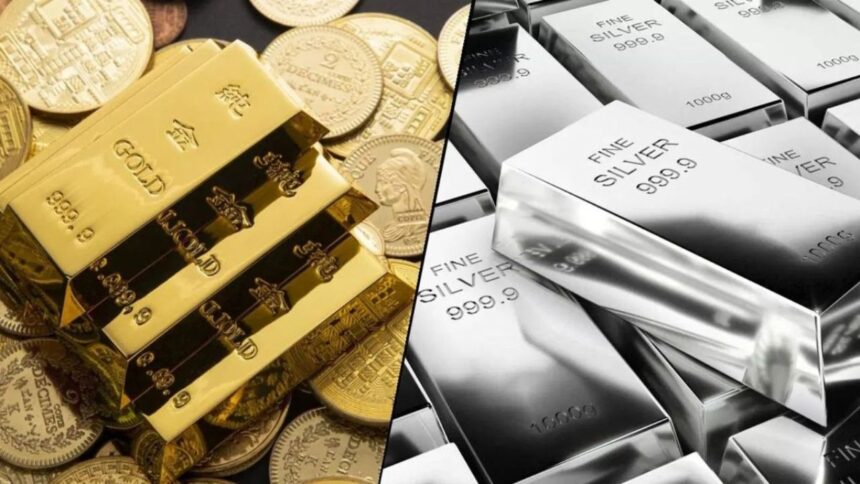
Gold and silver prices in India have surged to historic highs for the second consecutive day, reflecting strong global and domestic demand, heightened geopolitical uncertainty, and a weakening dollar, with investors increasingly turning to precious metals as a preferred store of value amid volatile financial markets.
On December 23, gold prices crossed the ₹1.36 lakh mark per 10 grams, while silver touched an unprecedented ₹2.09 lakh per kilogram, marking one of the strongest rallies in the bullion market in recent years. The sharp rise has drawn the attention of investors, jewellers, and policymakers alike, as precious metals continue to outperform many traditional asset classes and reshape expectations for the coming months.
Gold and silver rally driven by global uncertainty and sustained demand
According to the India Bullion and Jewellers Association, the price of 24-carat gold rose by ₹2,163 in a single day to reach ₹1,36,133 per 10 grams. Just a day earlier, gold was trading at ₹1,33,970, highlighting the pace at which prices have climbed. Silver followed a similar trajectory, rising ₹1,523 to touch an all-time high of ₹2,09,250 per kilogram, extending a rally that has added more than ₹23,000 per kg in just ten days.
This sharp upswing is rooted in a combination of global and domestic factors. One of the primary drivers has been the weakening of the US dollar following interest rate cuts by the American central bank. Lower interest rates reduce the opportunity cost of holding non-yielding assets such as gold, making bullion more attractive to investors worldwide. As the dollar softens, gold prices typically strengthen, a pattern clearly visible in the current rally.
Geopolitical tensions have further amplified demand for safe-haven assets. Ongoing conflicts, including the Russia–Ukraine war, along with broader global uncertainty, have pushed investors toward gold and silver as hedges against risk. In times of instability, precious metals are often perceived as reliable stores of value, and the current environment has reinforced that perception across global markets.
Another crucial factor supporting gold prices is the aggressive buying by central banks. Several countries, most notably China, have been steadily increasing their gold reserves as part of efforts to diversify away from traditional reserve currencies. Annual purchases running into hundreds of tonnes have tightened global supply and added structural support to prices. This trend has lent long-term strength to gold, making its rally appear less speculative and more fundamentally driven.
Silver’s surge has been even more striking, largely due to its dual role as both a precious metal and an industrial commodity. Growing demand from sectors such as solar energy, electronics, and electric vehicles has transformed silver into a critical industrial input. As countries accelerate their transition toward renewable energy and advanced technologies, silver consumption has risen sharply, creating supply constraints that have pushed prices higher.
Market participants have also pointed to concerns over global trade policies, particularly fears of tariffs and supply disruptions, as contributors to the rally. Anticipation of trade barriers has encouraged manufacturers and investors to stockpile silver, further tightening availability. This rush to secure supplies has reinforced the upward momentum, suggesting that silver’s rally is underpinned by strong structural demand rather than short-term speculation.
The rapid appreciation of both metals over the past year underscores the scale of the move. Since the end of December 2024, gold prices have risen by nearly ₹60,000 per 10 grams, while silver has gained more than ₹1.2 lakh per kilogram. Such dramatic increases reflect a fundamental shift in investor behaviour, with precious metals emerging as one of the standout performers in an uncertain economic landscape.
Price variations, city trends and expert outlook for coming months
While national benchmark prices provide a reference point, retail gold rates vary across Indian cities due to factors such as taxes, making charges, transportation costs, and local demand-supply dynamics. In major cities, 24-carat gold prices have already moved beyond ₹1.38 lakh per 10 grams, with Chennai recording the highest levels among metros. These differences arise because benchmark prices do not include goods and services tax, jewellers’ margins, or fabrication costs, all of which influence the final retail price paid by consumers.
Regional demand patterns also play a role. Southern India accounts for a significant share of the country’s gold consumption, enabling jewellers in those markets to procure gold in bulk at relatively competitive rates. In contrast, smaller cities and regions with lower volumes often see higher prices due to increased per-unit costs. Local jewellers’ associations further influence pricing by setting daily rates based on prevailing market conditions and inventory costs.
Experts believe the rally may not be over yet. Market analysts note that demand for silver remains particularly strong and could push prices even higher over the next year. Some projections suggest silver could approach ₹2.5 lakh per kilogram within twelve months if industrial demand continues to rise and supply constraints persist. Even in the near term, prices are expected to remain firm, with limited downside unless there is a sharp reversal in global economic conditions.
Gold, too, is expected to retain its upward bias. Analysts argue that as long as geopolitical risks remain elevated and central banks continue to diversify reserves, gold prices are likely to stay supported. Forecasts indicate that gold could cross ₹1.50 lakh per 10 grams next year if current trends continue, especially if global monetary policy remains accommodative and inflation concerns resurface.
For investors, the rally presents both opportunities and challenges. While those who already hold gold and silver have benefited significantly, new buyers face elevated entry levels. Experts advise caution, suggesting that purchases should be aligned with long-term financial goals rather than short-term price movements. Certified gold with proper hallmarking is recommended to ensure purity, and buyers are encouraged to verify daily prices from reliable benchmarks before making transactions.
The divergence in prices across cities also highlights the importance of understanding local market dynamics. Transportation costs, purchase timing, and jewellers’ inventory positions can all influence the final rate. Investors and consumers who take these factors into account are better positioned to make informed decisions, especially in a market characterised by rapid price changes.
Overall, the surge in gold and silver prices reflects a broader shift toward tangible assets in an era of economic and political uncertainty. As traditional markets grapple with volatility, precious metals have reasserted their role as both investment hedges and essential industrial inputs. Whether the rally extends further will depend on a complex interplay of global policy decisions, geopolitical developments, and demand trends, but for now, gold and silver remain firmly in the spotlight of India’s financial landscape.