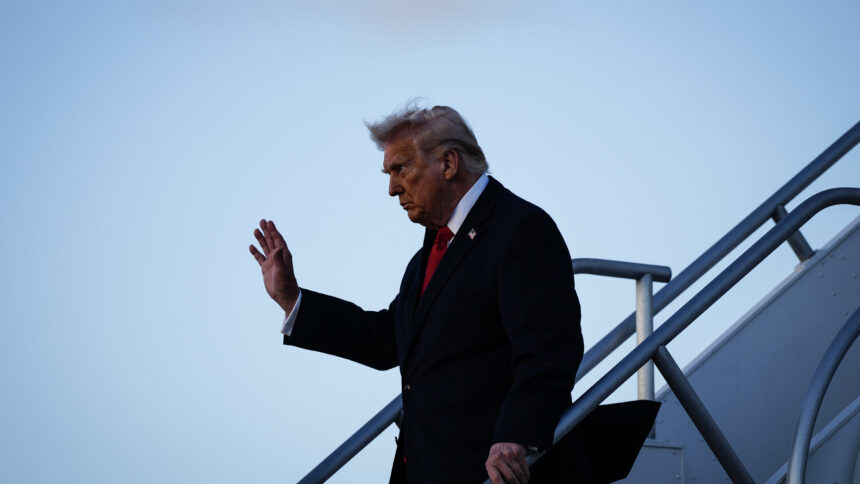
The announcement by former US President Donald Trump to impose a naval blockade on the Strait of Hormuz has dramatically escalated geopolitical tensions following the collapse of high-stakes peace talks with Iran. The decision, made after prolonged negotiations in Islamabad failed to reach a breakthrough, signals a sharp shift from diplomacy to military enforcement. As one of the world’s most critical oil transit routes comes under threat, the move has triggered immediate concerns over global energy supply, regional stability, and the risk of a broader conflict.
The Guardian
Trump says US will blockade strait of Hormuz after Iran peace talks fail
Today
Reuters
US military says it will start blockade of all ships going to and from Iran on Monday
Today
Reuters
Oil up over 7% to above $100 ahead of US blockade on Iran
Today
Business Insider
Oil prices spike after failed US-Iran peace talks and Trump’s blockade of the Strait of Hormuz
Today
Collapse of Diplomacy Leads to Military Escalation in Strategic Waterway
The blockade announcement followed the breakdown of more than 20 hours of negotiations between the United States and Iran, where the primary sticking point remained Iran’s nuclear ambitions. The US demanded a complete halt to nuclear development, a condition Iran refused to accept, ultimately derailing the talks.
In response, Trump ordered the US Navy to begin enforcing a blockade targeting maritime traffic linked to Iranian ports. The operation is expected to intercept ships entering or leaving Iran while allowing passage for vessels not connected to Iranian trade.
The Strait of Hormuz, a narrow yet vital chokepoint through which nearly 20% of global oil supplies pass, has long been a flashpoint in international politics. Any disruption in this region carries immediate global consequences, making the blockade a move with far-reaching implications.
Trump justified the decision by accusing Iran of threatening global shipping and attempting to impose illegal tolls on vessels, framing the blockade as a necessary step to ensure freedom of navigation.
However, Iran has reacted sharply, warning that any attempt to enforce the blockade would be considered an act of war. Its Revolutionary Guards have asserted control over the strait and signaled readiness for retaliation, raising fears of direct military confrontation.
The move also comes amid an already fragile ceasefire in the ongoing conflict involving the US, Israel, and Iran. The failure of talks and the shift toward military action indicate that diplomatic channels remain deeply strained, with little immediate prospect of resolution.
Global Impact on Oil Markets, Trade Routes, and Regional Stability
The announcement of the blockade has already sent shockwaves through global markets, particularly in the energy sector. Oil prices surged sharply, crossing the $100 per barrel mark as traders reacted to the potential disruption of supply through the Strait of Hormuz.
This spike reflects the critical importance of the strait, not just for Middle Eastern oil exports but for global energy security. Countries heavily dependent on oil imports from the region, including major Asian economies, are likely to face immediate economic pressure if the situation escalates further.
Shipping routes have also come under strain, with reports of tankers avoiding the area due to security concerns. The uncertainty surrounding maritime safety could lead to increased shipping costs, insurance premiums, and delays, affecting global trade beyond just energy supplies.
The blockade’s selective enforcement—targeting Iranian ports rather than completely closing the strait—has done little to ease tensions. While US officials have clarified that non-Iranian vessels can still pass, the risk of miscalculation or escalation remains high in such a volatile environment.
Geopolitically, the situation has drawn attention from global powers and regional stakeholders alike. Countries such as China and India, which rely heavily on oil passing through the strait, are closely monitoring developments. The possibility of broader international involvement or mediation efforts remains uncertain but increasingly likely as tensions rise.
The blockade also highlights the growing intersection of military strategy and economic leverage in modern geopolitics. By targeting a key energy corridor, the United States is exerting pressure not only on Iran but also on global markets, underscoring the strategic importance of maritime chokepoints in international relations.
As the blockade begins and military assets move into position, the Strait of Hormuz once again becomes the center of a global crisis—one that carries implications far beyond the immediate conflict and could reshape energy dynamics and geopolitical alignments in the months ahead.