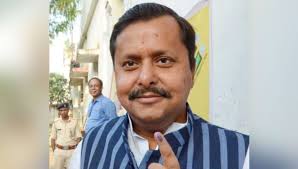
The Bharatiya Janata Party has appointed Bihar minister Nitin Nabin as its national working president, a move widely seen as signalling a generational transition within the party and positioning him as a potential successor to JP Nadda, who has led the organisation since 2020.
The appointment was announced in New Delhi on Sunday and immediately drew attention for its political significance as well as the profile of the leader chosen. At 45, Nitin Nabin becomes the youngest national chief in the history of the BJP, bringing with him a combination of youth, organisational experience, and administrative exposure. Party leaders described him as dynamic, ideologically rooted, and deeply committed to the organisation, qualities they believe are essential as the party prepares for future electoral and organisational challenges. His elevation also marks the first time the BJP has chosen a national chief from Bihar and eastern India, reflecting a strategic recalibration of the party’s geographic and political priorities.
Nabin’s appointment comes at a time when the BJP is seeking to consolidate its gains from the 2024 Lok Sabha elections while also preparing for upcoming state elections and long-term leadership transitions. JP Nadda, 65, had completed his formal term earlier but was given extensions to guide the party through crucial electoral phases. With Nabin stepping into the role of national working president, the BJP appears to be gradually laying the groundwork for a smooth and controlled leadership handover.
A blend of youth, organisation, and governance experience
Nitin Nabin’s political journey is often cited within the BJP as an example of steady organisational growth rather than rapid elevation. The son of late Nabin Kishore Prasad Sinha, a veteran BJP leader and former MLA, he entered politics in the late 2000s and has since built a strong electoral and organisational base. He contested his first assembly election from the Bankipur constituency in Patna in 2010 and has gone on to win the seat five consecutive times, establishing himself as a reliable and popular leader in Bihar’s capital region.
Over the years, Nabin has accumulated significant administrative experience. He currently holds the Road Construction and the Urban Development and Housing portfolios in the Nitish Kumar-led Bihar government. Party insiders say his work in these ministries has strengthened his reputation as an administrator capable of translating policy decisions into visible outcomes on the ground. Infrastructure development, urban planning, and road connectivity have been among the areas where he has been closely involved, giving him hands-on experience in governance that the BJP values highly at the national level.
Equally important to his rise has been his extensive organisational background. Nabin has spent nearly two decades working within the party structure, beginning with the youth wing. He served as the state president of the BJP’s youth wing in Bihar and later as national general secretary of the youth organisation. These roles helped him build networks across states and gain an understanding of cadre management, mobilisation, and election strategy.
One of the defining phases of his organisational career was his role as the BJP’s election in-charge in Chhattisgarh. Party leaders credit him with handling the responsibility with discipline and strategic clarity, strengthening organisational coordination during a challenging political period. His performance in that role is often cited as evidence of his ability to manage complex political assignments beyond his home state.
BJP leaders have repeatedly emphasised that Nabin represents a balance between ideological commitment and pragmatic politics. They describe him as a leader who understands the party’s core philosophy while also being attuned to the evolving aspirations of voters, particularly younger sections of society. This combination, they believe, makes him well suited to play a larger national role at a time when the BJP is seeking to expand its appeal without diluting its ideological identity.
Political significance, leadership transition, and eastern focus
The decision to appoint Nitin Nabin as national working president carries broader political implications beyond individual merit. Within the BJP, it is widely interpreted as a signal of generational change. While senior leaders continue to guide the party’s strategic direction, the elevation of a 45-year-old leader to such a prominent position reflects an effort to bring younger faces into top organisational roles. Party sources suggest that this approach is aimed at ensuring continuity, energy, and adaptability as the political landscape evolves.
Nabin’s appointment is also notable for its regional symbolism. By choosing a leader from Bihar and eastern India, the BJP has underscored its intention to deepen its organisational roots in the region. While the party has made significant electoral gains in several eastern states over the past decade, it continues to view the region as a key frontier for future expansion. Having a national chief from this part of the country is seen as both recognition of past efforts and an investment in future growth.
JP Nadda’s tenure as party president has been marked by electoral successes, organisational consolidation, and the management of internal transitions. Although his term formally ended earlier, he was given repeated extensions to steer the party through the 2024 Lok Sabha elections. With that phase complete, the BJP appears keen to move towards a planned transition rather than a sudden change. Appointing Nabin as national working president allows the party to test and groom him for larger responsibilities while maintaining continuity at the top.
The appointment has drawn praise from the party’s top leadership. Prime Minister Narendra Modi congratulated Nabin, describing him as a hardworking karyakarta with rich organisational experience and an impressive record as an MLA and minister in Bihar. Modi highlighted Nabin’s humble nature and grounded style of working, expressing confidence that his energy and dedication would strengthen the party in the coming years.
Union home minister Amit Shah, who is also regarded as the BJP’s chief strategist, echoed similar sentiments. He described Nabin’s elevation as an honour for young party workers who dedicate themselves tirelessly to organisational work. Shah pointed to Nabin’s journey through various roles, from youth wing leadership to state and national organisational responsibilities, as evidence of his commitment and capability. According to Shah, Nabin’s experience of working closely with people, both as a legislator and as a minister, equips him well for national leadership.
Within the party, there is also recognition that Nabin’s appointment could help bridge generational and organisational divides. His background allows him to connect with senior leaders who value ideological consistency, as well as younger cadres who seek representation and opportunity within the party structure. This dual appeal is seen as particularly important as the BJP continues to rely on a vast organisational network to mobilise support across diverse regions.
As national working president, Nabin is expected to play a key role in organisational planning, election preparedness, and coordination between the central leadership and state units. While the party has not formally outlined a timeline for leadership transition, the consensus among observers is that his appointment places him firmly in contention to eventually succeed JP Nadda as full-time national president.
For now, the focus remains on strengthening the organisation and maintaining political momentum. Nitin Nabin’s elevation represents both continuity and change: continuity in the BJP’s emphasis on organisational discipline and ideological clarity, and change in the form of generational renewal and expanded regional representation. How effectively he navigates this role will shape not only his own political future but also the BJP’s organisational trajectory in the years ahead.