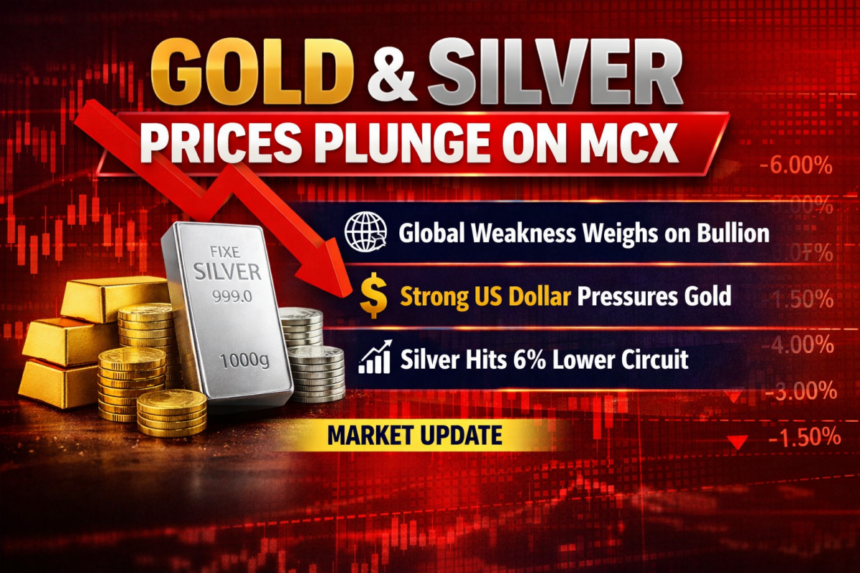
Gold and silver prices in India have taken divergent paths, with gold witnessing a notable decline while silver continues its upward momentum, reflecting shifting investor sentiment and global market dynamics.
The domestic bullion market has entered a phase of contrasting price movements, as gold prices corrected sharply while silver extended its rally. According to data released by India Bullion and Jewellers Association, the price of 24 carat gold dropped significantly on May 4, while silver recorded a strong gain. These movements highlight the evolving nature of commodity markets, influenced by global economic signals, currency fluctuations, and investor behavior.
Gold prices declined by ₹1,906 per 10 grams, bringing the price down to approximately ₹1.48 lakh. This drop comes after gold had touched levels close to ₹1.50 lakh per 10 grams, marking a correction after a sustained rally. On the other hand, silver prices surged by ₹3,906 per kilogram, reaching ₹2.44 lakh, up from ₹2.40 lakh recorded just a few days earlier.
This divergence between gold and silver is significant. Traditionally, both metals tend to move in the same direction, as they are considered safe haven assets. However, the current scenario reflects a nuanced shift in market sentiment, where silver is benefiting from both investment demand and industrial usage, while gold is undergoing a short term correction after a strong upward trend.
Looking at the broader trend in 2026, both gold and silver have delivered substantial gains. Gold has appreciated by around ₹15,000 per 10 grams since the beginning of the year. At the end of 2025, gold was priced at approximately ₹1.33 lakh per 10 grams, and it has since climbed to ₹1.48 lakh despite the recent dip. This indicates that the overall trend for gold remains bullish, even though short term fluctuations are visible.
Similarly, silver has gained around ₹14,000 per kilogram in 2026. From ₹2.30 lakh per kilogram at the end of last year, it has now reached ₹2.44 lakh. The rise in silver prices is being supported by strong industrial demand, particularly in sectors such as electronics, renewable energy, and manufacturing. Silver’s dual role as both an industrial metal and an investment asset gives it a unique advantage in times of economic transition.
The recent correction in gold prices can be attributed to multiple factors. One of the key reasons is profit booking by investors after the metal reached record highs. When prices rise sharply over a short period, investors often choose to lock in profits, leading to temporary declines. Additionally, movements in global interest rates and the strength of the US dollar also play a crucial role in determining gold prices. A stronger dollar typically makes gold more expensive for international buyers, which can reduce demand.
Another important factor is changing investor preferences. While gold remains a traditional store of value, some investors are diversifying their portfolios into other assets, including equities and commodities like silver. This shift can create temporary pressure on gold prices, even when the long term outlook remains positive.
Silver, on the other hand, is benefiting from a different set of dynamics. Its increasing use in green technologies, such as solar panels and electric vehicles, is driving demand. As countries around the world accelerate their transition toward clean energy, the demand for silver is expected to remain strong. This structural demand is one of the key reasons why silver prices have been rising steadily.
For consumers and investors, these price movements present both opportunities and challenges. The decline in gold prices may encourage buyers to enter the market, especially those planning purchases for weddings or festive occasions. Lower prices can provide a window of opportunity to accumulate gold at relatively attractive levels.
However, experts advise caution and due diligence when purchasing precious metals. One of the most important aspects is ensuring the authenticity and purity of gold. Buyers should always look for certification from the Bureau of Indian Standards, which guarantees the quality of the metal. Hallmarked gold provides assurance regarding its purity and helps avoid fraud.
Another crucial step is to verify the prevailing market price before making a purchase. Gold prices can vary depending on purity levels, such as 24 carat, 22 carat, and 18 carat. Checking prices from reliable sources, including associations like IBJA, can help buyers make informed decisions.
When it comes to silver, identifying authenticity is equally important. There are several simple tests that can help determine whether silver is genuine. For instance, silver does not stick to a magnet, so a magnet test can quickly reveal impurities. Similarly, placing ice on silver can indicate authenticity, as real silver conducts heat efficiently and melts ice faster.
Other methods include checking for any unusual smell, as genuine silver does not have a distinct odor, and using a cloth test, where rubbing silver with a white cloth may leave a black mark due to oxidation, indicating its authenticity.
From an investment perspective, both gold and silver continue to play important roles in portfolio diversification. Gold is often seen as a hedge against inflation and economic uncertainty, while silver offers growth potential due to its industrial applications. The combination of these two metals can provide a balanced approach to risk management.
Market analysts believe that the current correction in gold prices should not be seen as a reversal of the overall trend. Instead, it represents a healthy adjustment that can pave the way for future gains. As global uncertainties persist, including geopolitical tensions and economic fluctuations, gold is likely to retain its appeal as a safe haven asset.
At the same time, silver’s strong performance is expected to continue, supported by both investment demand and industrial growth. The metal’s role in emerging technologies positions it as a key commodity in the evolving global economy.
Another aspect worth noting is the impact of domestic demand in India. The country is one of the largest consumers of gold and silver, and seasonal factors such as weddings and festivals play a significant role in influencing prices. Any increase in demand during these periods can lead to upward pressure on prices.
Currency movements also have a direct impact on bullion prices in India. Since gold and silver are traded globally in US dollars, fluctuations in the Indian rupee can affect domestic prices. A weaker rupee typically leads to higher prices, while a stronger rupee can make imports cheaper and reduce prices.
In recent months, the interplay between global and domestic factors has created a dynamic environment for bullion markets. Investors are closely monitoring developments such as central bank policies, inflation trends, and geopolitical events, all of which can influence the direction of gold and silver prices.
For long term investors, the key lies in understanding the cyclical nature of commodity markets. Prices may rise and fall in the short term, but the underlying fundamentals often determine the long term trajectory. Gold’s role as a store of value and silver’s industrial demand provide strong foundations for their continued relevance.
In conclusion, the recent decline in gold prices and the simultaneous rise in silver highlight the complexity of the bullion market. While gold is experiencing a temporary correction, its long term outlook remains positive. Silver, driven by industrial demand and investment interest, continues to gain strength.
For buyers, this is a period that requires careful evaluation and informed decision making. Whether purchasing for personal use or investment purposes, understanding market trends, verifying authenticity, and staying updated with price movements are essential steps.
As the global economy continues to evolve, gold and silver will remain integral components of financial systems and investment strategies. Their enduring value, combined with changing demand patterns, ensures that they will continue to attract attention from investors and consumers alike.