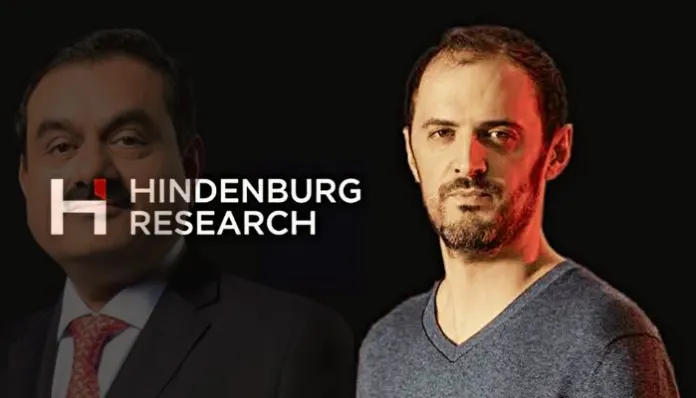
Hindenburg Research, the US-based short-selling firm that gained notoriety for targeting the Adani Group and other prominent business entities, is set to be disbanded, according to an announcement made by its founder, Nate Anderson. Nate Anderson revealed his decision in a note on the Hindenburg website, stating that the firm’s operations would come to an end after completing its current projects.
“I have made the decision to disband Hindenburg Research. The plan has always been to wind up after we finished the pipeline of ideas we were working on,” Nate Anderson wrote, clarifying that there were no external threats or personal issues influencing the decision. The news of the closure of the short-seller firm comes at a time when Donald Trump is about to take office, and there has been significant interest in the business world regarding this shift.
Hindenburg Research first made headlines in January 2022, when it launched a controversial report targeting the Adani Group, one of India’s largest conglomerates. The report accused the group of stock manipulation and accounting fraud. The Adani Group vehemently rejected the allegations, calling them “nothing but a lie” and accusing Hindenburg of launching “calculated attacks on India.” Despite the sensational nature of the claims, the Indian Supreme Court later cleared the Adani Group of any wrongdoing, with analysts and experts largely dismissing the accusations as unfounded.
The report, however, triggered a wave of media attention, and it was followed by several other allegations from Hindenburg, aimed at various companies and sectors. In August 2024, the short-seller revisited its scrutiny of the Adani Group with another attack on the conglomerate, accusing it of new financial irregularities. The Adani Group, in turn, dismissed these claims as “recycled” and denied any basis for the new round of allegations.
Gautam Adani, the chairman of the Adani Group, had earlier addressed the attacks in a public statement, calling the short-selling assault an attempt to destabilize the company and create political turbulence. He noted that the leadership of the Adani Group had demonstrated resilience during the financial market assault. “It was not a typical financial strike; it was a dual assault targeting our financial stability and pulling us into a political storm,” Adani remarked.
Hindenburg Research’s efforts also stirred controversy outside India, with the firm having previously targeted Indian market regulators, including Madhavi Puri Buch, the head of India’s Securities and Exchange Board (SEBI). The accusations, which involved claims of “character assassination,” were strongly rejected by the regulatory authorities. Hindenburg’s actions sparked discussions about its role in global financial markets, and the firm faced increasing scrutiny.
The closure of Hindenburg Research follows growing criticism of its actions, particularly from political figures in the United States. A prominent Republican lawmaker, Congressman Lance Gooden, had previously written to US Attorney General Merrick B. Garland, questioning the need for a government probe into the Adani Group’s business practices. Gooden suggested that the investigation could damage international relations and risk straining America’s alliances with countries like India.
The demise of Hindenburg Research marks a significant turning point for the firm, which had built its reputation on targeting major corporations through its short-selling strategies. Despite its controversial methods, the firm had positioned itself as a key player in exposing what it described as financial malpractice in the corporate world. However, the decision to disband the company now raises questions about the future of such short-selling entities and their impact on global markets.
As the world watches the end of Hindenburg Research, its closure marks the end of an era in financial activism that was both praised by some for exposing corporate fraud and criticized by others for its aggressive tactics. Whether the firm’s disbandment will have a lasting effect on the practice of short-selling or serve as a warning to other entities in the field remains to be seen.