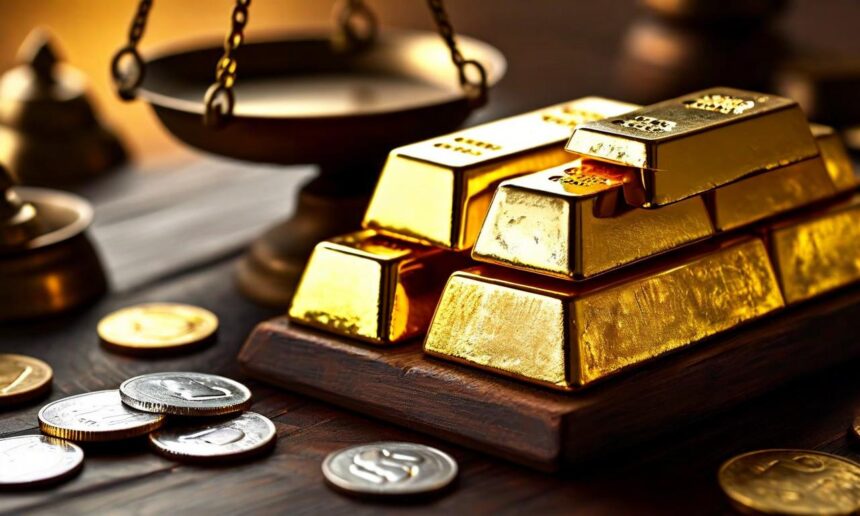
Gold and silver prices staged a strong comeback at the start of 2026 after three consecutive days of decline, with both precious metals registering sharp single-day gains that underline renewed investor confidence amid global uncertainty and strong domestic demand.
According to data released by the India Bullion and Jewellers Association, the price of 24-carat gold jumped by ₹954 on January 2, 2026, climbing to ₹1,34,415 per 10 grams from ₹1,33,461 the previous day. The rebound pushed gold back above the psychologically important ₹1.34 lakh mark, reinforcing its status as a preferred store of value during volatile periods. Silver, meanwhile, recorded an even sharper rise, surging by ₹5,656 in a single session to ₹2,34,906 per kilogram, compared with ₹2,29,250 per kg a day earlier.*
The sudden upswing follows a brief correction phase, suggesting that the underlying bullish momentum in precious metals remains intact. Market participants note that both gold and silver continue to be supported by a combination of global macroeconomic factors, geopolitical risks, and sustained industrial and investment demand. The early January rally has once again brought bullion prices close to their historic highs recorded at the end of 2025.
Record highs, city-wise price differences, and performance through 2025
The recent rebound must be viewed in the context of the extraordinary rally witnessed in the previous year. On December 29, 2025, gold touched an all-time high of ₹1,38,161 per 10 grams, while silver climbed to a record ₹2,43,483 per kilogram. Although prices have eased from those peaks, current levels remain historically elevated, reflecting a structural shift in bullion valuations rather than a short-term spike.
IBJA rates, which are widely followed across India, do not include 3 percent goods and services tax, making charges, or jewellers’ margins. As a result, retail prices vary across cities depending on local taxes, logistics costs, and retailer premiums. These benchmark rates play a crucial role beyond retail trade, as they are also used by the Reserve Bank of India for determining the pricing of sovereign gold bonds and by banks and financial institutions while calculating gold loan values.
The broader performance of gold and silver during 2025 highlights why even brief corrections are being treated as buying opportunities. Gold prices rose by nearly 75 percent over the year, increasing by ₹57,033 from ₹76,162 per 10 grams on December 31, 2024, to ₹1,33,195 by the end of 2025. Silver outperformed gold by a wide margin, registering a staggering 167 percent increase. Prices climbed by ₹1,44,403 per kilogram over the same period, rising from ₹86,017 to ₹2,30,420.
This exceptional performance has altered long-term expectations among investors, jewellers, and manufacturers alike. Gold has consolidated its role as a hedge against inflation and currency volatility, while silver has benefited from its dual identity as both a precious metal and a critical industrial input. Together, their gains reflect shifting global priorities in investment allocation and industrial supply chains.
Drivers of the rally, future outlook, and buying guidance for investors
Several powerful forces continue to underpin the strength in gold prices. A weaker US dollar, driven by interest rate cuts and expectations of prolonged monetary easing, has reduced the opportunity cost of holding non-yielding assets like gold. At the same time, ongoing geopolitical tensions, including conflicts and broader global instability, have reinforced safe-haven demand as investors seek protection against uncertainty. Central bank purchases have also emerged as a major structural driver, with countries such as China adding hundreds of tonnes of gold annually to diversify reserves away from traditional currencies.
Silver’s rally, while partly linked to broader precious metal trends, has been propelled by additional factors. Strong industrial demand, particularly from the solar energy sector, electronics manufacturing, and electric vehicle production, has tightened supply. Concerns over potential trade tariffs in the United States have encouraged companies to stockpile silver, while advance buying by manufacturers worried about supply disruptions has further supported prices.
Market experts believe the bullish trend may not be over. Ajay Kedia, director of Kedia Advisory, has said that silver demand remains robust and prices could rise to ₹2.75 lakh per kilogram later this year. Gold, too, is expected to maintain its upward trajectory, with projections suggesting it could cross ₹1.50 lakh per 10 grams by the end of 2026 if current conditions persist.
For consumers and investors, elevated prices make informed purchasing decisions more important than ever. Buyers are advised to opt only for BIS-certified gold, identifiable through a hallmark with an alphanumeric code that confirms purity. Verifying daily prices from reliable sources such as IBJA and ensuring clarity on whether the purchase is 24-carat, 22-carat, or 18-carat gold can help avoid overpayment.
Silver buyers are similarly encouraged to verify authenticity through simple checks. Genuine silver does not stick to magnets, melts ice quickly due to high thermal conductivity, emits no odour, and leaves a black mark when rubbed with a white cloth. These basic tests can provide reassurance, especially as high prices increase the risk of counterfeit products entering the market.
As 2026 begins, the sharp rebound in bullion prices underscores a broader reality: gold and silver remain central to both investment strategies and industrial planning. With economic uncertainty, technological demand, and central bank activity all pointing in the same direction, the precious metals market appears poised for continued volatility, with an upward bias that keeps investors firmly on watch.