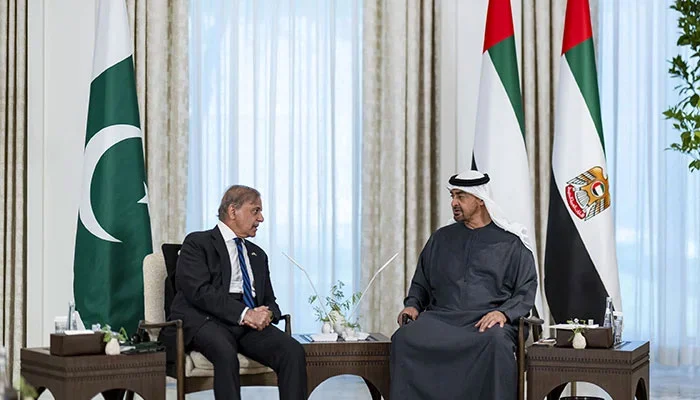
UAE President Sheikh Mohamed bin Zayed Al Nahyan is set to visit Pakistan on December 26, a high-profile engagement that signals renewed momentum in bilateral relations and a broader push to strengthen gulf–south asia political, economic, and strategic cooperation.
The visit, confirmed by Pakistan’s Foreign Office, comes at a time when both countries are seeking to deepen partnerships in trade, investment, energy, and regional stability. Accompanied by a delegation of senior ministers and top officials, the UAE president’s trip reflects the growing importance both sides attach to sustained high-level dialogue. Beyond bilateral matters, the meetings are expected to examine wider regional dynamics, highlighting how cooperation between gulf states and south asian countries is increasingly shaped by shared economic interests and security considerations.
High-level talks aim to deepen economic and strategic partnership
During his visit to Islamabad, Sheikh Mohamed bin Zayed Al Nahyan is expected to hold extensive discussions with Pakistan’s leadership on reviewing existing cooperation frameworks and identifying new areas for collaboration. Officials on both sides have described the relationship as longstanding and resilient, built on mutual trust and a shared commitment to development and regional stability.
Economic cooperation is expected to dominate the agenda. The United Arab Emirates has been one of Pakistan’s most significant economic partners, particularly over the past two decades. According to official figures, Emirati investments in Pakistan have exceeded ten billion dollars, spanning sectors such as energy, real estate, ports, telecommunications, and infrastructure. These investments have played a role in supporting Pakistan’s economic growth while also creating opportunities for Emirati companies seeking expansion in south asia.
The talks are likely to explore ways to further expand trade volumes, simplify investment procedures, and encourage greater private-sector engagement. With Pakistan seeking foreign investment to stabilise and grow its economy, and the UAE looking to diversify its global economic partnerships, both sides see scope for mutually beneficial outcomes. Energy cooperation is also expected to feature prominently, particularly in renewable energy, oil and gas development, and related infrastructure projects.
Beyond economics, leaders are expected to discuss development cooperation, including initiatives aimed at improving connectivity, logistics, and human capital. The UAE has supported several development projects in Pakistan, contributing not only to infrastructure but also to people-to-people ties through education, health, and humanitarian assistance. The visit provides an opportunity to assess the impact of these efforts and consider new collaborative models aligned with long-term development goals.
Visit reflects broader gulf–south asia strategic and regional engagement
The significance of the visit extends beyond bilateral relations, reflecting the evolving strategic landscape linking the gulf and south asia. Pakistan occupies a central position in this corridor, both geographically and politically, making it an important partner for gulf states seeking stability, trade routes, and economic connectivity. Discussions during the visit are expected to cover regional security challenges, emerging geopolitical trends, and cooperative approaches to promoting peace and stability.
For Pakistan, closer engagement with the UAE supports its broader foreign policy objectives of strengthening ties with key regional partners and attracting investment to support economic recovery. For the UAE, Pakistan represents both a strategic partner and a gateway to wider south asian markets. This convergence of interests has encouraged both countries to pursue a more structured and forward-looking partnership.
Political and strategic coordination is also expected to be an important theme. Leaders are likely to exchange views on regional developments, including security dynamics affecting the gulf–south asia region. Cooperation in these areas is seen as essential for maintaining stability in a region where economic growth and security are closely intertwined. By enhancing diplomatic coordination, both sides aim to contribute to a more predictable and cooperative regional environment.
The visit also highlights the importance of sustained high-level engagement in reinforcing diplomatic ties. Regular interactions between leaders help maintain momentum in bilateral initiatives and ensure that cooperation keeps pace with changing regional and global conditions. The presence of a senior Emirati delegation underscores the UAE’s interest in a comprehensive dialogue that goes beyond symbolic gestures to focus on practical outcomes.
As gulf–south asia ties continue to evolve, visits such as this one play a crucial role in shaping the direction of regional cooperation. By focusing on trade, investment, energy, and strategic dialogue, Pakistan and the UAE are positioning their relationship as a key pillar within a broader network of regional partnerships aimed at stability, growth, and shared prosperity.