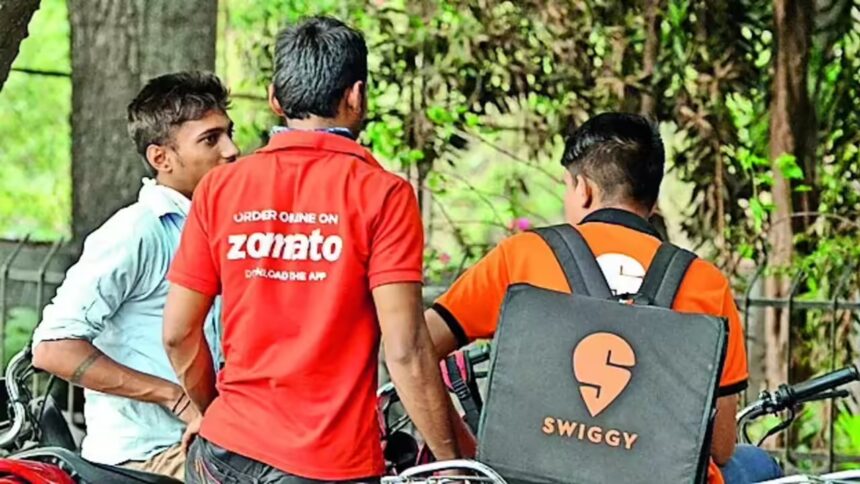
The Union government has moved closer to formally extending social security coverage to gig and platform workers by proposing a minimum annual work requirement, a step that reflects India’s evolving approach to labour protection in a rapidly expanding digital economy.
Under draft rules framed to operationalise the Code on Social Security, 2020, gig and platform workers would need to complete a defined number of working days in a financial year to qualify for benefits such as health insurance, life cover, and accident protection. The proposal marks a significant moment for millions of workers engaged in app-based and task-driven employment, a segment that has grown rapidly but remained largely outside traditional welfare systems. By linking eligibility to minimum engagement, the government is attempting to balance flexibility for platforms with structured protection for workers who rely on gig work as a primary or sustained source of income.
The draft notification has been issued by the Ministry of Labour and Employment, and is currently open for public consultation. Officials describe the proposal as a foundational step toward integrating gig workers into the national social security framework without redefining their employment status. While the move has been welcomed by many as long overdue recognition, it has also sparked debate about thresholds, implementation, and the practical realities of gig work in India.
Minimum engagement norms and the architecture of social security access
According to the draft rules, a gig or platform worker engaged with a single aggregator would need to work at least 90 days in a financial year to become eligible for notified social security benefits. Those working across multiple platforms would need to complete a minimum of 120 days. A day of work is defined broadly, with any calendar day on which a worker earns income from an aggregator counted as a day of engagement, irrespective of the amount earned.
This definition reflects an attempt to accommodate the irregular and task-based nature of gig employment, where workers may log in for short durations or combine work across platforms. The proposal also allows for cumulative counting of engagement, meaning that if a worker performs tasks for more than one aggregator on the same day, each engagement could be recorded separately for eligibility purposes. This approach is designed to capture the fragmented reality of platform work while ensuring that benefits are extended to those with sustained participation.
Registration will be a key component of the system. Gig and platform workers would be required to register through designated digital portals, most notably the e-Shram portal, which has been developed as a national database for unorganised sector workers. Aggregators, in turn, will be responsible for sharing accurate engagement data, enabling authorities to track eligibility and administer benefits.
The proposed framework reflects the government’s broader effort to move from informal welfare schemes toward rights-based social security access. By setting minimum thresholds, policymakers argue, the system ensures that benefits are directed toward workers who demonstrate regular economic participation, while also creating administrative clarity for implementation. At the same time, the draft rules stop short of mandating employer–employee relationships, preserving the independent contractor model favoured by most platforms.
Gig economy growth, worker demands, and the wider reform debate
India’s gig economy has expanded dramatically over the past decade, driven by the rise of ride-hailing services, food and grocery delivery platforms, logistics networks, and online freelance marketplaces. Millions of workers now depend on such platforms for daily income, yet most lack access to provident funds, insurance, or paid leave. The proposed social security thresholds emerge against this backdrop of structural vulnerability and growing worker mobilisation.
In recent months, gig worker unions and collectives have staged protests and strikes in several cities, demanding fair wages, predictable incentives, and enforceable social protections. These movements have brought renewed attention to the precarious nature of platform work and influenced policy discussions at both the central and state levels. The government’s decision to release draft rules at this juncture is widely seen as a response to these pressures, as well as to commitments made during the passage of new labour codes.
The draft rules also sit within the larger context of India’s labour law overhaul, which seeks to consolidate dozens of existing laws into four comprehensive codes. The Code on Social Security, in particular, aims to extend coverage to categories of workers historically excluded from formal protections, including gig, platform, and unorganised sector workers. By defining engagement thresholds, the government is attempting to translate legislative intent into operational policy.
However, questions remain about the adequacy of the proposed limits. Critics argue that a 90-day requirement may exclude workers who rely on gig work intermittently due to health, caregiving responsibilities, or fluctuating demand. Others warn that platform companies could potentially structure work allocations in ways that limit eligibility. Supporters counter that the consultation process offers scope for refinement and that the proposal establishes a baseline that can evolve over time.
For platform companies, the rules introduce new compliance obligations, including data sharing and potential contributions to welfare funds. While many firms have publicly supported the idea of social security for gig workers, they have also stressed the need for clarity and uniformity across states to avoid regulatory fragmentation. The government has indicated that stakeholder feedback will be carefully considered before finalising the rules.
As the consultation period unfolds, the proposal has opened a broader conversation about the future of work in India. It highlights the challenge of designing welfare systems that accommodate flexibility without sacrificing security, and of recognising new forms of labour within existing legal frameworks. If implemented effectively, the minimum work threshold could become a cornerstone of social protection for gig workers, setting a precedent for how emerging economies adapt labour policy to digital transformation.