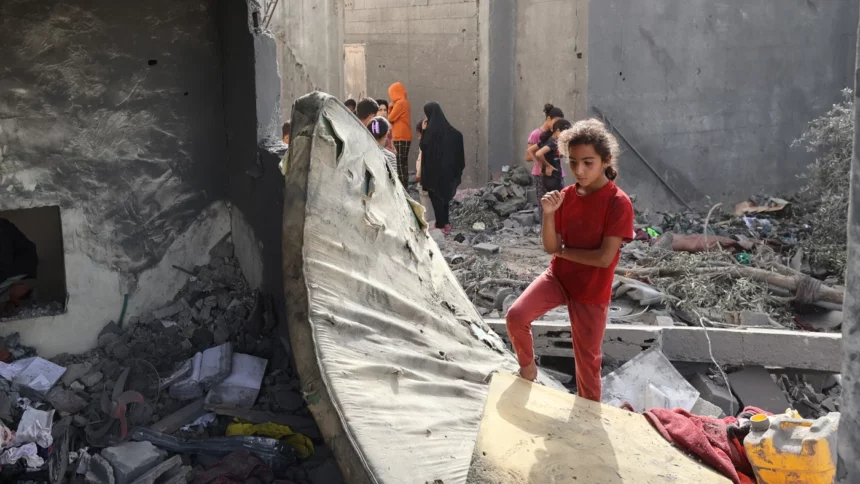
In the Gaza Strip, children are facing a silent crisis that may affect not just their immediate health but the genetic makeup of future generations. The ongoing war, compounded by starvation and trauma, is creating conditions that scientists warn could leave lasting epigenetic imprints on children like 22-month-old Rewan Aldreini. Born into extreme deprivation, Rewan has never had the chance to be breastfed due to her mother’s trauma-induced lactation failure, and she suffers from severe malnutrition, heart complications, and a weakened immune system. Her story is emblematic of the broader humanitarian and biological disaster unfolding in Gaza, where families endure relentless bombardment, displacement, and deprivation. Researchers studying historical famines and genocides, from the Holocaust to the Rwandan genocide, emphasize that trauma and starvation leave chemical marks on genes, influencing not only those directly affected but also their children. Scientists now warn that the conditions in Gaza are setting the stage for intergenerational health crises unless urgent action is taken.
Trauma, Starvation, and the Epigenetic Threat in Gaza
Mohamed Aldreini, Rewan’s father, struggles daily to provide a minimal diet for his daughter, relying solely on rice to make milkless rice pudding. Rewan’s mother, overwhelmed by depression after losing the ability to lactate due to repeated trauma, cares for four children while coping with post-traumatic stress disorder. Their story reflects a broader phenomenon of “engineered starvation,” as described by local families and human rights observers. Rewan’s fragile state—unable to walk, barely speaking, and continuing to lose weight—illustrates the devastating impact of prolonged malnutrition. Beyond immediate physical consequences, genetic researchers warn of lasting epigenetic changes, where chemical markers alter gene expression without changing the DNA sequence itself.
Historical studies have shown that severe stress and starvation leave molecular imprints on genes that persist across generations. The Dutch famine of 1944-1945, known as the “Hunger Winter,” demonstrated how prenatal exposure to food deprivation resulted in children and grandchildren with higher risks of obesity, diabetes, and cardiovascular disease. Similarly, research on Holocaust survivors revealed that parental exposure to extreme trauma affected stress hormone regulation in their offspring. Studies conducted by Rachel Yehuda, Professor Tessa Roseboom, and other epigenetics experts confirm that both mothers’ and fathers’ exposure to malnutrition and psychological stress can profoundly influence the health of children.
In Gaza, these effects are compounded by ongoing violence, displacement, and scarcity. Unlike historical cases studied post-factum, children in Gaza are currently experiencing severe trauma in real time. According to Palestinian health officials, Israeli forces have killed at least 20,000 children since the conflict escalated, with more than 50,000 reported as killed or wounded. UNICEF reports that over 12,800 children were identified as acutely malnourished in August alone, reflecting a famine that has been verified by international agencies. Experts caution that such high levels of mortality, malnutrition, and psychological stress are likely to leave permanent epigenetic marks, affecting not only children born today but also their potential offspring.
Dr. Leon Mutesa of the University of Rwanda notes that similar patterns were observed after the 1994 Rwandan genocide, where children born during the conflict carried markers of maternal trauma, manifesting in depression, anxiety, bipolar disorder, hallucinations, and other psychiatric disorders. The additive effects of continuous war, blockade, and food scarcity in Gaza create what Mutesa describes as a “double impact,” where multiple layers of trauma interact, amplifying the negative consequences on genetic expression and long-term health. Professor Hassan Khatib, an epigenetics researcher at the University of Wisconsin–Madison, emphasizes that adolescence, particularly in boys during puberty, is a critical period for the development of sperm and reproductive health. Exposure to stress, malnutrition, and violence during this stage can have profound effects on future generations. He points out that even diet alone in fathers has been shown to influence muscle growth, disease susceptibility, and other traits in subsequent generations in animal studies, underscoring the potential severity of Gaza’s unfolding crisis.
Historical Parallels and the Urgency of Immediate Action
The long-term epigenetic consequences of famine and trauma are well-documented across different regions and historical contexts. Research into the Great Chinese Famine, studies of Holocaust survivors, and investigations following the Rwandan genocide reveal how stress, malnutrition, and violence can leave lasting molecular changes in genes. These epigenetic modifications can influence metabolism, hormone regulation, immune function, and mental health, affecting children and grandchildren of those directly impacted. Professor Tessa Roseboom points out that stress hormones in both mothers and fathers affect the development of offspring, altering body and brain functions in ways that can persist for decades.
In Gaza, these conditions are ongoing, making the situation unprecedented in modern history. Children like Rewan face not only immediate risks of starvation and disease but also long-term vulnerability to diabetes, heart disease, and other chronic illnesses. The combination of relentless bombing, forced displacement, and scarcity of nutritious food creates an environment where epigenetic damage is almost inevitable unless structural changes occur. Experts stress that mitigating these effects requires a multi-pronged approach, including immediate cessation of hostilities, provision of adequate nutrition, healthcare access, and mental health support. Research from Rwanda and other post-conflict zones indicates that once violence ends and families receive assistance, some epigenetic markers can stabilize or partially reverse, emphasizing the critical role of timely intervention.
Palestinian families face compounded challenges: lack of medical care, limited access to clean water, overcrowded shelters, and psychological trauma. These factors interact synergistically to amplify stress-related epigenetic effects. Rewan’s condition exemplifies the broader population impact, as children born during periods of extreme deprivation inherit not just physical frailty but the molecular imprints of parental trauma. Scientists caution that without urgent international action, these epigenetic consequences will persist, influencing the health of children and grandchildren for decades.
Professor Hassan Khatib warns that Gaza is experiencing a “genetic disaster in progress,” with profound implications for the reproductive health and future wellbeing of its population. He notes that adolescent boys exposed to severe nutritional stress today may pass on altered gene expression patterns to their children, while pregnant women facing malnutrition and trauma transmit epigenetic risks directly to their unborn children. Dr. Leon Mutesa reinforces that positive environmental changes—safe living conditions, adequate nutrition, mental health support—can mitigate some damage, highlighting the urgent need for intervention to prevent long-term genetic and societal consequences.
The international community’s response is pivotal. Researchers like Roseboom and Mutesa argue that ending the war, providing humanitarian aid, and ensuring stability are essential steps to prevent a looming intergenerational health crisis. Without immediate action, the epigenetic impact of starvation, trauma, and violence in Gaza will likely rival or exceed the long-term consequences documented in previous genocides and famines. Scientists emphasize that while some damage may already be irreversible, timely intervention can still protect the current generation of children and reduce risks for future generations.
In the meantime, families like the Aldreinis continue to struggle. Rewan’s father, Mohamed, balances his own health challenges, including diabetes and high blood pressure, while caring for his malnourished child. Despite these hardships, he clings to hope that the conflict will end and that his children can have a chance at normalcy. His story represents the intersection of immediate humanitarian need and long-term genetic risk, underscoring how warfare and deprivation are not only moral and political crises but biological ones as well.
Experts argue that addressing the crisis in Gaza requires comprehensive strategies that combine conflict resolution, nutritional support, healthcare access, and mental health interventions. Lessons from historical famines and genocides show that epigenetic recovery is possible when survivors are provided with stability and adequate care. International organizations, policymakers, and humanitarian agencies have a unique responsibility to intervene, mitigating both the immediate suffering and the intergenerational consequences of war and starvation.
The plight of Rewan and thousands of other children in Gaza highlights the urgent need for global attention. Without decisive action, the region may face a multi-generational health catastrophe, where the legacy of war, malnutrition, and trauma manifests not only in mortality rates but also in genetic vulnerabilities passed down through generations. Researchers stress that addressing environmental, social, and nutritional factors now is essential to preventing a genetic legacy of suffering. The lives of children like Rewan depend on international intervention, peace initiatives, and comprehensive support systems that prioritize both physical survival and long-term genetic health.
In essence, the ongoing crisis in Gaza serves as a stark reminder that modern conflicts extend beyond immediate casualties. The combination of war, starvation, and psychological trauma has the potential to shape the genetic destiny of entire generations. Scientific studies provide clear evidence that epigenetic impacts can endure long after the violence ends, affecting metabolism, immunity, mental health, and reproductive health. Ensuring adequate nutrition, medical care, mental health support, and stable living conditions are critical to reducing the genetic burden imposed by conflict. Children like Rewan embody the stakes: their survival today determines the genetic and health landscape for Gaza’s future.
Immediate action, global awareness, and humanitarian intervention are essential not only to save lives in the present but to safeguard the biological future of Gaza’s children. The ongoing violence and deprivation risk creating a hereditary legacy of suffering, demonstrating that wars leave both visible and invisible scars that may echo for generations. Experts conclude that stopping the conflict, ensuring nutrition, and stabilizing the environment are the only viable measures to prevent irreversible epigenetic damage. Families like the Aldreinis remain on the frontlines of this crisis, embodying both resilience and vulnerability in the face of an unprecedented humanitarian and genetic catastrophe.