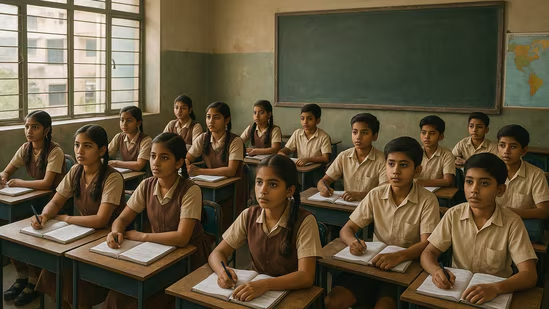
The Supreme Court of India has stepped in to tackle a deepening mental health crisis in the country’s education system, issuing landmark guidelines to safeguard students’ psychological well-being. The move follows a heartbreaking case of a 17-year-old medical aspirant who died by suicide while studying at a coaching institute in Visakhapatnam. In a powerful judgment, the court has directed all educational institutions—including coaching centres, schools, and universities—to immediately end discriminatory practices like batch segregation based on academic performance and to implement mandatory mental health support systems.
A Wake-Up Call Sparked by Tragedy
The court’s intervention came in response to a petition filed by the father of a NEET aspirant, referred to as Ms X, who died by suicide in July 2023. She was studying at Aakash Byju’s Institute in Visakhapatnam when the incident occurred. The case, initially dismissed by the Andhra Pradesh High Court, was transferred to the Central Bureau of Investigation (CBI) by the Supreme Court, highlighting the seriousness of the issue.
The bench of Justices Vikram Nath and Sandeep Mehta called the situation a “systemic failure that cannot be ignored.” The ruling has the backing of Articles 32 and 141 of the Constitution, meaning the court’s directives carry the weight of law until Parliament enacts formal legislation.
The backdrop of this ruling is grim: In 2022 alone, India recorded 170,924 suicides, with students accounting for over 13,000—around 7.6% of the total. A significant number of these deaths, over 2,200, were directly linked to exam-related stress and failure.
Sweeping Guidelines with Legal Force
To curb this growing crisis, the court unveiled a comprehensive mental health policy framework, referencing existing government initiatives such as UMMEED, MANODARPAN, and the National Suicide Prevention Strategy. These are not mere suggestions—they are legally binding for all educational institutions across the country.
Among the most critical orders is a ban on performance-based batch segregation. Coaching centres and schools can no longer group students by grades or ranks, a practice that often isolates lower-performing students and leads to emotional distress. Additionally, institutions are prohibited from engaging in public shaming or applying pressure through aggressive academic competition.
Every institution with more than 100 students must now hire at least one trained mental health professional—be it a psychologist, counsellor, or social worker. For smaller schools, a structured referral system to external experts is mandatory.
The visibility of mental health resources is also being emphasized. Suicide prevention helplines, including Tele-MANAS, must be prominently displayed across campuses, hostels, notice boards, and websites. This measure ensures that students in distress know exactly where to seek help without feeling isolated or helpless.
All educational staff will be required to undergo biannual training in psychological first aid, early warning signs, and proper referral protocols. The training is to be especially sensitized for vulnerable groups, including students from SC, ST, OBC, EWS backgrounds, LGBTQ+ communities, and those dealing with trauma or disability.
The court also mandated improvements in hostel infrastructure to prevent impulsive suicides—such as installing tamper-proof ceiling fans and restricting access to rooftops and balconies. Educational institutions must now provide safe, monitored environments, especially in residential settings.
A Call for Regulatory Clarity and Accountability
To reinforce the implementation of these measures, the Court has instructed all states and union territories to draft formal rules within two months to regulate private coaching centres. These centres, often operating with minimal oversight, are now under pressure to ensure they are not exacerbating student mental health struggles.
The central government has been directed to file a compliance affidavit within 90 days. This affidavit must outline the steps taken at the national level, detail coordination efforts with states, and show progress made by the National Task Force on student mental health.
Specific hotspots for mental health deterioration—such as Kota, Jaipur, Sikar, Chennai, Hyderabad, Delhi, and Mumbai—have been identified for immediate intervention. These cities, known for their dense networks of coaching institutes and extreme academic competition, will now be under closer regulatory scrutiny to ensure that pressure-cooker environments are addressed through both preventive infrastructure and mental health programs.
The court has also asked educational institutions to broaden their definition of success. This includes promoting extracurricular activities, offering interest-based career counselling, and easing the emphasis on exam performance as the sole metric of achievement. The goal is to foster a healthier, more holistic learning environment that prioritizes student well-being alongside academic excellence.
Through this judgment, the Supreme Court has not only responded to a tragic death but also issued a clarion call to overhaul India’s educational landscape. The verdict recognizes the emotional toll placed on students and compels institutions to rethink how they define and measure achievement.