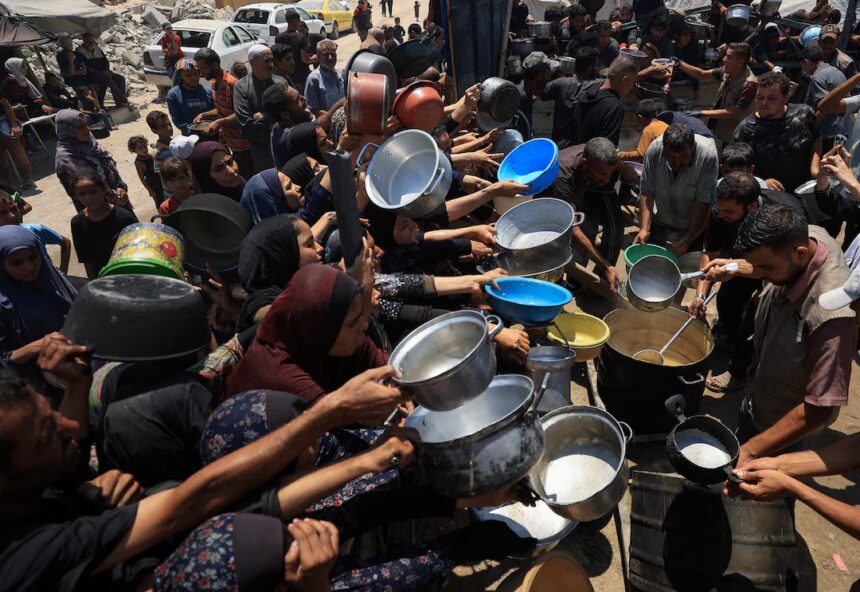
Gaza is experiencing a deepening humanitarian catastrophe as the World Health Organization (WHO) has warned of a “man-made mass starvation” crisis driven by restrictions on aid entering the Palestinian enclave. WHO Director-General Tedros Adhanom Ghebreyesus emphasised that the hunger sweeping Gaza is directly linked to a blockade and limitations on humanitarian supplies, calling the situation urgent and preventable.
Tedros spoke during a virtual press conference from Geneva after over 100 aid agencies raised alarms about the dire food crisis while tons of aid remain stuck outside Gaza’s borders. “I don’t know what you would call it other than mass starvation, and it’s man-made, and that’s very clear,” Tedros said, underlining the devastating impact of restricted aid access on Gaza’s 2.2 million residents.
Aid Blockade and Rising Hunger
Gaza’s humanitarian emergency has intensified since Israel, at war with Hamas since October 2023, cut off supplies to the territory in March 2025. Although Israel lifted the blockade in May, stringent restrictions remain, with Israel stating these measures are necessary to prevent aid from being misused by militant groups. However, humanitarian agencies report that the flow of aid into Gaza remains grossly insufficient, allowing only a fraction of the critical food, clean water, and medical supplies needed to reach those affected.
Israel has maintained that it is committed to facilitating aid into Gaza while ensuring it does not fall into the hands of militants. It argues that enough food has been allowed during the ongoing conflict, placing the blame for the suffering of civilians on Hamas. Despite these assurances, conditions in Gaza have continued to deteriorate, with hunger tightening its grip across the region.
The Gaza health ministry reported that ten more Palestinians died overnight from starvation, increasing the total number of starvation deaths to 111, with the majority occurring in recent weeks as hunger escalates within the enclave. The WHO noted that at least 21 children have died due to malnutrition in 2025, cautioning that the true scale of the crisis is likely far worse than reported figures indicate.
Strained Healthcare and Malnutrition Crisis
WHO officials highlighted the collapse of aid pipelines and access restrictions, which have severely impacted efforts to address the hunger crisis. Centres for treating malnutrition are operating beyond their capacity and lack sufficient supplies for emergency feeding, compounding the challenges faced by aid workers on the ground.
Tedros further revealed that the UN and its humanitarian partners were unable to deliver any food aid to Gaza for nearly 80 days between March and May, and the resumption of aid deliveries remains inadequate to meet the urgent needs of the population. WHO’s representative for the occupied Palestinian territories, Rik Peeperkorn, added that in July alone, 5,100 children were admitted to malnutrition programmes, including 800 who were critically emaciated.
The situation remains alarming, with WHO data showing that around 10% of those screened in Gaza are experiencing severe or moderate malnutrition, including up to 20% of pregnant women. As aid agencies continue to advocate for unimpeded humanitarian access, the crisis underscores the devastating consequences of restricted aid on a civilian population already grappling with the impact of conflict and economic hardship.
The mounting hunger crisis in Gaza highlights the urgent need for sustained and unhindered humanitarian assistance, international cooperation, and meaningful steps to address the root causes of the blockade to prevent further loss of life and alleviate the suffering of millions caught in this deepening emergency.