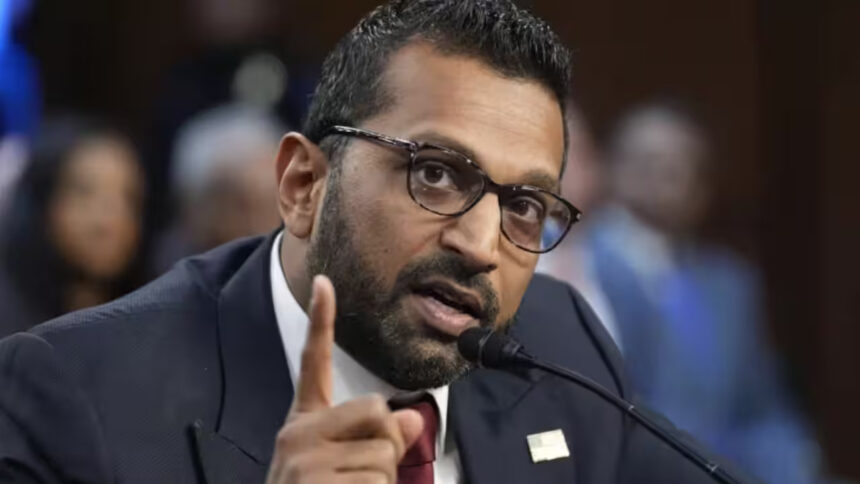
The growing controversy surrounding FBI Director Kash Patel has intensified after multiple reports alleged that he repeatedly deployed elite FBI SWAT agents and government aircraft to provide personal protection and logistical support for his girlfriend, country singer Alexis Wilkins. These accusations have raised significant concerns within the law-enforcement community and the broader political landscape, prompting debates about ethics, misuse of power, and the responsibility of federal leadership at a time of heightened domestic polarization.
Scrutiny Over Use of SWAT Personnel and Federal Resources for Personal Protection
The allegations first drew national attention when it emerged that two FBI SWAT agents from the Atlanta field office were dispatched to escort Wilkins at the National Rifle Association’s annual convention, where she performed the national anthem. These agents, highly trained for life-threatening operations such as hostage rescue and counterterrorism missions, were reportedly ordered by Patel himself to accompany her during the event. According to accounts from former agents familiar with the incident, the agents assessed the venue, deemed it secure, and left early because they found no credible threat that warranted their presence.
Their early departure, however, allegedly infuriated Patel. Reports indicate that he reprimanded the team’s commander for not remaining with Wilkins for the entirety of the event and criticized what he considered inadequate communication. Patel reportedly believed that Wilkins remained at risk due to online threats she had previously received, including messages encouraging her to harm herself or stating that she deserved to “take a bullet.” At the time, Wilkins had been facing a spike in harassment on social media, some of which coincided with Patel’s assumption of office.
The controversy expanded further when details emerged about a second incident in late September. Following an exhausting operational period responding to the killing of conservative figure Charlie Kirk in Utah, SWAT personnel assigned to the Salt Lake City field office were abruptly reassigned. Instead of being given time to rest or continue with investigative operations, the agents were reportedly ordered to provide protection for Wilkins at a political event. The reassignment was allegedly made out of concerns that she could be targeted by individuals threatening conservative public figures online, fears that Patel reportedly viewed as credible and urgent.
Former senior FBI agent Christopher O’Leary criticized these decisions publicly, characterizing them as a clear misuse of elite tactical resources. O’Leary argued that Wilkins did not meet the established criteria for government-provided protective services and that her relationship with Patel did not grant her such entitlement. He emphasized that protective details for non-spousal partners, especially those who do not reside with federal officials or hold public office, generally fall far outside the parameters of legitimate use of federal law-enforcement assets.
In defense of these actions, Patel’s spokesman, Ben Williamson, stated that Wilkins had been subjected to hundreds of credible threats, many involving violent intent, and that the FBI acted within its authority to ensure her safety. He rejected criticism that SWAT agents were misused and described allegations of improper conduct as politically motivated or made in bad faith. The FBI, in a separate statement, also declined to provide further specifics, citing Wilkins’s safety and the sensitive nature of protective operations.
Yet the concerns persisted due to the nature of the personnel assigned. SWAT agents receive specialized training to respond to extreme and rapidly developing threats, such as hostage takings, armed standoffs, and terrorism-related incidents. Their deployment for personal protection, particularly for private individuals who are not government officials or high-risk witnesses, raised questions about judgment, priorities, and adherence to federal protocols.
Patel’s critics argue that these episodes demonstrate a dangerous willingness to override established guidelines and utilize high-level tactical teams for personal or political considerations. Supporters, however, maintain that the threats against Wilkins—some of which she publicly shared, including messages urging her to take her own life—warranted heightened security. The polarizing nature of Patel’s tenure has only deepened the divide between these perspectives.
Controversy Over Use of FBI Jet and Personal Travel Decisions
Alongside the allegations concerning SWAT protection, Patel has been criticized for his use of the FBI’s government aircraft, which is designated for secure travel, rapid response, and high-level official mobility. Federal regulations stipulate that senior officials may use such aircraft when necessary for secure communications or when commercial travel is impractical due to operational demands. However, Patel’s travel patterns have prompted questions about whether he exploited these allowances for personal convenience, particularly in relation to his visits to Wilkins and trips allegedly unconnected to official duties.
The most high-profile incident involved an FBI jet flight to State College, Pennsylvania, where Wilkins was scheduled to perform the national anthem at a Penn State wrestling event. The trip, which took place during a government shutdown, quickly drew criticism from political commentators and former federal officials. Conservative commentator Kyle Seraphin accused Patel of using government aviation assets to “hang out with his ‘chick,’” suggesting excessive personal use of public resources.
Patel responded to the criticism on social media, dismissing accusations as “disgustingly baseless” and arguing that such attacks unfairly targeted Wilkins. He praised her character, called her a true patriot, and emphasized his commitment to protecting her from hostility and misinformation. He also asserted that his travel adhered to federal guidelines requiring him to use government aircraft for security and communication reasons.
Despite this defense, investigative reports indicated that Patel may have used the aircraft on multiple occasions for trips that included personal components or were tied to Wilkins’s performances and public appearances. Critics say these flights raise concerns about blurred boundaries between official responsibilities and private life. They contend that such usage undermines public trust and sets a troubling precedent regarding the discretionary power of top federal officials.
The broader concerns stem from the essential purpose of government aircraft. These jets are equipped with advanced communication systems and security protocols intended to support federal leadership during crises and high-risk situations. Using them for discretionary travel not directly tied to official duties, critics argue, diverts resources from essential operations and exposes the government to accusations of fiscal irresponsibility.
Patel, however, has maintained that the threats Wilkins faced—particularly those emerging after his appointment as FBI director—required him to remain connected and responsive at all times, necessitating the use of secure communication capabilities. Supporters also argue that Wilkins’s relationship with Patel places her in a position where threats against her may constitute indirect threats against the director himself, thereby justifying additional security.
These defenses have not quelled the criticism. Within the FBI, questions have reportedly circulated about whether the bureau’s leadership culture has shifted too dramatically under Patel’s direction, with some career agents expressing unease about the perception that personal relationships may influence operational decisions. Observers note that such concerns can affect morale, trust in leadership, and the internal systems that safeguard accountability.
Further fueling the controversy is Wilkins’s ongoing defamation lawsuit against former Utah Senate candidate Samuel Parker and conservative podcaster Elijah Schaffer. Both individuals publicly accused her of being an “Israeli spy,” an allegation Wilkins argues is not only false but politically motivated. The case has drawn attention to the broader climate of online harassment and disinformation that public figures increasingly face, as well as the extent to which such allegations may intersect with security considerations.
Wilkins’s supporters point to the threats she has publicly shared—including messages stating she deserved physical harm—to argue that the security concerns are legitimate. Critics counter that while threats should always be taken seriously, the method and scale of response must align with established protocols and proportional risk assessments.
Meanwhile, Patel’s critics continue to question whether he has allowed personal relationships to shape decisions about resource allocation. They point to the reassignment of SWAT agents, the use of government aircraft, and the verbal confrontation with field commanders as evidence of a pattern that prioritizes individual concerns over broader mission readiness. These critics argue that such actions may undermine the integrity of the FBI at a time when it already faces scrutiny from multiple political directions.
Supporters remain adamant that Patel is being targeted unfairly by political opponents and former officials resistant to his leadership style. They contend that the heightened climate of political violence necessitates stronger protective measures for individuals connected to national security leaders and that Wilkins’s prominence within conservative circles has made her a particular target for harassment.
The debate continues to deepen divisions within the political conversation surrounding federal law enforcement. For some, the controversy reflects deeper institutional tensions about leadership, accountability, and the role of personal relationships within the operational sphere. For others, it represents an exaggerated response to what they see as necessary protective measures during a period of rising political violence and intensified online threats.
At its core, the controversy over Patel’s decisions underscores long-standing questions about the boundaries of power within federal agencies, the oversight mechanisms designed to prevent abuse, and the challenges leaders face when personal lives intersect with professional responsibilities in environments defined by security and public scrutiny.