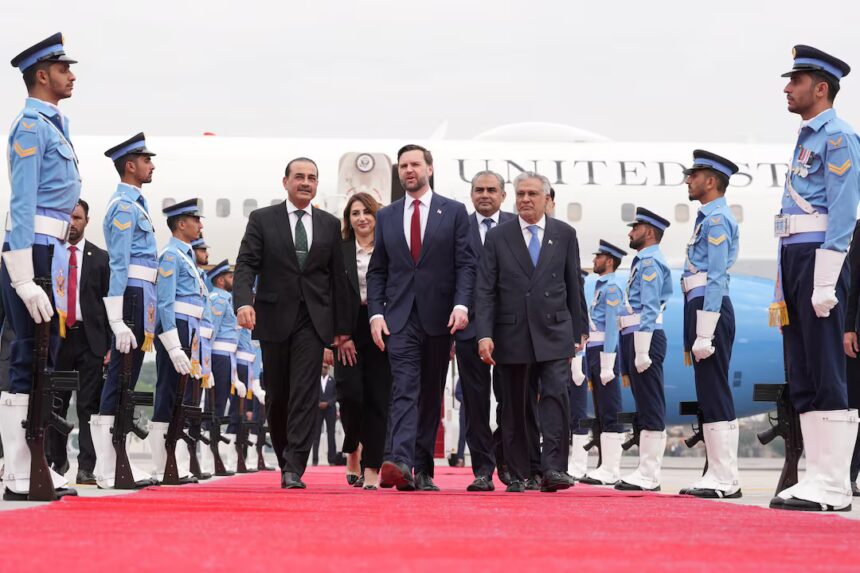
High-stakes peace talks between the United States and Iran have begun in Islamabad amid growing uncertainty, as both nations attempt to convert a fragile two-week ceasefire into a more lasting agreement. The negotiations follow weeks of intense conflict that disrupted global energy markets and heightened geopolitical tensions across West Asia. While the initiation of dialogue signals a willingness to de-escalate, deep-rooted disagreements over sanctions, regional conflicts, and strategic influence continue to cast doubt over the outcome.
Delegations from both sides have entered the talks with cautious optimism but limited trust. The diplomatic engagement represents one of the most significant attempts in recent years to stabilize relations between the two adversaries. However, ongoing violence in Lebanon and unresolved economic disputes have complicated the negotiation environment, making the path to peace increasingly uncertain.
Lebanon Conflict and Sanctions Disputes Complicate Negotiations
A major challenge confronting the talks is the continuing conflict in Lebanon, which has emerged as a central point of disagreement. Iran has insisted that any meaningful progress must include a ceasefire in Lebanon, where Israeli military operations against Hezbollah continue despite the broader US-Iran truce. This demand has been rejected by the United States, which maintains that the Lebanon situation falls outside the scope of the current negotiations.
This disagreement reflects a deeper divide in how both sides view regional conflicts. Iran considers these issues interconnected and believes that peace efforts must address the entire regional landscape. In contrast, the United States prefers a more segmented approach, focusing on specific issues to achieve incremental progress. This difference in perspective has created a significant obstacle in aligning negotiation priorities.
Sanctions remain another critical sticking point. Iran has demanded the lifting of US-imposed economic sanctions and access to its frozen assets as a precondition for any long-term agreement. These demands stem from years of economic pressure that have severely impacted Iran’s economy. On the other hand, the United States is expected to push for concessions related to Iran’s nuclear program, missile development, and regional activities in exchange for any sanctions relief. The gap between these positions highlights the complexity of reaching a mutually acceptable agreement.
Strategic Stakes, Energy Routes, and the Future of Regional Stability
Beyond immediate disagreements, the broader strategic implications of the talks add another layer of complexity. One of the most critical concerns is the security of the Strait of Hormuz, a vital route for global oil shipments. During the recent conflict, threats to disrupt this passage raised alarms worldwide, underscoring its importance to international energy markets.
Iran’s stance on controlling or regulating movement through the strait has further heightened tensions. Any attempt to impose restrictions or transit conditions could have far-reaching consequences for global trade and energy prices. The United States, along with its allies, remains committed to ensuring free navigation through the route, making it a key issue in the ongoing discussions.
The outcome of the peace talks will significantly influence regional stability. A successful agreement could ease tensions, stabilize energy markets, and create opportunities for broader diplomatic engagement across West Asia. However, failure to resolve core disputes could lead to renewed conflict, increased volatility, and further disruptions in global supply chains.
At the same time, both sides continue to maintain a posture of strategic caution. While engaging in diplomacy, they have also signaled preparedness for escalation if negotiations fail. This dual approach reflects the fragile nature of the ceasefire and the high stakes involved in the talks.
Pakistan’s role as host adds another dimension to the process, positioning it as a facilitator in one of the most complex diplomatic engagements in recent times. The negotiations are expected to be prolonged, as both sides navigate deeply entrenched differences while exploring possible areas of compromise.
The evolving situation underscores the challenges of achieving lasting peace in a region defined by overlapping conflicts, strategic rivalries, and competing interests.